to better coordinate
cancer services.
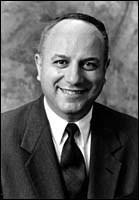
(Al Alexio)
Lifespan officials recently announced a new initiative aimed at enhancing care for cancer patients and expanding research efforts.
Rhode Island Hospital, Miriam Hospital and Newport Hospital will share their cancer-care resources and medical staffs to form the Comprehensive Cancer Center. The goals: to create a team approach to cancer care — which hospital officials say will vastly improve the patient experience – and to eventually be designated an official cancer center by the National Cancer Institute.
For Leaders Who Don't Have Time to Get Sick
Top performers guard their calendars, delegate relentlessly and optimize every hour of the day. Health,…
Learn More
The three hospitals already provide roughly 40 percent of cancer care in Rhode Island, where about 5,000 new cases of invasive cancer are diagnosed annually. Combined, Rhode Island Hospital and Miriam Hospital spent $37 million in 2000 on inpatient, adult cancer care. Lifespan spent about $6.5 million on cancer research last year.
But the new cancer-care initiative will better link the efforts of medical oncologists, surgical oncologists, radiation therapists, social workers, counselors, medical educators and other hospital staff.
“The goal is to give the patient and family a single, coherent message about what the diagnosis is and what the options are,” said Fred Schiffman MD, clinical director of the cancer center.
After spending tens of millions of dollars on information technology in recent years, Lifespan doctors now can electronically share patient records, lab work and clinical studies among member hospitals – a key aspect of the new center.
“We already have tremendous resources in place at these hospitals, but we’ve lacked coordination of these services,” said Lifespan President and CEO George Vecchione. “Now, hundreds of Lifespan physicians can access data on a real-time basis.”
The most common forms of cancer – lung, colon, breast and prostate – will be treated at all three facilities. Special clinics for treatment in these areas are in various stages of development, Vecchione said.
Clinics to treat rarer forms of cancer – which often are more costly and complex to diagnose and treat – will be housed at specific locations. For example, patients with forms of stomach cancer will be treated at the upper gastrointestinal malignancy clinic at Rhode Island Hospital.
Development of that clinic is furthest along of Lifespan’s cancer-care clinics, partly because the incidence of stomach cancer in Rhode Island is 25 percent higher than the national average, according to Lifespan. The clinic should serve as a prototype for the other clinics, Schiffman said.
Several renovation projects are under way to upgrade cancer facilities at the three hospitals.
At Miriam, the cancer-treatment facilities, now housed on the second floor, will expand into the third floor. Renovations will not only add beds and space for preventive screenings but also include patient “quality-of-life” amenities such as an art room, according to Sandy Stamoulis RN, senior vice president for cancer services.
Lifespan will spend about $8 million at Rhode Island Hospital and $2.6 million at Miriam to upgrade cancer-care facilities.
Lifespan officials say the new center could ultimately earn designation as a cancer center by the NCI, which is the federal agency that funds cancer research. NCI designation would bring millions of dollars in additional research funding and access to experimental drugs and treatment protocols.
Vecchione, Schiffman and Donald Marsh MD, Dean of Medicine at Brown Medical School, which is affiliated with Rhode Island Hospital and Miriam, met with NCI officials late last year to discuss possible designation.
“I think their feeling was that most of the components (for NCI designation) already are in place, but they’re not coordinated yet,” Vecchione said. The key elements of Lifespan’s new cancer center – creation of multidisciplinary clinics, emphasis on a total-care model and a focus on prevention – all are in line with NCI’s criteria for designation, Vecchione said.
Lifespan and Brown are conducting a nationwide search for a scientific director to head the cancer center’s research efforts – a move that could bolster chances for NCI designation.
There are about 60 NCI-designated cancer centers in the United States, although Rhode Island has none. The cancer center at Roger Williams Medical Center in Providence lost its NCI status in 1994 because of administrative problems.
In recent years, Roger Williams has brought in “world-renowned” cancer specialists to rebuild the center’s reputation and regain NCI status, according to Gerald J. Elfenbein, M.D., head of Roger Williams’ cancer center.
“NCI designation is an ultimate objective of ours,” Elfenbein said. Roger Williams is pursuing NCI status through its affiliation with Boston University’s medical school, which already has applied for NCI designation. “If BU doesn’t get designation, then we plan to get it on our own.”
It is questionable as to whether there is room in Rhode Island for two NCI-designated cancer centers. NCI officials have said in the past that close geographic proximity of two centers would be a concern because they might be forced to compete for patients.
Officials from Lifespan and Roger Williams say they are not in competition for NCI status. But Elfenbein said he doubts Rhode Island’s population could support two NCI cancer centers.
“Only one NCI-designated center will exist in Rhode Island – I truly doubt that two awards would be given,” Elfenbein said.
Roger Williams last week had plans to launch a new cancer-based clinical research program. The initiative would add to Roger Williams’ existing research efforts – which are primarily focused on drug development – by initiating cell-therapy treatments on patients.
Elfenbein said plans to initiate several such innovative therapies, along with long-term plans to build a new cancer-care facility, should give Roger Williams the edge in the quest for NCI status.
“(NCI) cancer-center designation is based on the quality of research done at an institution — that is far and away the most important criterion,” Elfenbein said. “And we’re the leading cancer-care and research institution in Rhode Island. We’re not competing against Lifespan. They will have to compete with us.”