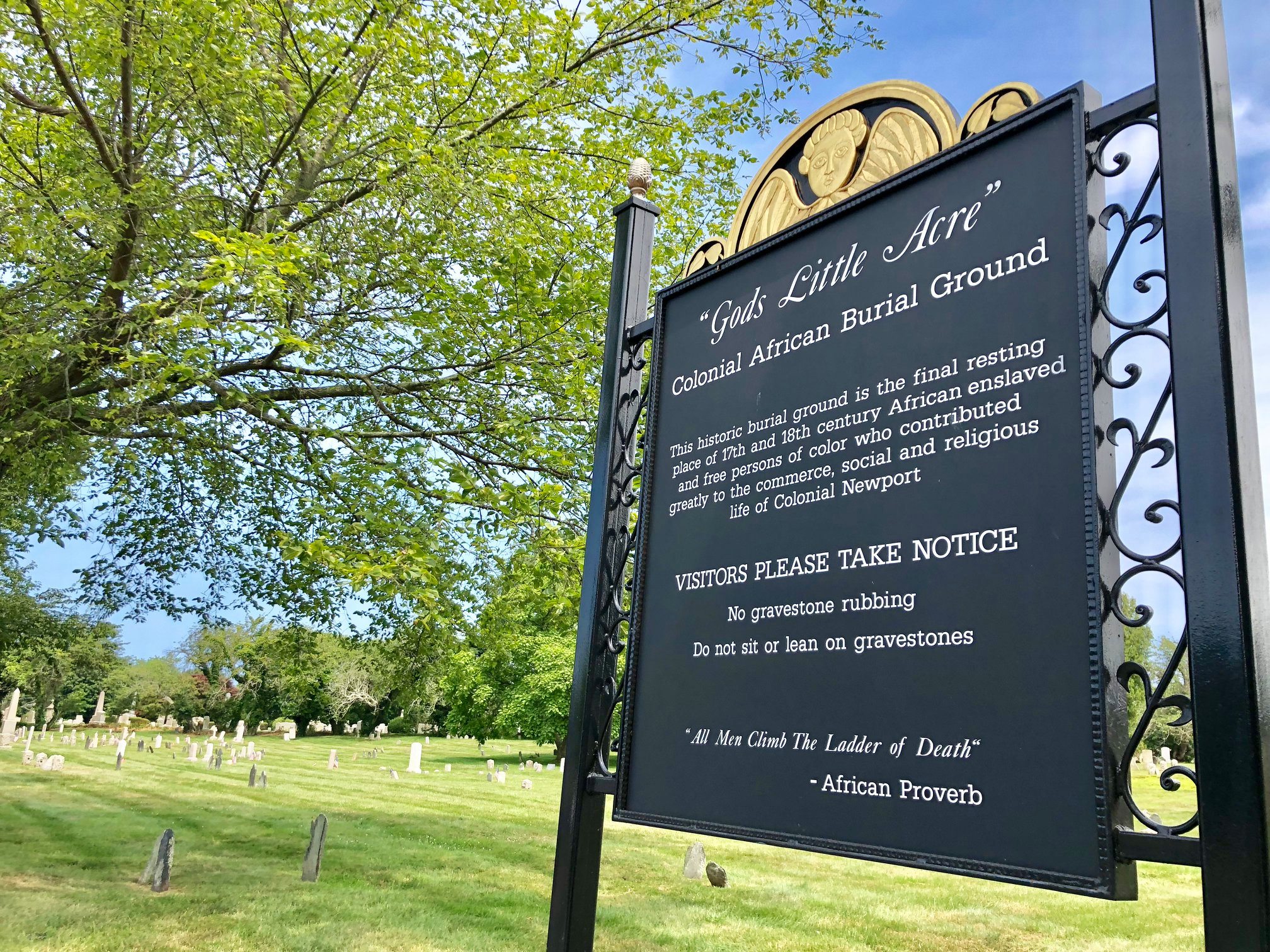
NEWPORT – God’s Little Acre, one of America’s largest and most intact burial sites for Colonial-era Africans and African Americans, may soon be more easily navigable thanks to the efforts of a team from Brown University.
Newport’s Historic Cemetery Advisory Commission said work is underway on a project to create a high-resolution digital map of the historic site, which could serve as the foundation for future site management and exploration.
ISO 9001:2026: A Practical Opportunity to Build for What’s Next
For Rhode Island manufacturers, ISO 9001 has been much more than a certificate on the…
Learn More
Once complete, visitors, scholars and site managers will be able to access pertinent information from an advanced digital map of the area via smartphone or the internet that researchers hope will provide the public a better understanding and appreciation for the historic burial ground.
“We’ve very excited to partner with this talented team from Brown,” said Janet Parkinson, a member of the Historic Cemetery Advisory Commission. “Having an accessible digital map of God’s Little Acre will be a significant milestone for future work.”
The project is being conducted by Alex Marko, Dan Plekhov and Miriam Rothenberg, all doctoral candidates at the Joukowsky Institute for Archaeology and the Ancient World at Brown University. The team was recruited by Giles Eyre, who has worked with the advisory commission. There is no cost to the city for the work the students will be conducting, and their web and smartphone products will be given to the city at no charge.
One goal is for visitors to the site to use their phones to guide them directly to specific headstones. Preservationists are hopeful the map will provide the city with another tool in tracking gravestone conservation.
God’s Little Acre features about 200 professionally carved headstones from a time when the graves of Africans were typically left unmarked, according to the Preservation Society of Newport County.
The burial ground is contained within the Common Burying Ground and Island Cemetery on Farewell and Warner streets.
The site contains headstones of well-documented members of Newport’s Colonial African community, such as Pompey Stevens, Duchess Quamino and Arthur Tikey. In some cases, the headstones serve as the only record that the deceased had ever existed, the preservation society said. The iconography, epitaphs and placement of the headstones offers insight into individuals and family relationships that are otherwise unrecorded.