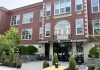
For people who have lost an arm or a leg, the band saws, ovens and high-tech equipment in Mike Nunnery’s manufacturing laboratory can forge a new life.
Nunnery Orthotic & Prosthetic Technologies LLC, a clinical practice and custom designer of artificial limbs and braces, makes state-of-the-art devices that can enable people who have lost a limb to return to work and resume a productive life.
The company custom-makes virtually all its products in its 2,000-square-foot facility in North Kingstown – half of which is a manufacturing lab, said Nunnery, who founded the business in 1995 after working as a prosthetic practitioner for biotechnology and health care companies in Connecticut and New York.
Business is brisk, he said, to a great extent because of the nation’s obesity crisis, which has caused an attendant rise in the number of amputations secondary to diabetes. And though Nunnery has only worked with one soldier who lost a limb serving in the Iraq war so far, he expects the number of such patients to increase in coming months and years.
“It’s sort of an unfortunate byproduct of war, and we’ve seen that happen in the past,” he said.
In recent years, Nunnery has refined his practice to focus on highly customized prosthetics that require a high degree of technical proficiency – upper-extremity prosthetics in particular. He also has begun using a computer-aided design and production program for lower-extremity prosthetics.
“We like to build everything in house,” Nunnery said. “We have a full-time technician whose job it is to assemble the devices [and] come up with the proper fabrication techniques based on what I as a clinical practitioner outline. Every job we do on every patient is truly customized. If I see five prosthetic patients in one day, and they all have the same level of amputation, there’s a pretty good chance that there will be five very distinct prosthetic devices.”
Specializing in such custom work poses challenges – parts that only may be used once or twice cannot be stocked as inventory, and the process of building and perfecting a successful device can take up to four months, Nunnery said.
“Our role is really dictated on trying to read into a patient’s lifestyle,” he explained. “There’s a timeline to doing that. I evaluated a new patient this morning, and it will take probably a year before I know everything about her.”
Given the lengthy, intimate nature of the work, Nunnery has forged bonds with many patients, including teachers, lawyers, construction workers and people from every other walk of life. In some cases, he has designed two or more devices for a single person.
“You have a good relationship with a patient, it will last for years,” Nunnery said. “We have a lot of patients who work – they run businesses, they run households. So if they don’t have what they need to get around, it has a huge impact on their families and their employers or employees, whatever it might be.”
Beyond his practice, Nunnery is a lecturer in both the University of Rhode Island’s physical therapy school and Community College of Rhode Island’s physical therapy assistant and occupational therapy assistant programs.
And Nunnery recently co-sponsored and hosted a two-day clinical course for physical and occupational therapists doing upper-extremity rehabilitation. A second part of the course will be offered later this year.
“As these technologies progress and get more complicated, their requirements are such that we have to spend a significant amount of time educating ourselves,” Nunnery said. “Not only in how these things work and operate, but then there’s a learning curve to applying that to a patient or a training program. So having this event allows us to have a jumping-off point.”
The job also involves a great deal of mundane work, especially regarding billing, record-keeping and dealing with insurance companies, Nunnery said.
“They’re forever trying to cut back on covering these devices, and we’re always struggling to show them, ‘Look, you provide the proper device to somebody, even if it’s expensive, the return on the insurance company’s investment is potentially huge,’” he said. “Not just from a health point of view, but enabling them to go back to work, contributing to the economy and their communities.”
Company Profile: Nunnery Orthotic & Prosthetic Technologies LLC
TYPE OF BUSINESS: Orthotic and prosthetic device manufacturer and clinical practice
OWNER: Mike Nunnery
LOCATION: 7408 Post Road, North Kingstown
EMPLOYEES: 4
YEAR FOUNDED: 1995
ANNUAL REVENUE: WND
Selling Luxury Real Estate Requires More Than Exposure
By Emilio DiSpirito IV License Partner | Private Office Advisor Engel & Völkers Oceanside www.DiSpiritoteam.com…
Learn More