The advent of the Internet in China already has precipitated meaningful economic and cultural change, but as Jay Henderson sees it, the impact on Chinese politics has been overplayed by the U.S. media.
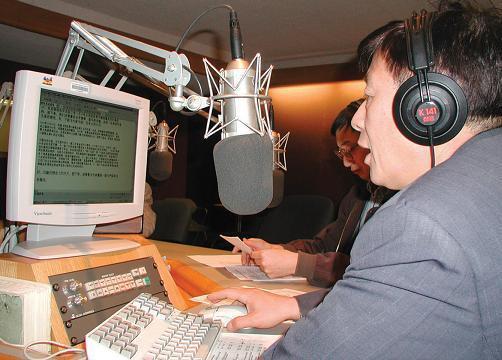
Henderson, director of Voice of America’s East Asia and Pacific Division, spoke at a May 22 luncheon to launch the 2007 season of the Bryant-Lingnan Summer Exchange Program between Bryant University and The Lingnan College of Sun Yat-sen University of China.
The program, which is managed by Bryant’s U.S.-China Institute, was designed to open a dialogue between the future businesspeople of the world’s reigning economic superpower and those of its fastest-growing rival.
Although his speech was titled “China’s Choice: The Silk Road or Cyber Superhighway,” Henderson immediately conceded that China has chosen the latter, and proceeded to argue that most Americans misunderstand this phenomenon’s political ramifications.
Despite the fact that e-mail, Web browsing and blogging have made the free exchange of information and ideas in China more feasible, only 10 percent of the country’s urban population has Internet access, and only 10 percent of Internet users post their political views, according to Henderson. If anything, he said, the government has taken a harder line against political discussion and the intrusions of Western media.
“The new government has tightened up on the ability of VOA and other major news [outlets] in the U.S.” to broadcast in China, said Henderson. “Even the Discovery Channel has a hard time getting through.”
But the facts on the ground haven’t discouraged the American media from rhapsodizing about the revolutionary potential of the Internet in China – a tendency Henderson attributes to “wishful thinking.”
Henderson cited Time magazine’s recent decision to include Zeng Jinyan in “The Time 100,” the publication’s annual rundown of the world’s most influential people.
Jinyan made headlines in the West when she started a blog about her husband’s imprisonment by the Chinese government in 2002. In her profile of Jinyan, guest writer Arianna Huffington christened her “Tiananmen 2.0.”
“There is a lot of power in the Internet, but will it go that far?” Henderson asked. “It sells magazines to say that, but calling it Tiananmen 2 reflects more our views than the direction that country is actually headed in. Americans misunderstand China because we love you, we wish you the best, but we want you to be like us.”
Voice of America is a multilingual, multimedia news service funded by the U.S. government. It began broadcasting in 1942 and now claims to reach more than 115 million people per week through radio, television and Internet broadcasts in 45 languages.
Governed by a charter signed by President Gerald Ford in 1976, VOA aims to be a “consistently reliable and authoritative source of news” that represents all of America and presents U.S. policies “clearly and effectively,” along with “responsible discussions and opinion on these policies,” according to the agency’s Web site.
Henderson was invited to the Bryant luncheon by Hong Yang, a professor of environmental studies and director of the U.S.-China Institute, which was founded in 2005 in response to China’s economic and demographic ascendancy.
Thirty-five students are currently enrolled in the summer exchange program (20 from Bryant, 15 from Lingnan). The group will remain in the United States until June 3, after which it will depart for a two-week session in China.
“The program has three main goals,” Yang said, “to bring American and Chinese university students together to discuss the environmental, cultural and ethical issues” pertinent to U.S./China business relations.