More than a month after Gov. Donald L. Carcieri vetoed a major energy bill, a debate is still raging over whether ratepayers should give National Grid extra money as a way of enticing the utility to buy electricity from renewable sources.
There is broad agreement among those engaged in the energy debate that National Grid, the state’s dominant utility company, should sign long-term contracts with electricity generators who use renewable sources, such as solar and wind. Developers of new renewable energy projects say they need the long-term contracts to convince investors there will be a market for their output.
In Massachusetts, Gov. Deval L. Patrick signed a law last month that offers utilities 4-percent bonus payments as a reward for purchasing electricity from renewable generators.
Carcieri, however, vetoed a bill supported by National Grid and environmentalists that included a proposal to pay the utility a 3-percent bonus when it buys and delivers electricity from renewable sources. The bill’s backers say the extra payments would total about $1.50 per year for the average ratepayer.
Jerry Elmer, staff attorney for the Conservation Law Foundation in Rhode Island, said the incentive payments are “a way of making Grid an interested, enthusiastic partner in renewable energy.” But Carcieri has argued the incentive payments would let National Grid “reap great monetary benefits without taking any risk.”
Andrew Dzykewicz, the governor’s chief energy adviser, said National Grid should not get incentive payments for buying renewables because, as a regulated utility, its profitability is already ensured. “They’re regulated because they’re a monopoly, and you can’t let monopolies do anything they please,” he said.
Instead, the governor is calling on the R.I. Public Utilities Commission to simply mandate that National Grid sign long-term contracts to buy competitively-priced renewable energy, which he said will create “a stable, reliable, and environmentally responsible energy supply for Rhode Island.”
“We think it’s the prudent thing to do,” Dzykewicz said, both to stabilize the state’s energy supply and to lessen the impact on ratepayers.
The RIPUC’s chairman, Elia Germani, declined to comment, but a spokesman said the topic will likely be taken up at the commission’s next open meeting. Elmer noted that nearly three years ago, the RIPUC approved a rule requiring National Grid to sign long-term contracts, but has failed to enforce it.
House Speaker William Murphy dismissed the governor’s letter to the utility authority. “Going to the PUC again is not a solution to this issue,” he said in an e-mail.
Murphy would not comment directly on whether he will seek to override the energy-bill veto. A decision will be made after Labor Day on whether to hold an override vote, his spokesman said.
Both Elmer and Matt Auten, an advocate for Environment Rhode Island, called on lawmakers to override the governor’s veto.
A spokesman for National Grid, David Graves, did not respond directly to Carcieri’s letter. But he reiterated the utility’s support for the vetoed bill and called for cooperation between industry, policymakers and advocates.
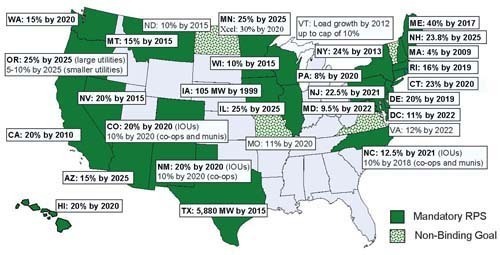
Elmer said long-term contracts will help the state reach its mandate to generate 16 percent of its electricity from renewable sources by 2019, and ensure that the goal is reached by actually using the electricity, rather than by selling offset permits.
But Dzykewicz said the governor would not support sending extra money to National Grid at a time when energy costs are rising. •