WASHINGTON – The nationwide Consumer Price Index for All Urban Consumers (CPI-U) rose a seasonally adjusted 0.2 percent last month, slowing from March’s 0.3-percent gain, as lower prices for other consumer goods helped offset a surge in food prices, the U.S. Department of Labor’s Bureau of Labor Statistics said today.
Analysts had expected the CPI-U to rise 0.3 percent in April, matching the March gain, based on the median forecast from a Bloomberg News survey of 77 economists. (Their estimates called for gains of 0.1 percent to 0.7 percent.)
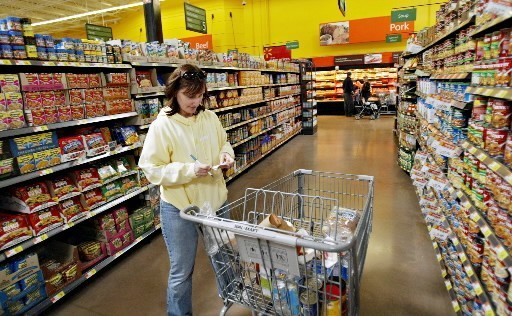
The food component of the CPI-U rose 0.9 percent last month, in what Bloomberg called its largest rise in 18 years, after rising 0.2 percent in March and 0.4 percent in February. The price index for food at home rose 1.5 percent in April, after rising 0.2 percent the month before.
The energy index was unchanged in April after surging 1.9 percent the month before. Increases in fuel oil (4.4 percent) and natural gas (4.8 percent) were partly offset by a decline in the price of gasoline, which fell 2 percent last month after seasonal adjustment – retreating from a March high that the BLS last month said “was 4.4 percent higher than its previous peak level, recorded in May 2007.” (READ MORE)
This month, however, the energy index is expected to resume its rise. Gasoline prices have risen steadily during May to a nationwide high of $3.71 per gallon in this week’s AAA fuel-price survey (READ MORE), while crude oil on the New York Mercantile Exchange yesterday touched a record $126.98 per barrel.
The CPI-U’s core index excluding food and energy rose 0.1 percent in April – lagging the survey’s projection of a 0.2-percent gain – after rising 0.2 percent in March. Higher expenses for transportation (+0.7 percent), shelter (+0.4 percent), recreation (+0.3 percent), education and communication (+0.3 percent), medical care (+0.1 percent) and other goods and services (+0.4 percent) were partially offset by a 1.3-percent decline in clothing costs, which fell for a second month in a row.
In the Northeast, the CPI-U rose to 230.038 points (December 1977 = 100) in April, an increase of 0.5 percent from the month before and 3.9 percent compared with April 2007.
Nationwide, compared with the same month a year ago, the CPI-U rose 3.9 percent in April to 214.823 points (1982 to 1984 = 100) after showing a 4.0-percent year-over-year gain in March. Energy prices rose 15.9 percent year-over-year, slowing from March’s 18.9-percent increase. Food prices nationwide rose 5.1 percent compared with a year ago, accelerating from the previous month’s 4.6-percent gain. The core CPI-U rose 2.3 percent, the same as in March.
“It does look like you’re starting to get some real improvement here,” Michael Feroli, an economist at JPMorgan Chase & Co. in New York, told Bloomberg News. “It’s good news for the Fed.”
Meanwhile, the BLS said in a separate report, U.S. production and nonsupervisory workers’ real earnings – average weekly earnings adjusted for inflation – rose 0.1 percent in April compared with the month before, after rising 0.2 percent in March. Compared with April 2007, average weekly earnings rose 3.1 percent – to $599.65 last month from $588.50 a year earlier – but real earnings adjusted for inflation fell 1.0 percent.
More information, including the full Consumer Price Index report, is available from the U.S. Department of Labor’s Bureau of Labor Statistics at www.bls.gov/cpi; the five-page Real Earnings report can be found at www.bls.gov/ces.