(Editor’s note: This is the 57th installment in a monthly series speaking with minority business owners and leaders. Each will be asked their views on minority-business conditions in the state and for ways to improve those businesses’ chances for success.)
When Middletown locals heard that one of their most beloved restaurants, and the town’s only place to get authentic barbecue, would be returning months after its longtime owner retired, the buzz was palpable.
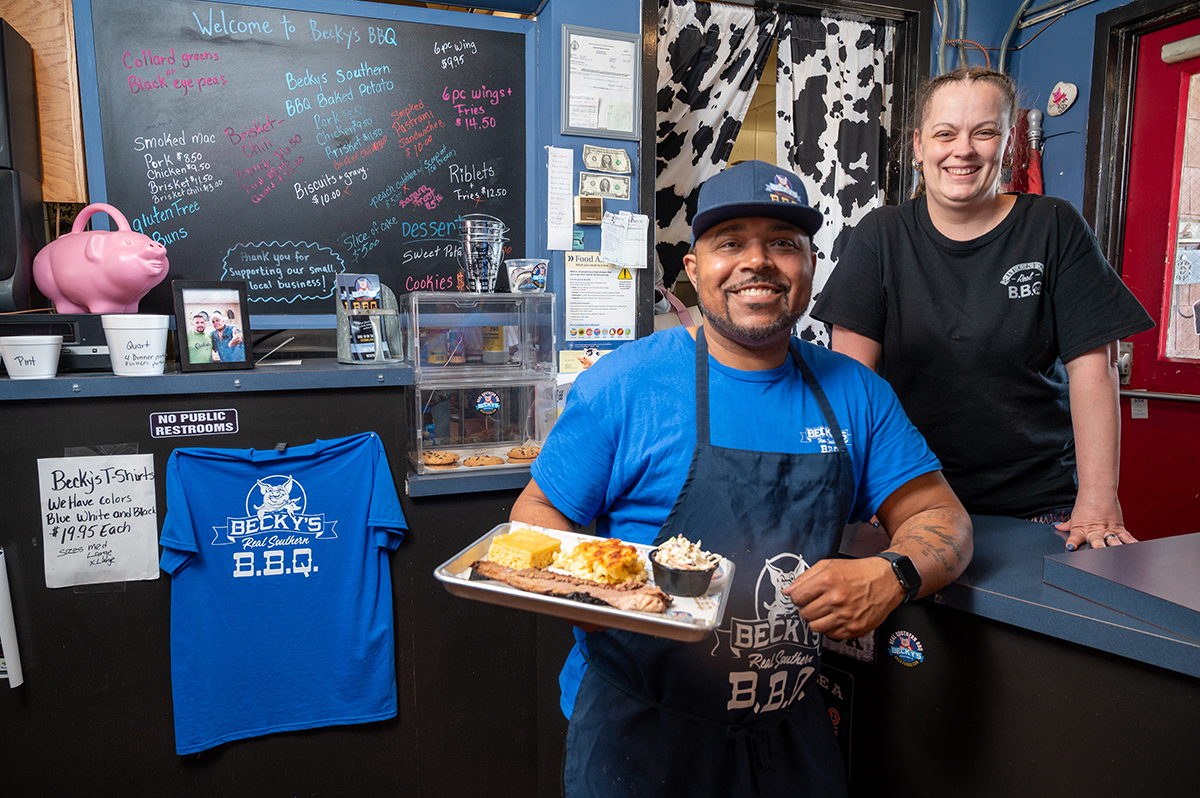
Michael Durrett Jr., an entrepreneur and chef, has breathed new life into Becky’s BBQ, ensuring the simple and homey smokehouse will continue into its third decade.
The proprietor of the popular Dashing Dan’s Cafe Car in Portsmouth , Durrett and his wife, Carolyn, purchased the Becky’s building and the name last year, reopening in August.
Hailing from Providence but now living in Bristol County, Mass., Durrett’s roots are in the Carolinas, a region with a rich cooking culture. Not only is the region one of a few that has a style of barbecue sauce named after it, but it’s also where knowing how to make traditional barbecue is as common as driving a car or tying your shoes.
Durrett’s story is one of resilience and transformation. A self-described “hothead” in his youth, he now emphasizes the importance of face-to-face interactions and owning your property. He also believes community engagement and authenticity are preferable to relying on institutional support, whether public or private.
“When I was really young, I was wild. I have a lot of friends who are now dead or in jail,” he said. “I remember telling them, ‘This is my plan, and I want you to be on the same page.’ A lot of them I had to cut out of my life. My friends now are people who own restaurants and businesses.”
The same can be true for anyone – regardless of racial background – looking to enter entrepreneurship in Rhode Island, he said.
There has been some interesting, though not necessarily hostile, interactions with customers popping in who were curious about the new ownership. Some longtime previous customers were skeptical of the change in direction, while other armchair barbecue experts questioned if Carolyn Durrett, who is white, was the one whipping up the dishes typically associated with African American culture.
In an age when many long-cherished eateries are closing shop or being bought out and converted, the next chapter of Becky’s shows that with some planning and investment, you can buck the trend.
Now, almost a year later, the consensus is that Becky’s is better than ever. There is still the pulled pork and brisket cooked low and slow overnight in simple smokers perched out back, but Durrett has expanded the menu with Southern staples such as collard greens, baked macaroni and cheese, and black-eyed peas – items that weren’t previously available.
Other additions include the additional seating planned in the back parking lot and an eventual beer and wine license. And “Big Mike’s” sauce is scattered on the tables and available for purchase. If all goes well, you may be seeing it in grocery stores.
Durrett is already on to another venture, an expansion next to the Comedy Connection in East Providence.
Now a successful businessman who owns several properties, Durrett has remained humble.
“I never forget where I come from,” he said.
1. Do you believe racism is keeping minorities from starting businesses in the Ocean State or succeeding when they do? No. It still exists, but there are ignorant people everywhere from all races. It’s all about how you present yourself. But I would say doing things face-to-face has always been my philosophy. Simply put, smile and interact with the customers and make every customer feel like family. Make people feel like they’re home.
2. How dependent is your business on the support of other minority groups? Is that a sustainable business model? We get customers from all around the world and from all different cultures. Becky’s had been in business for over 25 years. A lot of people were sad that it closed. But I do think there are more African Americans coming here now. Not to say that the previous version was basic, but I think a lot of people who appreciated soul food thought someone needed to spice it up.
3. What one thing could Rhode Island do to boost the odds for minority-owned business success? I haven’t really had to rely on any outside resources, but whatever the local cities and towns can do to make the permit process easier. I’ve owned businesses in different towns and it’s not always easy. They sometimes have different rules and regulations. And as I said, owning your property is vital, especially with the rents these days. Since the original Becky’s was a converted house, I am able to let my head chef and partner live in the apartment on the top floor here, which made it easier for him.
4. Have you had to turn somewhere other than a bank for a loan? Do you believe the state’s lending institutions generally treat minorities fairly? Honestly, I’ve owned other businesses and properties. Much of my capital was from my own savings. And now that I have equity, I can use some of that. So, I’ve never really used the bank to start any of my businesses. But, certainly, owning property rather than renting is important. I’ve always had that mindset.
5. If another minority entrepreneur asked where they could turn for support, where would you direct them? When I started the process to take over here, I went to Town Hall and talked to everyone there, and they were so excited. A lot of them were worried that it wasn’t going to reopen. They were really helpful and walked me through it. Introduce yourself. I’ve never been one to send a lawyer or someone else to speak for me.