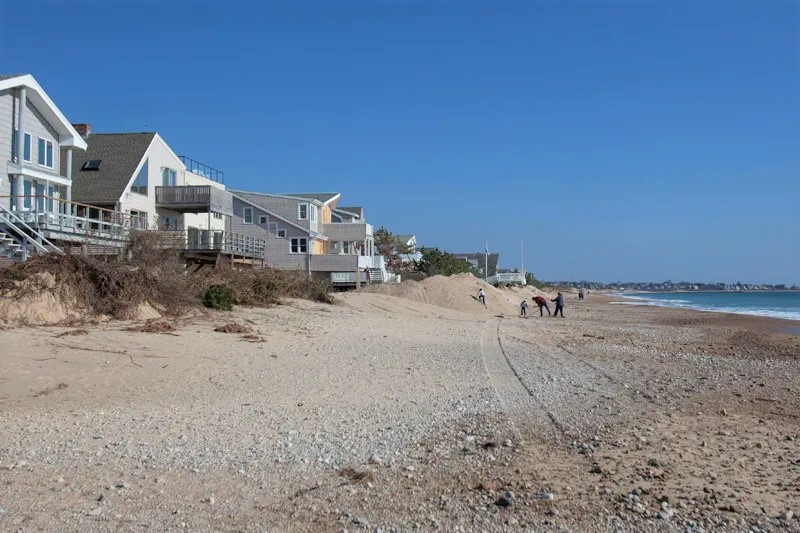
PROVIDENCE – A federal court has struck down a legal challenge to Rhode Island’s updated shoreline access law, preserving expanded public access to the state’s coastline.
The decision, filed on Tuesday, dismisses a lawsuit submitted by the Rhode Island Association of Coastal Taxpayers – a recent dispute in a debate that has cropped up throughout Rhode Island’s history.
ISO 9001:2026: A Practical Opportunity to Build for What’s Next
For Rhode Island manufacturers, ISO 9001 has been much more than a certificate on the…
Learn More
In June, Rhode Island adopted a law permitting public access to the shore up to 10 feet landward of the high tide line, as delineated by seaweed or other ocean debris. Previously, members of the public were typically allowed access to the waterfront up to the mean high tide line.
The update was applauded by shoreline access advocates, who say that the federal public trust doctrine, which Rhode Island also recognizes in its own constitution, requires the state to preserve public access to the shore. The old measurement, advocates argued, often placed the line underwater and did not provide meaningful access to Rhode Island’s beaches.
But RIACT, represented pro bono by the Sacramento-based Pacific Legal Foundation, alleged that the law illegally seizes private property without adequate compensation to landowners. The group filed its lawsuit in U.S. District Court in July, naming Coastal Resources Management Council Executive Director Jeffrey Willis; R.I. Department of Environmental Management Director Terrence Gray; and R.I. Attorney General Peter F. Neronha as defendants.
Neronha, Willis and Gray shortly afterward filed a motion to dismiss the lawsuit.
The federal court dismissed the lawsuit on the grounds that RIACT “seeks the wrong relief from the wrong defendants before the wrong court,” District Judge William E. Smith wrote in the decision, and therefore “lacks the requisite standing to sue.”
For the lawsuit to stand, RIACT would need to “show that the Defendants sued are the ones who acted wrongfully and are able to right the wrong specified in the complaint,” Smith said. Ad RIACT cannot sue the named officials or the state itself due to sovereign immunity established in the 11th Amendment to the Constitution, Smith noted.
Smith also rejected RIACT’s argument that the group of property owners “fears prosecution or citation if its members attempt to eject or dissuade people from encroaching on their property” under the updated shoreline access law.
“Dressing up the claim as a ‘fear of prosecution’ is like putting lipstick on a pig,” Smith wrote. “Standing cannot rest solely on speculation … and the court cannot grant
RIACT’s members a license to exclude would-be trespassers.”
Dave Breemer, a senior attorney for the Pacific Legal Foundation, said that the property owners’ group will continue to pursue other legal avenues. “RIACT is disappointed in this result, but its members will not give up their constitutional property rights and will now consider alternative legal options,” Breemer said in an email statement.
Pacific Legal Foundation did not immediately provide a comment to Providence Business News.
In a statement shared on Wednesday, Neronha said he is “grateful that the General Assembly codified Rhode Islanders’ constitutional rights to shoreline access into state law,” adding that his office “remains committed to protecting those rights against any legal challenge.”
(Update: Comment from RIACT added in 11th paragraph)
Jacquelyn Voghel is a PBN staff writer. You may reach her at Voghel@PBN.com.