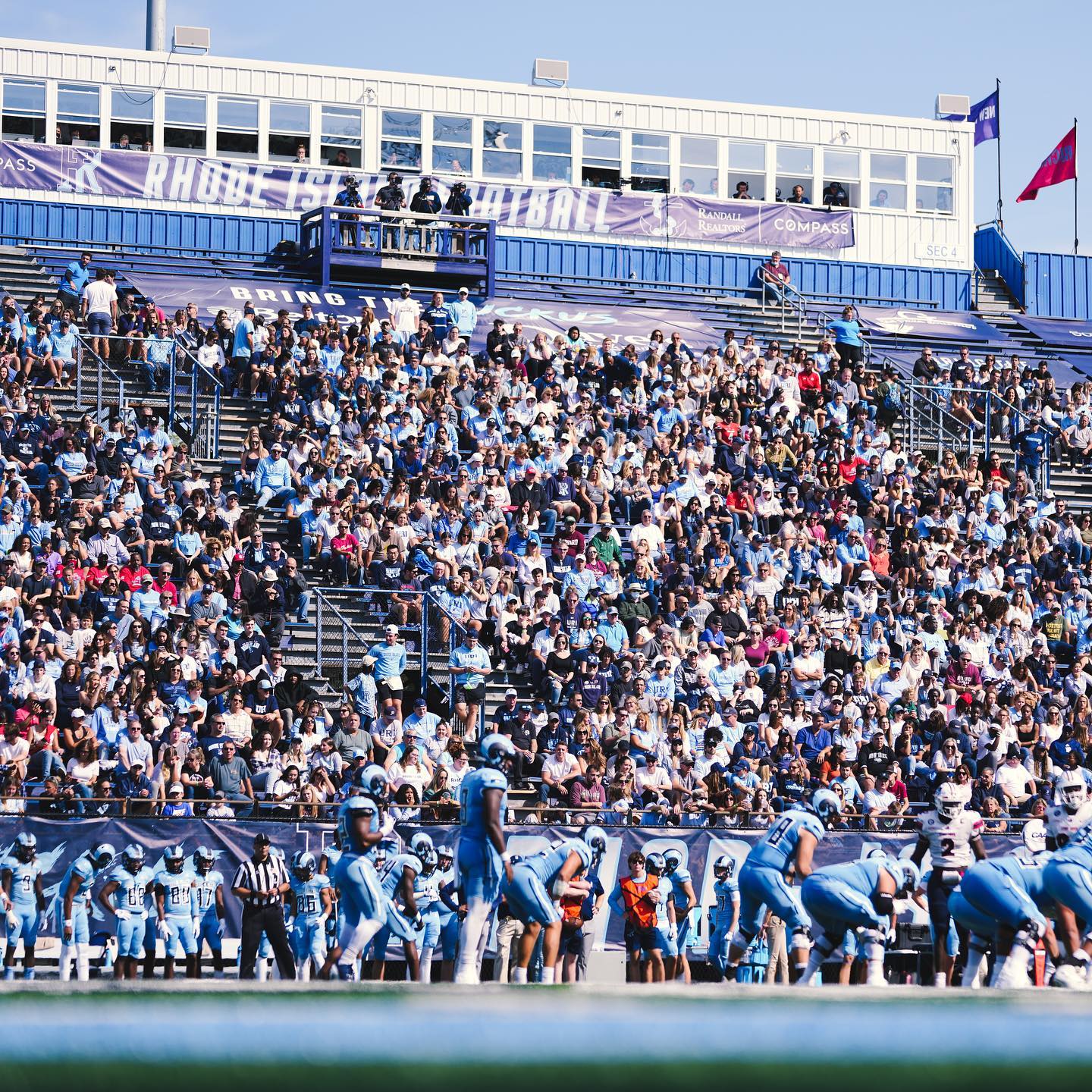
SOUTH KINGSTOWN – Thorr Bjorn is trying to look beyond the disrepair with some University of Rhode Island athletic fields, including Meade Stadium, for hope.
Bjorn, URI’s director of athletics, feels the on-campus athletic facilities once repaired or replaced could not only brighten up the university’s athletic climate, but also be a destination for non-university-led sporting events, such as high school state championships and the Special Olympics of Rhode Island. But that hope now comes with a high price tag, and URI is looking to get its wish in part for updated athletic facilities granted through this year’s state fiscal budget.
Rhode Island's Market Has Changed. Developers, Builders, Investors and Sellers Must Change With It.
By Emilio DiSpirito IV License Partner | Engel & Völkers Oceanside Leader | The DiSpirito…
Learn More
And, whether URI’s wish gets granted and how long it will take for the fields to be upgraded remains a question.
Even with URI receiving voter-approved bond support in recent years for projects, including the new $100 million bond for URI’s Narragansett Bay Campus, Gov. Daniel J. McKee said in an email to Providence Business News that there has been “historic underinvestment” at URI from the state. He is proposing in his budget this year $99.2 million in operating and capital investments for the university in fiscal year 2024, about a 30% increase from fiscal year 2021.
Additionally, McKee recommends $57 million from the Rhode Island Capital Plan Fund in fiscal year 2024 and $177.5 million in RICAP funding from fiscal year 2024 through fiscal year 2028.
McKee’s office said $43.3 million is recommended in this year’s budget to renovate Meade Stadium and the outdoor track and field. The governor’s office told PBN McKee recommends the state share at 80% and URI would contribute an additional $10.8 million.
Bjorn told PBN he’s “incredibly grateful” McKee and other elected officials saw the needs firsthand at URI and the university in the past did raise its own money for athletics. However, Bjorn said URI needs help from the state and is realistic that it will take time for the upgrades to be completed.
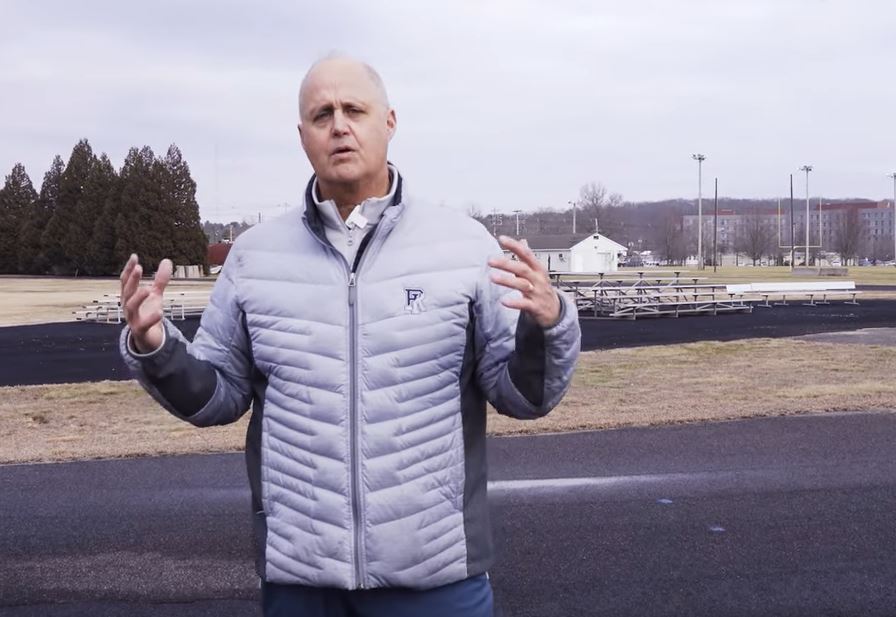
Meade Stadium, along with the soccer fields, outdoor track, softball and baseball fields on campus, will need about $82 million in repairs just to be “functional, not fancy,” Bjorn said. He said it is the same funding request URI President Marc B. Parlange made to the state last year. Bjorn highlighted most of those facilities problems in a YouTube video presentation for the university’s board of trustees in early April.
The biggest pending expense is Meade, which hosts URI football every fall. It’s expected to cost $42 million to both completely replace the 50-year-old stands and press box, as well as make it compliant with the Americans with Disabilities Act. Making the stadium ADA compliant is not just for fans attending games.
“Our media relations director [at URI] has cerebral palsy,” Bjorn said. “He cannot go up and down those stands; there’s no elevator. He’s walking away from doing his job this year … and not doing football because he said ‘I cannot get up and down the stairs anymore.’ That’s not right, and it’s just the reality we find ourselves today.”
The outdoor track, which is more than 30 years old and unusable for both team practice and events, will cost $12.1 million to fix. The pending baseball field upgrades are approximately $10.3 million, including installing new athletic turf; $7.3 million to improve the softball field, including a new press box; $6.2 million to renovate portions of the Tootell Aquatic Center; and $4.4 million to redo the soccer fields.
Other colleges, such as Bryant University and Providence College, have done capital campaigns seeking donations from alumni and the community on their own to improve current athletic facilities or build new ones. Bryant is slated to build a new on-campus arena for basketball and other events that is expected to be financed with “significant philanthropic investments,” according to Bryant officials.
When asked why the state should be the funding source to upgrade URI’s athletics facilities, Bjorn said financially supporting the on-campus sports facilities would be “no different” than any other state facilities, including the other university buildings on campus. He referenced similar-sized colleges, such as the University of New Hampshire, that received state monies for sports facilities.
Rep. Carol Hagan McEntee, D-South Kingstown, agrees that the state needs to assist with upgrading the facilities in question at URI. McEntee, a URI alum, toured the facilities on May 5 and noted Meade’s concession stands are “nonexistent.” She said URI brings in food trucks as concessions for football games, which doesn’t financially benefit the university or its athletics.
“If [URI] ran their own concession stands, they could be making some money off of whatever they are selling there,” McEntee said. The facilities’ current conditions could also deter potential student athletes from coming to URI when they “have an opportunity to go elsewhere” where the athletic facilities are in better shape, thus impacting enrollment at URI, McEntee said.
Bjorn acknowledged that URI has run some individual fundraising campaigns for athletic facilities on campus. They include raising $8 million to fully cover costs for its new Soloviev basketball practice complex and raised $3 million to renovate both the field turf and lights at Meade.
However, Bjorn said URI cannot solely cover the nearly nine-figure cost it is facing to upgrade Meade Stadium, the soccer fields, track, softball and baseball fields, and needs the state’s help. He said the university is having difficulty finding a benefactor to cover the eight-figure track renovation cost.
“Raising $3 million [for Meade] is great and wonderful,” Bjorn said. “But it’s $3 million out of a $42 million project. It’s hard to get there [on our own].”
Bjorn said URI is making its case to state officials and lawmakers by giving them tours of the facilities, showing them up close what they look like. He said he and URI officials will continue to give tours “if people want them,” including to more lawmakers, to help show URI’s need.
McEntee acknowledged that URI getting funding for the facilities is “the big question.” She does plan on addressing this matter with House Speaker K. Joseph Shekarchi, D-Warwick, at the Statehouse.
McKee’s office didn’t immediately respond how he plans to further make the case to the General Assembly for more funding for URI in addition to his budget request.
Plus, explaining to state officials about the prospects of hosting 6,000 fans at Meade for URI football again and to host high school championships again has been part of the university’s pitch to officials for state assistance, Bjorn said. He said the stadium hasn’t been feasible to hold thousands of fans in recent years due to its physical condition.
Bjorn said he wants to see at least a commitment from the state so that URI can plan for the needed renovations and construction projects, which will take a few years to fully realize – McEntee also feels a few years will be needed to fix the facilities. Plus, further delaying the upgrades will cause URI to fall behind in competing with other nearby colleges comparable to URI’s size and athletic status, Bjorn said.
“We’re not looking to do anything fancy or crazy. But when you look at our facilities, we’re in desperate need,” Bjorn said. “We’re not trying to compare ourselves with [Ohio State University or the University of Michigan]. We’re just trying to compete.”
James Bessette is the PBN special projects editor, and also covers the nonprofit and education sectors. You may reach him at Bessette@PBN.com. You may also follow him on Twitter at @James_Bessette.