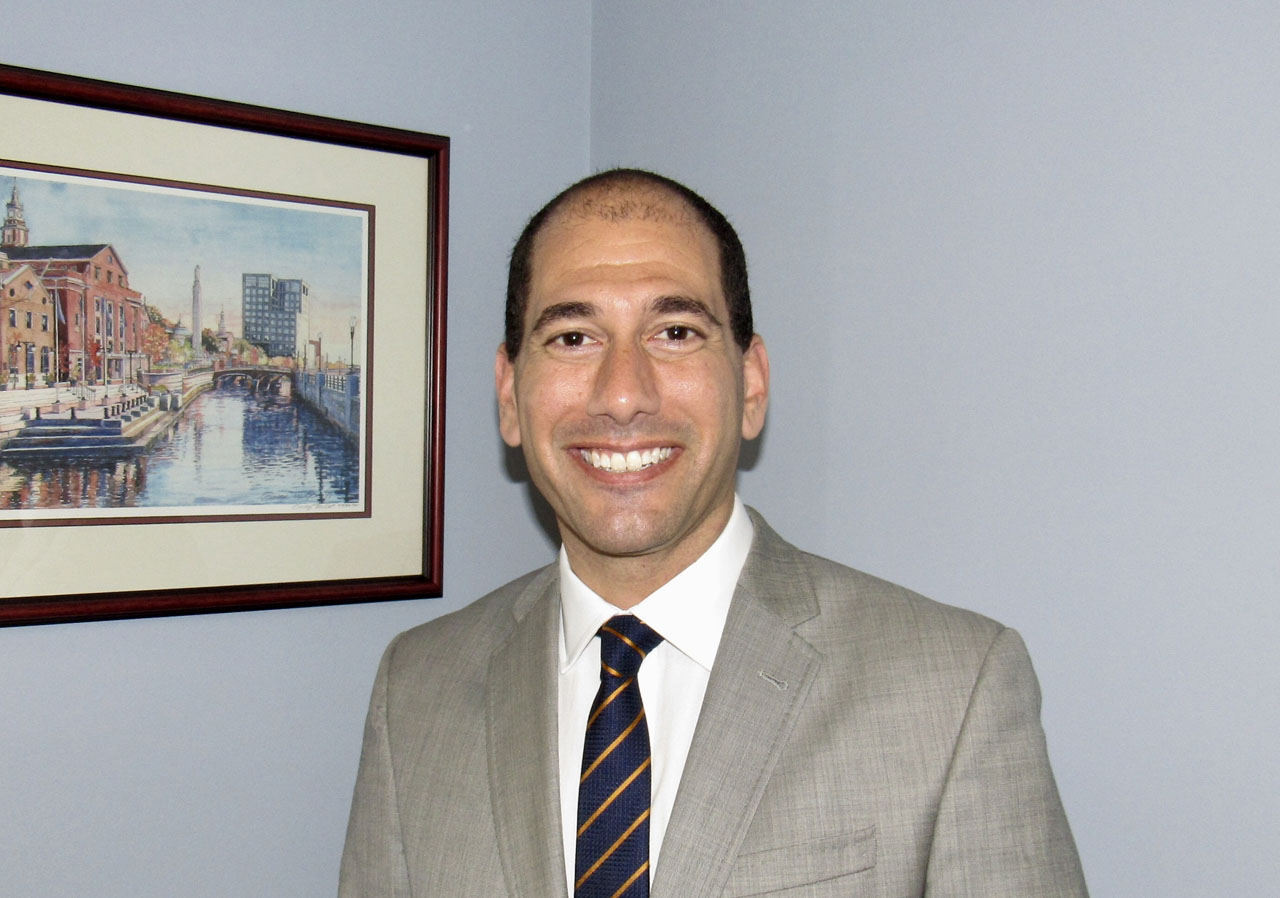
David Salvatore is a Providence City Councilman, representing a district that includes Elmhurst and Wanskuck. He’s also the government affairs director for the Rhode Island Association of Realtors. He responded recently to a Providence Business News request to provide the top five real estate-related bills considered by the General Assembly this year, as well as their status.
1. Real estate brokers and funds in escrow.
Building a Strong Data Foundation in the Age of AI
Artificial intelligence (AI) has become a key priority in the boardroom and across management —…
Learn More
This measure creates a statutory deadline for the timely release of funds held in escrow and will go into effect on Sept. 1. The consumer-friendly bill requires real estate brokers who hold deposits in escrow to release these funds within 10 calendar days once the buyer and seller have signed and delivered a release to the broker. The Rhode Island Association of Realtors asked the General Assembly to introduce this legislation. [House Bill] 5222/[Senate Bill] 168 is a proactive approach for consumers who may need their deposit to purchase a home, to pay expenses, etc.
Status: Signed by the governor. Effective date: Sept. 1.
2. Definition of a real estate broker or salesperson.
Legislation filed by the Rhode Island Association of Realtors, [House Bill] 5619/[Senate Bill] 0096, that defines the term “opinion of value” went into effect on July 6. Clarifying unclear language, the bill removes the term “appraises” in the Real Estate Brokers and Salespersons Law, so that consumers are not given the false impression that real estate brokers and salespersons may refer to a market analysis as an “appraisal” if they hold a real estate license. Furthermore, the bill clarifies the role of the Department of Business Regulation as the agency responsible for regulating all real estate to include residential and commercial property.
Status: Effective without governor’s signature. Effective date: July 6
3. Property tax fairness.
Effective Sept. 1, 2018, enabling legislation, [House Bill] 5570/[Senate Bill] 395, introduced by the Rhode Island Association of Realtors will provide for a proration of the homestead exemption in cases where title to property passes to those entitled to claim an exemption in six cities and towns (North Providence, Johnston, East Greenwich, East Providence, West Greenwich and Narragansett). Enabling these six cities and towns to enact local ordinances to reflect this change sends a message to taxpayers that fairness is vital to growing our local tax base and Rhode Island’s economy.
Status: Effective without governor’s signature. Effective date: Sept. 1, 2018
4. Broker education requirements.
Buying or selling a home or other real estate is often the largest investment a consumer will make in their lifetime. Real estate brokers are legally responsible for assisting prospective homebuyers, managing others who do this work and holding thousands of dollars of client deposits in an escrow account. That is why the Rhode Island Association of Realtors introduced legislation, [House Bill] 5532/[Senate Bill] 299, that removes the exception to qualification for a broker’s license previously granted to those with a baccalaureate in real estate. Since brokers are responsible for comprehending and applying Rhode Island real estate law in their daily business interactions, RIAR believes that practical experience cannot be substituted with a degree that does not meet the minimal standards of an experienced salesperson.
Status: Not passed. Senate Bill 299 placed on House calendar on June 30. House Bill 5532: House Committee recommended passage in concurrence on June 29.
5. Rights and obligations of property owners.
The Federal National Mortgage Association (Fannie Mae) will no longer back mortgages for homes on private roads or shared driveways unless a recorded covenant or perpetual road-maintenance agreement has been recorded or a state statute has been enacted to define how the costs of maintenance will be shared. Homeowners who have historically handled maintenance informally may learn only when they try to sell their home that the property cannot meet federal appraisal requirements. As a result, these homes are unsellable to any buyer who requires conventional financing. To address the issue, the Rhode Island Association of Realtors filed legislation, [House Bill] 5344/[Senate Bill] 235. The measure would create a formula for sharing the costs and maintenance of a private road or shared driveway if neither a legally enforceable agreement or covenant exists between property owners who benefit from the road. Connecticut resolved this issue by enacting similar legislation in 2014.
Status: Not passed. Housed, passed. Senate, held for further study.
Mary MacDonald is a PBN staff writer. Email her at MacDonald@PBN.com, or you can follow her on Twitter @MaryF_MacDonald.