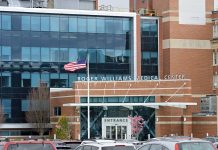
Dr. John Froehlich is program director of the Total Joint Center at The Miriam Hospital, which recently earned its second Gold Seal of Approval from The Joint Commission. A specialist in adult reconstructive surgery and sports medicine, Froehlich is involved in research on improving cartilage properties and the quality of joint replacements.
Froehlich, a clinical associate professor of orthopedics at the Warren Alpert Medical School of Brown University and on staff at Lifespan’s Rhode Island and The Miriam hospitals, talked with Providence Business News about the Total Joint Center’s Gold Seal of Approval and new trends in joint replacement.
Selling Luxury Real Estate Requires More Than Exposure
By Emilio DiSpirito IV License Partner | Private Office Advisor Engel & Völkers Oceanside www.DiSpiritoteam.com…
Learn More
PBN: How does The Joint Commission evaluate the Total Joint Center? What’s involved in the application and evaluation processes?
FROEHLICH: Preparation for this process is extensive. It involves documentation of comprehensive care plans and services for the patient, including preoperative, perioperative and postoperative components. Additionally, a two-day site visit is conducted where direct observation and queries of staff and patients are conducted.
PBN: How are joint centers that receive the Gold Seal of Approval different from those that don’t, and how do those differences impact patient care?
FROEHLICH: The Total Joint Center at The Miriam Hospital is one of only 32 programs in the country – and the only one in Rhode Island – to achieve this designation. This reflects a level of commitment and sophistication that other institutions typically cannot match. For patients, this translates into remarkably consistent results, including few complications, seamless care and better outcomes with shorter rehabilitation. In other words, patients seeking joint replacement should not only consider which doctor to perform their surgery, but which program to go to for care – namely, one that has demonstrated excellence in the eyes of national experts.
PBN: On an annual basis, what are the joint procedures most typically performed at the Total Joint Center, and how many of each are performed?
FROEHLICH: In 2016, the Total Joint Center did nearly 1,700 total joint procedures, including hip, knee and shoulder. The most common at the center and nationally is knee, accounting for about 55 percent, and about 33 percent are hips.
PBN: For the typical patient, which joint-replacement surgery has the most challenging or time-consuming rehabilitation process, and why?
FROEHLICH: Knee replacement is typically the most challenging recovery from a patient perspective, although all have unique features. For this very reason, we have worked very hard as an organization to provide each patient with a unique care plan. They learn what to expect in a preoperative education program and, with state-of-the-art pain-management techniques, most are able to get up the day of surgery and spend less time in the hospital with fewer complications. Because of this, we have also seen more and more patients go directly home with less need for inpatient rehabilitation.
PBN: Minimally invasive knee and hip replacements are routinely performed now. What new surgical advancements are coming and how do you anticipate their impact on surgical and rehabilitation procedures?
FROEHLICH: Although computer-assisted or robotic surgery has become popular at some centers, studies have failed to show improved outcomes with these techniques and they do carry much higher costs and have unique potential complications. Studies show that the best outcomes, not surprisingly, are achieved by surgeons who do large volumes of these procedures in a center dedicated to this effort. All of the physicians at the Total Joint Center are fellowship-trained and the Total Joint Center allows us to provide state-of-the-art care in a safe and cost-effective manner.
Nancy Kirsch is a PBN contributing writer.