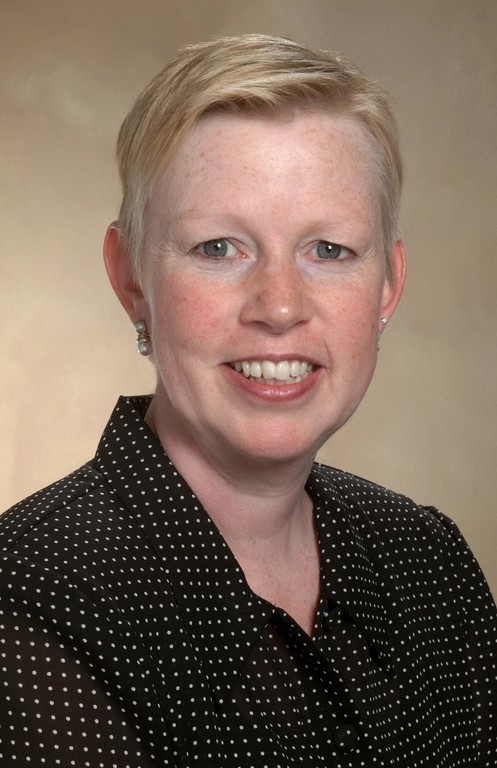
Dr. Patricia J. Flanagan is an expert in teenage parenting and adolescent medicine. She directs the Teens with Tots Clinic at Hasbro Children’s Hospital, an intervention clinic providing social and medical services for about 300 mothers under the age of 16 and their babies.
At the recent Rhode Island KIDS COUNT breakfast to celebrate the release of the 2011 factbook, which benchmarks the health and well being of Rhode Island’s children, Flanagan spoke briefly, praising the factbook as a valuable data resource.
Flanagan talked about an ongoing online dialogue she and her colleagues were having about the public professional responsibility of the medical profession to be an advocate.
Providence Business News asked Flanagan to share her insights into what she and her colleagues believe is the medical profession’s public responsibility.
PBN: At the recent KIDS COUNT breakfast, you talked about the importance of the “necessary politics of childhood health” and a doctor’s professional public responsibility? What does that mean?
FLANAGAN: There is a growing clarity of the connections between a child’s health and a child’s early environment and experiences. Research on early brain development over the past two decades has revealed that social deprivation, lack of language stimulation, and familial stress all impact child behavior, and that they do so through changes in the anatomy, the chemical receptors, and changes in the very physical characteristics of a child’s brain.
Such effects are long lasting, not only for the individual child in his or her life, but animal studies suggest that they may be changes that are heritable. Generational effects.
The “necessary politics of child health” refers to what I am coming to understand as a mandate for a public role for pediatricians. To improve child health, we need to address social determinants of health, the drivers of so much of what makes Rhode Island’s children healthy or unhealthy.
Our willingness and ability to work outside the traditional office or clinic to improve conditions and opportunities for children is really fundamental to being physicians for children and youth.
The public role of doctors is to look up from their day-to-day work and recognize the critical impact that environment and experience has on the health of kids. What we then do takes different forms in different practices. It may be taking a leadership role in a community task force or maybe addressing the PTO or town council on matters critical to child health. It may be writing to local newspapers. Perhaps testifying for our state legislators on behalf of issues critical to children. It’s recognizing that all the high-tech advances in medicine that help us rescue babies from the river are futile until we run upstream and figure out how to stop them from being thrown in the river to begin with.
Rhode Island's Market Has Changed. Developers, Builders, Investors and Sellers Must Change With It.
By Emilio DiSpirito IV License Partner | Engel & Völkers Oceanside Leader | The DiSpirito…
Learn More
PBN: In your work on the 2011 factbook, what stood out most for you? Which ones deserve the attention of policy makers and doctors?
FLANAGAN: /b> The data that always catches my eye pertains to teen pregnancy. I’m always amazed at the numbers. While the rates are the highest in New England, and much higher than they should be, we are still talking about manageable numbers for rich interventions.
In 2009, there were 160 births to teens under 18 in Providence. We could put them all in one room, [we could] know them by name if we chose to really focus our resources on mitigating the poor outcomes to these young girls and their children.
The data on racial and ethnic disparities is also compelling. [There are] stark differences in the health of Rhode Island’s minority children: preterm births, infant mortality, asthma, all of these health burdens are borne at much higher rates by minorities. Poverty is two and three times higher among blacks and Hispanics compared with white Rhode Islanders. The segregation of our schools and neighborhoods and its impact on opportunities for high quality education is drawn clearly in this data.
PBN: The keynote speaker at talked about the importance of pushing back the age of pregnancies to the mid-20s in order to help break the cycle of poverty. Do you think that this is realistic?
FLANAGAN: We can absolutely do a much better job at helping youth delay family formation until they are ready. There are basically three things youth need to prevent teen pregnancy. Youth need good information about sexuality and ways to prevent unintended consequences of sexual activity. For those who decide to become sexually active, they need access to safe, effective and reliable contraception. Thirdly, perhaps the most critical element, they need life opportunities, a sense of optimism, and dreams for a future that motivate them to delay childbearing.
Can it be done? Yes, there’s no question in my mind. Will it be done? At this critical juncture in our nation’s debate about the role of government and its obligation to better conditions for all of its citizens, our ability to get it done is threatened.
PBN: A new nurse visitation program, supported with federal funds, is now underway in Rhode Island to provide support for new young parents. How is that working?
FLANAGAN: The Nurse Family Partnership is an evidence-based approach that supports young low-income first-time mothers from the second trimester of pregnancy through the child’s second birthday.
It is built on a durable relationship that pairs young mothers and their infants with nurses who support the health and emotional needs of new moms. It’s new here, just coming up on its first-year mark but it has been very successful in engaging families. It is a critical program that invests early in vulnerable families and pays a big dividend by preventing second pregnancies, child abuse and neglect, and welfare dependency.
PBN: The state budget debate was positioned as a matter of choices by R.I. Senate President Paiva Weed. In terms of young children and young mothers, what kinds of resources are needed? What are the long-term consequences of not making those investments?
FLANAGAN: State budgets are moral documents. They tell the world what we value and what we care about. This is a tough year for budgets in Rhode Island. There is no question that we need to balance the state budget. But it is short sighted to do this by withdrawing support to children and especially to poor families with children. Investing programs like NPF and full-day kindergarten, addressing the racial and ethnic disparities in education and in health are important. Keeping RIte Care strong and fully funding the education formula are very important statements about our values and our commitment to Rhode Island’s future.