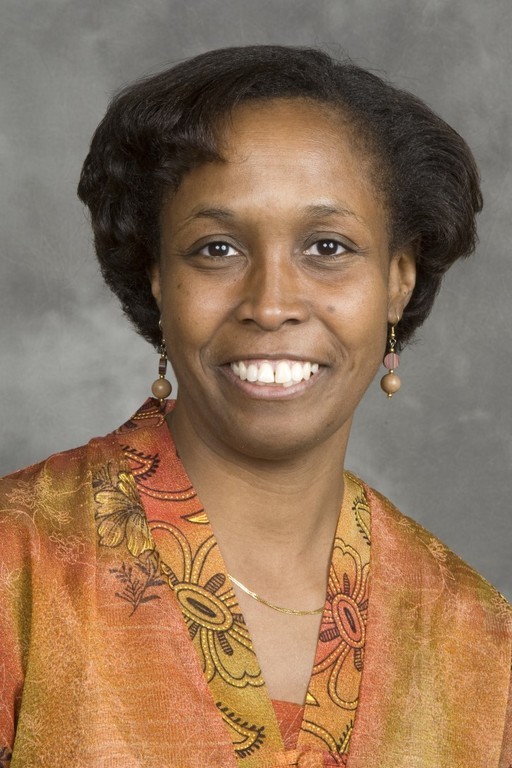
Dr. Emma M. Simmons has been named assistant dean for minority medical affairs at The Warren Alpert Medical School of Brown University. A family physician and public health researcher, she has a special interest in health disparities in minority populations. She also has extensive experience in medical education and in community work, in the United States and internationally, and she has won numerous awards.
Simmons spoke with Providence Business News about her new position at Brown.
PBN: What drew you to medicine in the first place?
SIMMONS: The perceived prestige and financial rewards – all the wrong reasons. [But] it did not take long for me to realize the opportunities that medicine really offers. Medicine literally can change a life for the better. I first realized it when I went for my pre-college physical examination with Dr. Robert “Bob” Smith. His down-to-earth style made me realize that individual prestige should not be the major factor at all, but rather how one could use the skills obtained from medicine to help those in need, on many levels. He taught me and spoke to me in a way that made me see the level of change that one can make as a physician.
A modernized health plan: Supporting cost management and the employee experience.
The Surest health plan came from a group of innovators wondering: What if health care…
Learn More
PBN: You have been teaching at Brown now for a decade, and have been recognized for teaching excellence. What do you seek to teach the next generation of physicians about the meaning of medicine, your values, and your view of your place in the community?
SIMMONS:Being a doctor is extremely powerful, and as a result you have a lot of responsibility affecting your patients and yourself. I try to instill values like empathy, humility and respect for patients, and skills like listening and problem-solving.
You can’t just simply write a prescription and expect that it will treat an illness unless you talk to the patient and become intimately involved with their life. … You treat the patient with arthritis so they can go to work and feed their family; treat the patient with depression so that they can get their child to school. …
Brown has evolved tremendously since my graduation; the curriculum has changed and become much more relevant and stimulating. Students are more interested and … are motivated to be involved in the community.
PBN: You’ve worked on health disparities issues in the United States and abroad. How serious a problem are health disparities in the United States?
SIMMONS: They are a big issue, as supported by research and my own experiences. The Institute of Medicine reports that health disparities amongst underrepresented minorities, particularly Latinos and African Americans, are pervasive and a real threat to our nation’s health. Socioeconomic and income factors are only part of the problem. We, as health care professionals, also have to take into account our own stigmas, biases and stereotypes. Awareness is the first step to rectify this, followed by institutional accountability.
PBN: What will be your priorities in your new position?
SIMMONS: My priorities are three fold: increase proportional diversity, increase cultural competence, and decrease health disparities. Having a diverse medical school population brings in lots of varying attitudes and skills. The more diverse we are, the better it is for the medical school as a whole. We become better equipped to improve health disparities and cultural competence. Having a diverse student body will not only provide benefits to our students, but also to the faculty and community at large.
PBN: How can your work at the national and international levels inform and enhance your work at Brown?
SIMMONS: By bringing my own personal experiences, those of my patients and my research experiences to the students. My visit to the Philippines was eye-opening. During my residency in a Central Falls community health center, my eyes were opened to the level of contribution that you can make as a doctor. It was my first experience with a predominantly Latino population who spoke almost exclusively Spanish. It showed me that poverty, disparities and needs comes in all shapes and forms. As a physician you realize that you can make such a huge difference with even a minor contribution.
I worked in the Mississippi Delta in Clarksdale from 1994 to 1996, a very poor community. I daily saw the meaning of social injustice. It is practically meaningless to write a prescription for a patient when they do not have the means to fill it, and do not have the money to buy the proper food to support the script. …
I loved working in community health. I would lay my head on the pillow at night thinking how grateful my patients were and appreciative of whatever help you were able to give to them. That’s the feeling I hope all my Brown students will have.