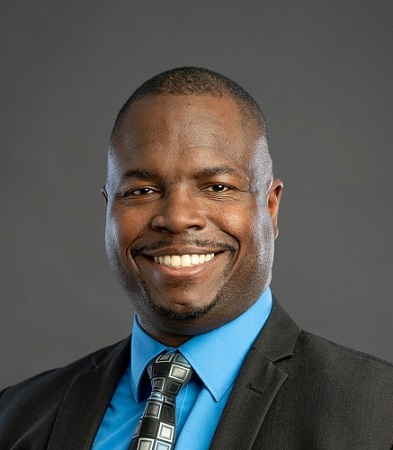
The Rhode Island Public Health Association recently announced it has named Dr. Larry Warner as its new president. Warner, chief impact and equity officer for United Way of Rhode Island Inc., will serve a two-year term as the health association’s president. He previously served as an officer on the association’s board. Warner is also chair of the Governor’s Council on Behavioral Health and has experience as a firefighter and emergency medical technician in Providence.
PBN: What are your priorities for your new role?
WARNER: There are two main priorities I have as president. First, I want to build on the successes of my predecessor by expanding our reach and strengthening our impact. This means engaging new community groups, forging strategic partnerships, increasing our visibility and voice, growing our membership, and ensuring our members find meaningful value in being part of RIPHA.
Second, I want to position RIPHA to be nimble and responsive in an evolving policy and fiscal landscape – both nationally and locally. While the leadership and work of agencies like the CDC [Centers for Disease Control and Prevention], NIH [National Institutes of Health], and HHS [U.S. Department of Health and Human Services] is important, so are the policies and budgets we advocate for here in Rhode Island.
Public health is shaped by decisions at every level, and I’m committed to working with our board, members and partners to champion policies and practices that contribute to healthier, safer and more-resilient communities.
PBN: Why did you want to lead the Rhode Island Public Health Association?
WARNER: I accepted the nomination for president because I believe in the power of collaboration to create healthier, more equitable communities. Public health is a team effort, and RIPHA brings together a diverse network – health care providers, community health workers, educators, advocates, researchers and students. And all play a role in shaping the policies, systems and environments that impact well-being.
I’ve had the privilege of working in emergency services, philanthropy, social services and academia, and I know meaningful progress happens when we bring together different perspectives and lived expertise. My role is not just to lead but to listen, connect and elevate the voices of those doing the work among our membership and the community.
I’m honored to build on the foundation laid by past presidents and board members, and am excited to foster new partnerships, deepen community engagement and ensure public health remains central to policy decisions in Rhode Island.
PBN: What are the greatest barriers to health equity you’ve noticed recently in Rhode Island?
WARNER: Health equity means making sure everyone has a fair chance to live a healthy life. While access to health care is important, most of what affects our health happens outside the doctor’s office. At the community level, things like high housing costs, lack of access to public transportation, limited access to fresh food, pollution and aging school buildings can all make it harder for people to stay healthy.
At the personal level, challenges like being isolated – especially for seniors, financial struggles, unstable or unsafe housing, and discrimination based on age, race, ethnicity, disability, sexual orientation, or gender identity can create major health obstacles. To achieve health equity, we need to work together across different sectors – health care, housing, transportation, education and beyond. By tackling the root causes of poor health, we can create stronger, healthier communities where everyone has the opportunity to thrive.
PBN: How do you plan to address those in your new role?
WARNER: Achieving health equity requires collaboration, advocacy and meaningful community engagement. As RIPHA president, I plan to help facilitate and strengthen partnerships across sectors, bringing together public health, health care, housing, transportation, education and others to identify and advocate for solutions that address the root causes of health disparities.
RIPHA advocates for policies that address the barriers I mentioned. We listen to and elevate the voice of residents and communities on what is needed to improve health outcomes. We share data and other information that help educate policymakers and community members. We partner with community-based organizations, colleges and universities, and government agencies in research.
Engaging more voices, especially those from historically underserved communities, will be a priority to ensure the policies we support reflect real community needs. By amplifying community-driven solutions and keeping health equity at the forefront of policy discussions, we can make progress toward a healthier, more just Rhode Island.
PBN: How do you see your new role with the Rhode Island Public Health Association intertwining with your other positions at United Way and the Governor’s Council on Behavioral Health?
WARNER: Each of these roles contributes to public health in unique but complementary ways. RIPHA focuses on advocacy, education, professional development and research to advance public health initiatives.
At United Way, our work spans direct services – such as 211, the Point, and SNAP [Supplemental Nutrition Assistance Program] outreach – as well as systems-level efforts in advocacy, convening, research, grantmaking, and leadership development. We collaborate with community organizations, government agencies, academic institutions, donors and other partners to address social determinants of health.
The Governor’s Council on Behavioral Health has a specific focus on mental health and substance use but intersects with many of the same agencies, advocates and community partners working on broader public health issues in Rhode Island.
Across all three roles, I engage in strategic planning, coalition-building, resource management and public-private partnerships. I’m grateful to be part of teams that share a commitment to creating a healthier, more equitable Rhode Island where everyone can thrive.
Katie Castellani is a PBN staff writer. You may contact her at Castellani@PBN.com.