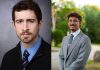
Hasbro Children’s Hospital recently named Dr. Rishi Lulla as its new chief of pediatric hematology and oncology. Lulla spent years as an attending physician in Chicago hospitals. He was also assistant professor of pediatrics at Northwestern University. Recently, Lulla was honored for outstanding dedication to pediatric neuro-oncology by the Pediatric Brain Tumor Foundation. Lulla spoke with Providence Business News about his career.
PBN: Your bio notes your research efforts to translate laboratory findings into novel treatments for children with brain and spinal cord tumors. Can you explain a little of your recent work in this area?
ISO 9001:2026: A Practical Opportunity to Build for What’s Next
For Rhode Island manufacturers, ISO 9001 has been much more than a certificate on the…
Learn More
LULLA: At the present time, I’m leading an international clinical trial for patients with an aggressive type of cancer called high-grade glioma. We are using a combination of two medications to target a specific mutation found in the tumor. This trial developed out of elegant work done in the lab demonstrating that cells with the mutation respond to the combination treatment.
This strategy has been successful in some other tumors with similar mutations, but our study will be the first to use it for children and young adults at the time of diagnosis of a high-grade glioma. Simultaneously, I’m involved in many collaborations to study tumor cells in the lab to find additional targets.
PBN: The Pediatric Brain Tumor Foundation has recognized your dedication to pediatric neuro-oncology. Please tell us about why this field is important to you.
LULLA: Over the past 30 years, we have made tremendous improvements in the outcomes for children and young adults with cancer, including those with brain and spinal cord tumors. In many cases, we are able to cure diseases that had previously been considered incurable. There are some diseases, however, in which progress has been stagnant and cures are uncommon – that is what drives me to keep working harder. I’m honored to be part of a community of providers, researchers and families focused on improving outcomes for our children.
PBN: What do you find the most exciting aspect of your work today?
LULLA: This is a very exciting time in cancer research. Our understanding of cancer biology has grown exponentially in the last few years and this is most notable in recent work done on rare pediatric brain tumors. Armed with this information and a variety of new treatment strategies, we are poised to make significant progress in cures for all children with cancer.
PBN: Can you share a recent story about your work that illustrates an underappreciated aspect among the general public?
LULLA: Despite the fact that 300,000 children are diagnosed with cancer each year in the world – one child every two minutes, funding for pediatric cancer research from the federal government is extremely limited and represents only about 4 to 5 percent of the annual research budget. Therefore, we rely on generous donors and foundations to support a vast majority of the work that we do to find new cures. Our community can do their part by helping us raise awareness and continue to lobby for increased funding.
PBN: What do you find the most surprising thing about your work?
LULLA: Simply put – resilience and dedication. First, I’m constantly humbled by the resilience of our patients and their families when they are facing a diagnosis of cancer or a serious blood disorder – it’s inspiring even in the most difficult situations. Second, I’m so proud to be working with an amazing team of individuals – they constantly surprise me with their dedication to our mission and our patients.
Rob Borkowski is a PBN contributing writer.