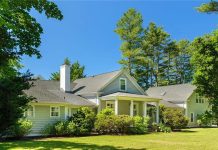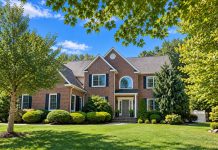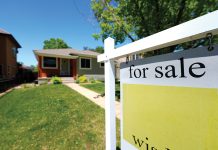
Sam Glicksman is a broker associate with Mott & Chace Sotheby’s International Realty in Providence and has an unusual listing. A single-family home, renovated to achieve LEED platinum designation, is thought to be the first single-family house renovation in Providence to reach that threshold. The house, built in 1917, is listed for $950,000 and has three bedrooms and four bathrooms.
PBN: The house at 509 Wayland Ave. in Providence is designated LEED platinum. How hard will it be to market such an unusual property and does this designation carry any particular value?
ISO 9001:2026: A Practical Opportunity to Build for What’s Next
For Rhode Island manufacturers, ISO 9001 has been much more than a certificate on the…
Learn More
GLICKSMAN: My biggest goal in putting together a marketing plan for this property was making sure awareness of the listing extended outside our local market to areas where LEED has more of a presence, such as Greater Boston and Connecticut. I knew our marketing department at Mott & Chace Sotheby’s International would make that happen through our targeted social media and print advertising.
Since the company blankets these areas with brand marketing through various veins, I am confident that the property will get ample exposure. Also, the curiosity factor doesn’t hurt. Since we are marketing the home as LEED certified, even people who don’t know what it means are intrigued.
My only marketing concern was highlighting the second “E” in LEED, Leadership in Energy and Environmental Design, so people realize LEED is multifaceted and not just about efficiency. Indoor environmental quality was a major concern in the design of the house. All the finishes are low to zero [volatile organic compounds]. All combustion appliances are direct vented, and the air exchange filtration is near hospital grade. I cannot think of anything more important than living in a “healthy home.”
In Massachusetts, a home with an LEED certification definitely sold at a premium versus just a “green build.” An LEED certification is third-party verified and follows a standardized rating system, so there is a consistency in what you are buying. Any builder can call their house “green,” only with the certification from the U.S. Green Building Council can you have an LEED house.
PBN: Describe what makes the house energy efficient.
GLICKSMAN: The windows, doors, lighting, appliances and [heating, ventilation, air conditioning] system all meet or exceed the highest Energy Star ratings, and the insulation uses a mix of closed- and open-cell, high-R value spray foam to seal the home. The hot water heater is a hybrid system of direct and indirect power, complimented by a PowerPipe drain recovery system to preheat that water.
PBN: What will this mean for energy bills going forward, and is that part of the sales package that it’s going to be low cost to maintain?
GLICKSMAN: The numbers speak for themselves. 509 Wayland Ave. is a 3,000-square-foot home. Last year’s heating bill was $1,400 and the average monthly electric bill was $35. These are usually heating and cooling bills associated with a home half its size.
PBN: How did you get the listing?
GLICKSMAN: My former business partner, Heather, and I sold the seller’s last home and helped her with the purchase of this home. She was very happy with our work and called me when she decided it was time to sell this one.
PBN: How much interest has the designation generated, as opposed to the location on Providence’s East Side, which in itself attracts buyers?
GLICKSMAN: The house is in Freeman Plat, one of the more-desirable locations on the East Side, and essentially, it is a brand-new home. The builder did first-class work, so that did attract a number of buyers. Furthermore, Rhode Island has been at the forefront of green building requirements, and environmental issues are becoming increasingly important to people.
This, in addition to the number of people who have watched this project as it developed with the LEED sign in front of the home, which has also sparked interest, have provided about 50 percent of the potential buyers. On top of this, another requirement toward obtaining the LEED designation is educating the public, and the builder did an excellent job. I am trying to build on that.
Mary MacDonald is a staff writer for the PBN. Contact her at macdonald@pbn.com.