The Flynn Kids, a collection of first through fifth-grade performance arts students at the Edmund Flynn Elementary School in Providence, delivered an invaluable and moving lesson last Monday morning. In short, that they are capable of great things and that it is the adults — not the children — who must ensure that resources are in place and that those resources are being used properly.
Singing a series of show tunes from the 1940s, the children demonstrated to about 100 adults that with hard work and lots of practice, it’s possible to hone talents that may otherwise have gone unnoticed — and unappreciated.
Your Business Has Gone Global. Has Your Insurance?
A decade ago, “doing business internationally” was mostly a large-company concern. Today, a manufacturer in…
Learn More
The Flynn Kids are an impressive bunch. Their next gig is set for this Sunday at the White House. One Flynn Kid, fourth-grader Nick Francis, was selected to perform in “Showboat” at the Providence Performing Arts Center. Another has landed a role in “A Christmas Carol” at Trinity.
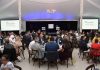
Monday’s performance came at the Providence Children’s Museum during a forum sponsored by Health & Education Leadership for Providence (HELP) and Rhode Island KIDS COUNT. The audience was made up of about 100 adults — most of them educators, health care leaders, politicians and social service professionals. As the children sang, audience members smiled — and smiled. If their mission was at all clouded beforehand, it was now crystal clear.
HELP is a community partnership of colleges and hospitals, including: Brown University; Butler Hospital; Johnson & Wales University; The Miriam Hospital; Providence College; Rhode Island Hospital; Rhode Island School of Design; Roger Williams Medical Center; St. Joseph Hospital for Specialty Care; and Women & Infants’ Hospital.
HELP was established in 1994 because the institutions involved “shared the belief that a collective, policy-oriented effort would add depth to the spectrum of community service activities already under way at each.”
In recent weeks, HELP has been using its clout to aggressively attack the city’s lead paint problem. HELP has established the Lead Safe Center at St. Joseph Hospital for Specialty Care on Broad Street in Providence. The Lead Safe Center is a resource center for lead education, lead-safe housing information, and policy/advocacy initiatives to prevent lead poisoning.
Since its inception, HELP has played a critical role in bettering the lives of urban youth. HELP has contributed $3.75 million in direct funding for programs that benefit the children of Providence — and leveraged $2 million in additional support from its member institutions, private foundations, and government grants.
HELP has established a successful school-based dental program, and has also created a series of professional development programs.
Monday’s forum, “Health and Education Partnerships for Young Children,” was part of a program convened by the Harvard University School of Public Health and the Centers for Disease Control. Rhode Island is one of only seven states to be invited by Harvard University to host the leadership forum. The idea was to get health care, education, political and social leaders together to discuss ways of reinforcing a collaborative approach to making the lives of children better.
The performance by the Flynn Kids provided a fitting segue for Peter McWalters, commissioner of the Rhode Island Department of Elementary and Secondary Education, who introduced a panel discussion. “Pick out the one who you think ‘can’t do it’,” he said. And the audience, who had just given the students and their teacher, Abigail Mills, a pair of standing ovations, got the point.
The discussion that followed was a lively one. Mostly it was about the importance of working together. Everyone seemed to agree that the responsibility for the well being of children falls to adults. And that schools must be used as a central point at which contact is made and services our delivered.
McWalters reminded the audience that in most cases, for example, young girls don’t get pregnant and drop out of school, “they drop out of an insensitive system and then get pregnant.”
There was some talk that more of an effort must be made to lobby at the Rhode Island General Assembly for programs that benefit children. Christine C. Ferguson, director of the Rhode Island Department of Human Services, agreed, but added that lobbying efforts in the past have been missing a critical element.
“If groups of suits would accompany the groups of skirts at the legislature,” she said.
Several lawmakers attended the forum. Sen. Thomas J. Izzo (D-Cranston) said work needs to be done in terms of building community consensus. Look how long it has taken, he said, to get any kind of breakfast program into public schools.
“That’s a no-brainer,” said Izzo.
Rep. Paul V. Sherlock (D-Warwick) said that leaders must avoid making the same mistakes over again in their attempts to address problems. And a lack of funding, he said, can no longer be used as an excuse to allow problems to linger.
“We have to access the minds of our children, regardless of our real estate,” said Sherlock. “We may have to re-deploy our folks. It is not the children’s failure — it is our failure.”
The business community was a big part of the dialogue. The economy, pointed out Rep. Nancy L. Benoit (D-Woonsocket), plays a critical role in the development of children.
“The reason kids are poor is because they live in poor families,” she said. “We have to raise economic levels.”
Christopher F. Koller, chief executive officer of Neighborhood Health Plan of Rhode Island, said educators and social service professionals need to learn from the successes of the business community.
“What is the business sector really good at,” he asked? “They’re good at identifying wants and making them needs.”
Steven D. Baron, president of Lifespan, Rhode Island and vice chairman of HELP, points to the health care industry as an example of the critical need for collaborative efforts. There are no longer margins, said Baron, only increased responsibilities.
“Health care is under an incredible challenge,” he said, “Never once did we believe we could do it ourselves.”
And that holds true for discussing the health and well being of our children, he said.
“We can not look away from the future of our children — they are our future,” Baron said.