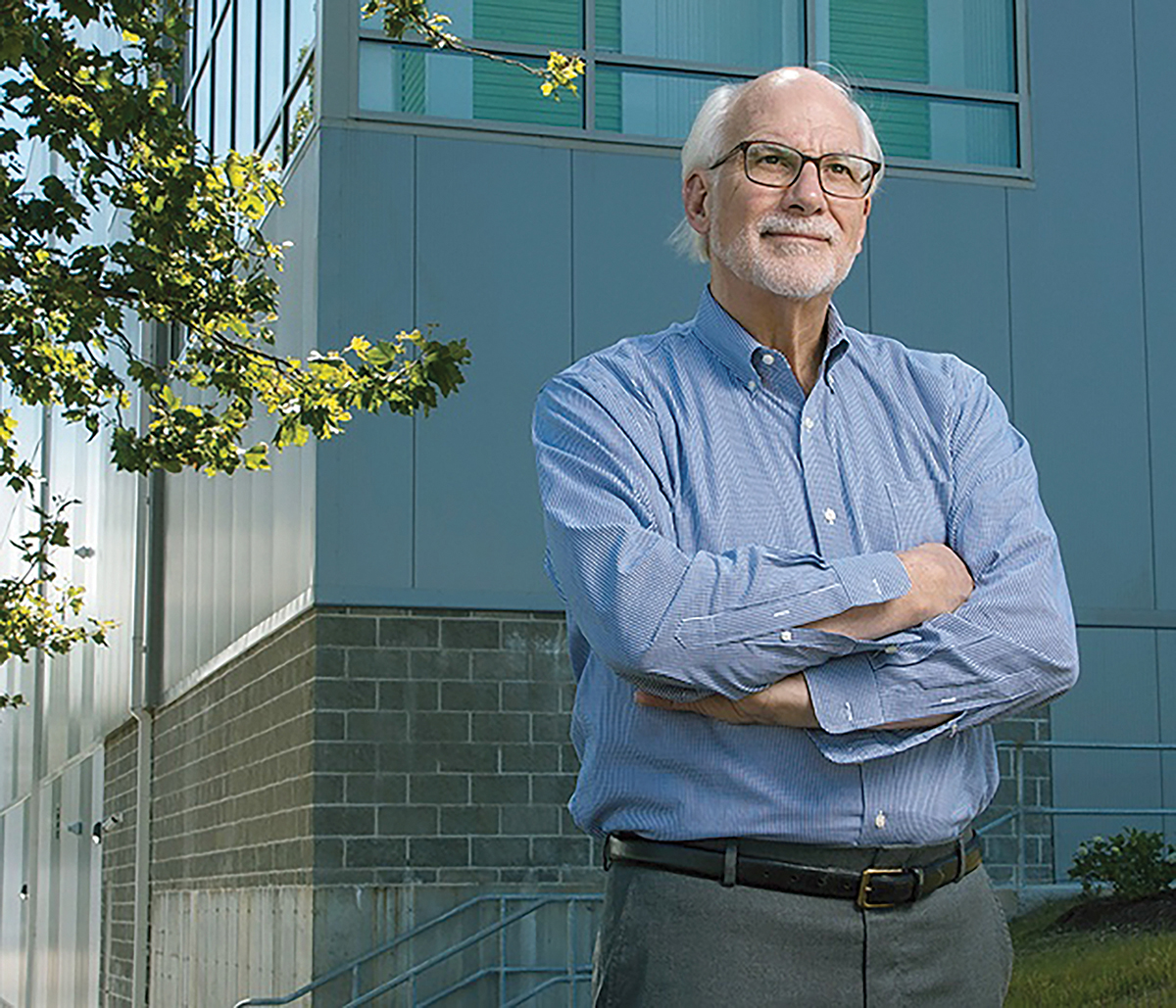
RICHARD GODFREY, the former longtime R.I. Housing and Mortgage Finance Corp. executive director, was recently appointed the new board chairperson of Sojourner House. Godfrey succeeds Kersti Yllö, who served on Sojourner House’s board since 2017. Godfrey, who led R.I. Housing from 1993 through 2015, brings significant knowledge in housing assistance programs and affordable-housing development to the board, which he’s served on since 2021. Godfrey is also a former executive director of Roger Williams University’s multidisciplinary Real Estate Program.
What will be your first order of business as Sojourner House’s board chair? My primary goal is to continue the outstanding leadership of Executive Director Vanessa Volz; our prior board chairperson, Kersti Yllö; and the entire board, including all of the committees. … The work that the Sojourner staff undertakes every day requires special skills, patience and training, and is emotionally challenging. Our role as a board is to support staff in those tasks, promote and defend the Sojourner House mission, and seek to increase alternative sources of funding.
In what way will housing be a component in Sojourner House further supporting victims? Will the organization support new housing initiatives? At Sojourner House, housing is at the core of our mission to support victims of domestic violence, sexual assault and human trafficking. Without safe, stable housing, it’s nearly impossible for survivors to begin rebuilding their lives.
We currently operate a wide range of housing programs, from emergency shelter to long-term permanent supportive housing, and are actively working to acquire additional properties and create new apartments to meet the increasing need.
What is the biggest need for domestic violence survivors and how will the organization respond to that? Aside from housing, the greatest challenge facing survivors today is access to comprehensive, long-term support. While emergency services remain essential, survivors often need more than a short-term intervention to help them rebuild their lives. They often need an extended period of clinical counseling, legal advocacy, child care, job training and case management. At Sojourner House, we continue to grow holistic, trauma-informed programs that meet survivors where they are and support them every step of the way.
Is Sojourner House concerned about federal funding? If so, how will the organization find new avenues to bring in money to support its mission? We’re deeply concerned about the future of federal funding, especially since almost 80% of our current budget comes from federal sources.
In response, Sojourner House is doubling down on diversifying our funding. We’re expanding our individual giving program, engaging more deeply with private foundations, strategically acquiring more property, launching advocacy efforts to secure more consistent state-level funding, and exploring fee-for-service models where appropriate.