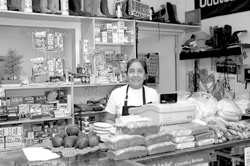
Guatemala Bakery
Owners: Carlos Gomez and Willi Gomez
Type of Business: Bakery specializing in Guatemalan bread, cakes and
pastries
For Leaders Who Don't Have Time to Get Sick
Top performers guard their calendars, delegate relentlessly and optimize every hour of the day. Health,…
Learn More
Location: 241 Union Ave., Providence
Year Founded: 2001
Employees: Six
Annual Revenue: WND
After years of moving around throughout the United States, Carlos Gomez returned
to Rhode Island and decided to take an idea he had long had for a bakery and
make it reality. Money and the risks that come with starting a new business
had prevented him from trying his luck earlier.
“Things were just different when I came back,” Gomez said. “The timing felt Gomez, who opened Guatemala Bakery almost three years ago with his nephew The bakery was also able to retain two employees and will be hiring three About four months ago, the Gomezs were concerned they might have to leave “Assisting the Guatemala Bakery through the Small Business Loan Fund is great Carlos Gomez was born in Guatemala and moved to the United States in 1988, He and Willi started renting space out of an empty storefront on Union Avenue, All of the bakery’s goods are made from family recipes. Beyond breads, cakes Gomez said the difference between his operation and some others that have Gomez said the bakery sees a diverse group of customers through the course “Our customers are hard-working people, just like us,” said Gomez, whose employees “They reflect us and we reflect them,” he said. The bakery is open seven days a week, from around 6 a.m. to 10:30 p.m., and “I didn’t know what to expect when we opened,” Gomez said. “There were three
right. There are a lot of opportunities here if you work hard.”
Willi, received a $25,000 loan through the Small Business Loan Fund of the Rhode
Island Economic Development Corporation in May. Working through the Urban Enterprise
Equity Fund, in participation with Coastway Credit Union, the money will be
used for moving expenses and working capital, possibly to put a new façade on
the bakery and purchase some new equipment.
additional people.
their location at 241 Union Ave. in Providence and decided to purchase their
own building at 410 Cranston St. They are still hard at work rehabbing the two-story
structure (apartments located on the top floor and a parking lot on the side)
to open a Guatemala Mini Mart and are in negotiations to purchase outright their
original location. The two locations will share staff.
economic development,” said Michael McMahon, executive director of RIEDC. “Carlos
and Willi Gomez are growing jobs and improving the community, so we are thrilled
to play a small part in their success. People often think of the Economic Development
Corporation as serving only the needs of big business, but the reality is we
spend most of our time working with entrepreneurs such as Carlos and Willi.”
where he lived in New York with an uncle before heading north to Rhode Island.
After a few years of working as a line cook in various restaurants, Gomez spent
about six years in Texas before deciding to return to Rhode Island with the
idea for a bakery he had been carrying around for several years.
which had formerly housed a computer repair shop and began buying the ovens,
cases, stove and fixtures needed to get the place running. After offering just
bread and food at the beginning, the bakery began adding groceries over the
years and customers can now find spices, special pastas, beans and pickled fruits
that arrive from retail sellers who export the items from Guatemala.
and pastries, they also sell foods that are ready-to-go meals, like enchiladas,
tamales and other Guatemalan appetizers.
failed over the years comes down to the quality of the product. He stresses
that none of the recipes have been changed from Guatemala and only high-quality
ingredients are used in making the goods. Gomez, his nephew and another worker
rotate the store’s opening shift from week to week, with the first man arriving
around 5:30 a.m. to begin baking.
of a day, from families picking up staples to single workers stopping in during
their lunch hour. He’d like to add another story to the 1,000-square-foot bakery,
possibly to hold a small room for family reunions and other functions.
are other family members (he has three brothers living in the state, along with
a handful of nieces and nephews). Gomez only recently saw his own hours at the
bakery drop from 60 or 70 hours a week since being able to take on the additional
staff.
doesn’t close for holidays.
or four other bakeries and no one knew if the people would ever start coming.
Sometimes, there would be only two or three customers a day. … Now everyone
knows we are here. God has blessed us.”