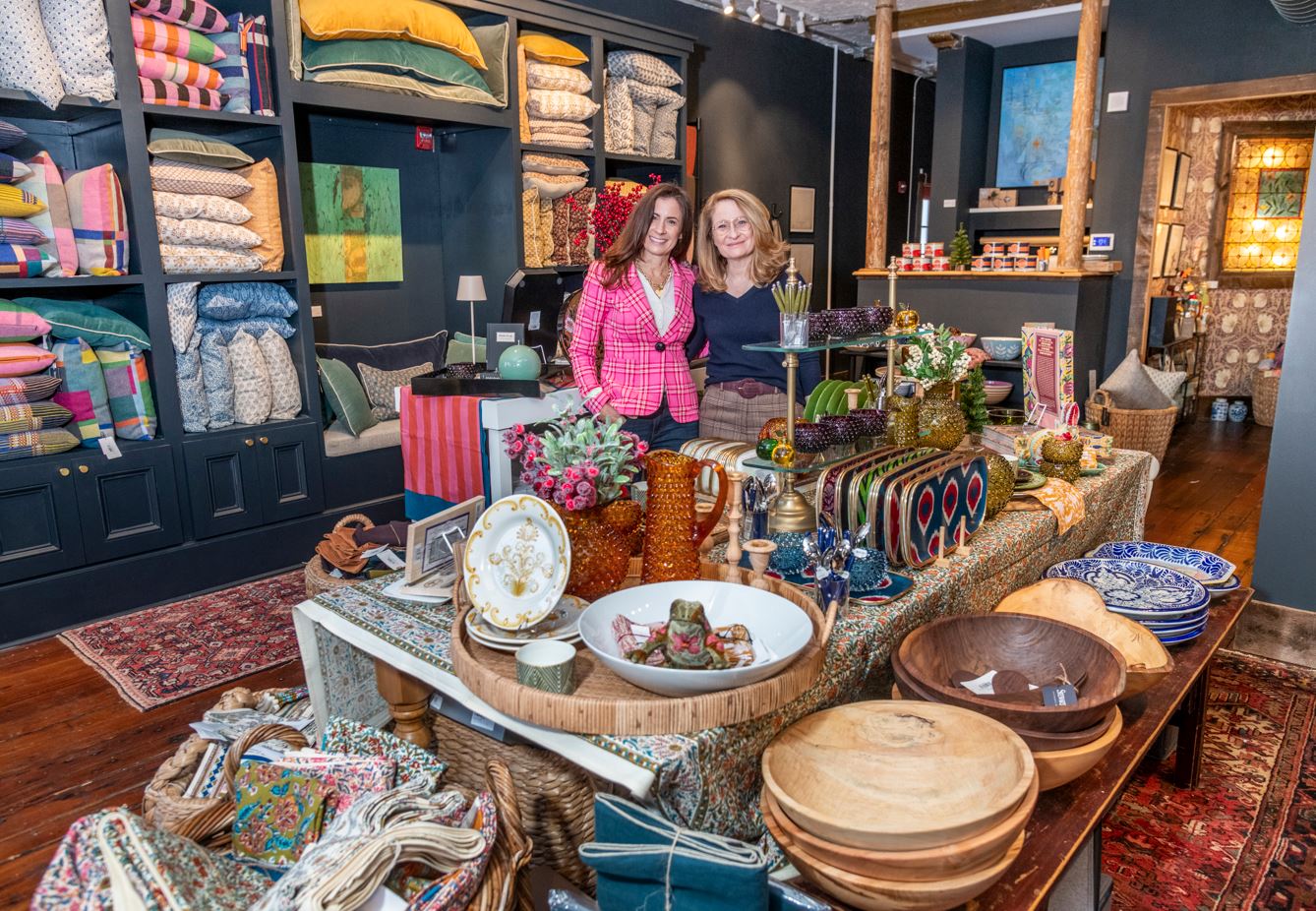
With this year’s holiday shopping season already surging despite economic uncertainty, local businesses are looking to personalized customer service and an online presence that stands out in an increasingly competitive shopping landscape.
Amid economic anxiety, consumers aren’t slowing down when it comes to holiday spending. The National Retail Federation has reported that a record-breaking 202.9 million consumers shopped throughout the five-day weekend of Thanksgiving through Cyber Monday, up from 197 million consumers a year ago.
Rhode Island's Market Has Changed. Developers, Builders, Investors and Sellers Must Change With It.
By Emilio DiSpirito IV License Partner | Engel & Völkers Oceanside Leader | The DiSpirito…
Learn More
With seasonal sales on an upswing since 2021, hitting the $1 trillion mark this holiday season feels like an inevitability, said Kristine Regine, assistant professor in Rhode Island College’s Department of Management and Marketing.
Still, the enormity of the figure is “mind-boggling to even think of,” she said.
Online shopping rates increased year-over-year by 9%, while in-person shopping increased by 3%, according to the NRF data.
But while online shopping saw a particular surge, businesses large and small are by no means forsaking in-person sales, Regine said.
Rather, they’re offering services to tempt customers into their brick-and-mortar locations, such as in-store pickup of online orders or other offerings “that make consumers feel special,” such as the availability of personal shopping assistants, Regine said.
For local retailers in particular, “creating community is a really critical piece,” Regine added.
Karen Deutsch, co-owner of Stewart House home goods shop on Hope Street in Providence, knows this phenomenon well.
A small business is “not just where [people] go to buy things,” Deutsch said. “It’s where they go to meet up with friends, they know the shop owner, they discuss their lives … It’s very much what a small town or a small city gets its identity from.”
Recently, Deutsch and her sister, Ellen Deutsch, hopped on a video call with a customer, who led a tour of her new house and asked for their help picking out furnishings and decor.
It’s this type of personalized service and relationship-building that helps small businesses stand out in a landscape where at big-box stores, “every day has been a Black Friday sale,” Deutsch said. “Small businesses can’t really afford to do that.”
With more customers using artificial intelligence chatbots to brainstorm gift ideas and seek the best deals and discount codes, Regine said, the businesses that thrive are putting effort into a strong digital storefront and search engine optimization, even if most of their sales are in-person.
“It’s not that small businesses can’t partake, can’t go against the big stores,” Regine said. “But they’ve probably had to refresh their websites … to make sure people can find them by putting [keywords] in their search bars.”
At Stewart House, the sisters curate a selection of goods from around the world and try to promote unique offerings through their e-commerce website.
“Our approach is to carry things that people in California or Oregon or anywhere in the country can have shipped from Stewart House,” Deutsch said. “I feel like if you carry things from [Amazon.com], that’s a losing battle. You’re never going to keep up with those prices.”
Like other businesses, Stewart House is also navigating the impact of rapidly shifting tariffs, which often lead to sales that were comparable or better than last year’s numbers, but lead to lower profit margins for retailers.
Larger stores are also reacting to these trends. At the Warwick Mall, strategic adaptations resulted in a Thanksgiving weekend that included “probably the best days we’ve had since well before COVID,” said Domenic Schiavone, the mall general manager.
The mall’s big-box retailers, such as JCPenney, Macy’s Inc. and Target Corp., anticipated customers’ financial anxiety and adjusted prices, Schiavone said, and many of the mall’s tenants reported sales that far exceeded their goals.
The mall’s longstanding strategy of including small, locally owned stores among its tenants also plays a role in attracting customers, Schiavone said.
“We were very intentional this year in recruiting and trying to find local businesses and services,” Schiavone said. “The customers have really responded to that.”
And, although consumers tend to prioritize holiday gift shopping even when finances are tight, anxiety looms among buyers amid ever-increasing cost of living expenses and talks of recession, observers say.
“We’re fortunate that we kept up with last year [in sales], which was a huge year,” Deutsch said, “but I definitely think there’s something very unstable about the economy this year, so we’re not taking anything for granted.”
With less than two weeks until Christmas, there’s still plenty of time for holiday sales – particularly for in-person shopping.
“People are always going to need that last-minute gift,” Regine said. “There’s always going to be that opportunity for retailers to capitalize on that, that people need these things immediately.”
Deutsch echoed this expectation.
“The fact of the matter is online orders have to stop a week or so before Christmas,” Deutsch said, “so that last week for small businesses is almost entirely foot traffic.”