For decades, Rhode Islanders who needed specialized medical care traveled to Boston or farther by default. Local hospitals just didn’t offer that kind of service, or if they did, they were still widely viewed as not quite as good as major medical centers.
Today, after major investments by Lifespan, Care New England, Brown University and others, the outlook is quite different, with highly sophisticated diagnostic tools and therapies available right in Providence, and local scientists working on cutting-edge research.
Now, in what Lifespan President and CEO George Vecchione is calling “a significant milestone,” one of the nation’s preeminent heart surgeons has been recruited as Lifespan’s chief of cardiothoracic surgery, and he’s moving his research operations here as well.
Dr. Frank W. Sellke, who started at Lifespan last week, was recruited from Harvard Medical School – where he was an endowed professor – and Beth Israel Deaconess Medical Center, where he was chief of cardiothoracic surgery and cardiothoracic research.
Sellke had been at Beth Israel and Harvard for more than 18 years, but he had made incursions into Rhode Island before, helping Landmark Medical Center develop its now-defunct cardiac-surgery program, which was affiliated with Beth Israel.
The idea of luring Sellke away from Boston, however, goes back about a decade, said Dr. Arthur Klein, senior vice president and chief physician officer at Lifespan and Brown’s associate dean for strategic and special projects.
As new medications, stents and other therapies have reduced the need for bypass surgery and other common procedures, Klein said, Lifespan has focused its growth efforts on more sophisticated surgeries that require great expertise and even multiple specialists at once.
That, combined with a desire to create a “research center of excellence” in cardiovascular surgery, made it important to hire a “charismatic and nationally recognized” new leader, he said, and Sellke fit the bill perfectly.
By his own description, Sellke is “kind of a rarity” in his field, an active surgeon who also works on research at every level, from basic molecular science, to preclinical studies, to clinical trials, with sponsorship from industry and the government alike.
His primary focus is on microcirculation of the heart, lung, brain and other organs as it relates to blood vessel expansion, contraction and permeability, and promoting the growth of new blood vessels to increase blood flow in a heart with severe coronary disease.
Of only about 15 cardiovascular-surgery research projects currently funded by the National Institutes of Health, Sellke leads three – all of which will move with him to a new lab in Lifespan’s Coro East building over the next year.
Sellke’s research enterprise will bring about $2 million per year in federal research dollars to the city, Klein noted, “hopefully more in the future,” and “it’ll put us on the national map” in this field, potentially attracting other cardiovascular research projects.
From a business perspective, Sellke is also expected to give a boost to the Lifespan hospitals’ cardiac-surgery volume, Klein said, because they’ll be able to offer procedures that they couldn’t before, including left ventricular assist device (LVAD) implantations – a prelude and often an alternative to heart transplants.
Demand for these kinds of procedures has been growing, Klein noted, because the population is aging and doctors are increasingly willing to operate on patients well into their 80s, aiming to give them several more good years of life.
And with Sellke’s leadership, the hospitals’ reputation will be enhanced, he said, so people who might have gone out of state to get these surgeries will be likelier to stay in Rhode Island, keeping health care dollars local and avoiding the extra costs that come with travel.
“Clearly if people out-migrate for services, there is a substantial cost,” Klein said.
As part of the restructuring that accompanied Sellke’s hiring, Brown and Lifespan created a new nonprofit entity that will employ Sellke and the program’s other surgeons, following a model used for several other specialties. The University Cardiothoracic Surgery Foundation will include six surgeons, Klein said, including one other new hire: Dr. Michael Coady, who is also chief of surgery at Landmark and worked with Sellke there.
Coady was recruited to Landmark from Yale University School of Medicine, where he was director of cardiac transplantation.
Sellke explained his willingness to move to Lifespan was fueled in part by his disappointment with how Beth Israel has dealt with his field recently, with waning interest in surgery-related research.
Lifespan, on the other hand, “is making a push in a very positive regard in this area,” he said, so it’s a good place to go. And his ambitions aren’t limited to research and clinical work: Sellke also hopes to help train a new generation of heart surgeons as well.
Government projections show there will be a “marked need” for more such specialists within five to 10 years, he said, and though Brown doesn’t have a cardiothoracic surgery training program, he and Lifespan officials hope to create one.
“It will be three or four years in the future,” he said, “but that is one of our objectives.” •
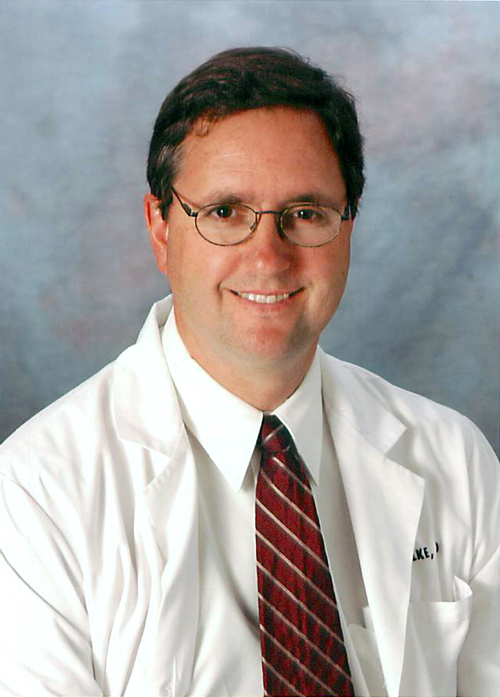
Portrait of a Surgeon:
Dr. Frank W. Sellke, the new chief of cardiothoracic surgery for the Lifespan health system, was previously the Johnson and Johnson endowed professor at Harvard Medical School and a senior cardiovascular surgeon at Beth Israel Deaconess Medical Center, where he was also chief of cardiothoracic surgery and of cardiothoracic research.
Sellke serves as chairman of the National Heart, Lung and Blood Institute’s data and safety monitoring board for the cardiothoracic surgical network, which is part of the National Institutes of Health. He is vice-chair of the American Heart Association’s council on Cardiovascular Surgery and Anesthesia and is the current president of the Massachusetts Society of Thoracic Surgeons.
Sellke received his medical degree from Indiana University School of Medicine in Indianapolis, where he also completed a surgical internship. He completed several surgical residencies, and was chief resident of thoracic and cardiovascular surgery, at the University of Iowa Hospitals and Clinics in Iowa City, while simultaneously holding a research fellowship in vascular physiology at the university’s college of medicine. He is a fellow in the American College of Surgeons for cardiothoracic surgery. •
Your Business Has Gone Global. Has Your Insurance?
A decade ago, “doing business internationally” was mostly a large-company concern. Today, a manufacturer in…
Learn More