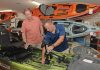
PROVIDENCE – Advances in imaging and screening have helped doctors discover breast lesions early, when they’re very small, but marking them for surgery requires wires inserted through the skin to point at the masses, an experience patients at Women & Infants Hospital won’t have to endure with the new LOCalizer system in use at the hospital.
Women & Infants is the first hospital in the region to begin using the system, made by imaging manufacturer Faxitron in Tucson, Ariz., to mark breast legions.
Building a Strong Data Foundation in the Age of AI
Artificial intelligence (AI) has become a key priority in the boardroom and across management —…
Learn More
“The fact that we are able to detect breast lumps earlier is fantastic, but it has definitely made the removal of these significantly smaller masses more challenging,” said Dr. David Edmonson, breast surgeon with the Breast Health Center at Women & Infants Hospital. “We spent more than a year trialing different devices and found the LOCalizer to offer tremendous benefit to our patients, who can now have the device placed prior to the day of surgery, in a less-rushed, less-stressful environment.”
A LOCalizer tag can actually be implanted in the breast up to 30 days before surgery. The tag is inserted using a needle guided by ultrasound or X-ray imaging. Each tag has a unique number that clearly marks the lesion. Just before the surgery, the surgeon uses the LOCalizer reader to confirm the position and ID for the tag. The system involves less discomfort and waiting and avoids having a foreign object protruding from a patient for long periods before surgery, which can be a mental and physical irritant.
“For the surgeon, placement ahead of time leads to better flow in the operating room and in diagnostic imaging, which also helps to alleviate stress for the patient in what is already a stressful time. This will be a dramatic improvement for patients with suspicious breast masses and is the latest in our efforts to provide only the best for our patients,” Edmonson said.
Rob Borkowski is a PBN staff writer. Email him at Borkowski@PBN.com.