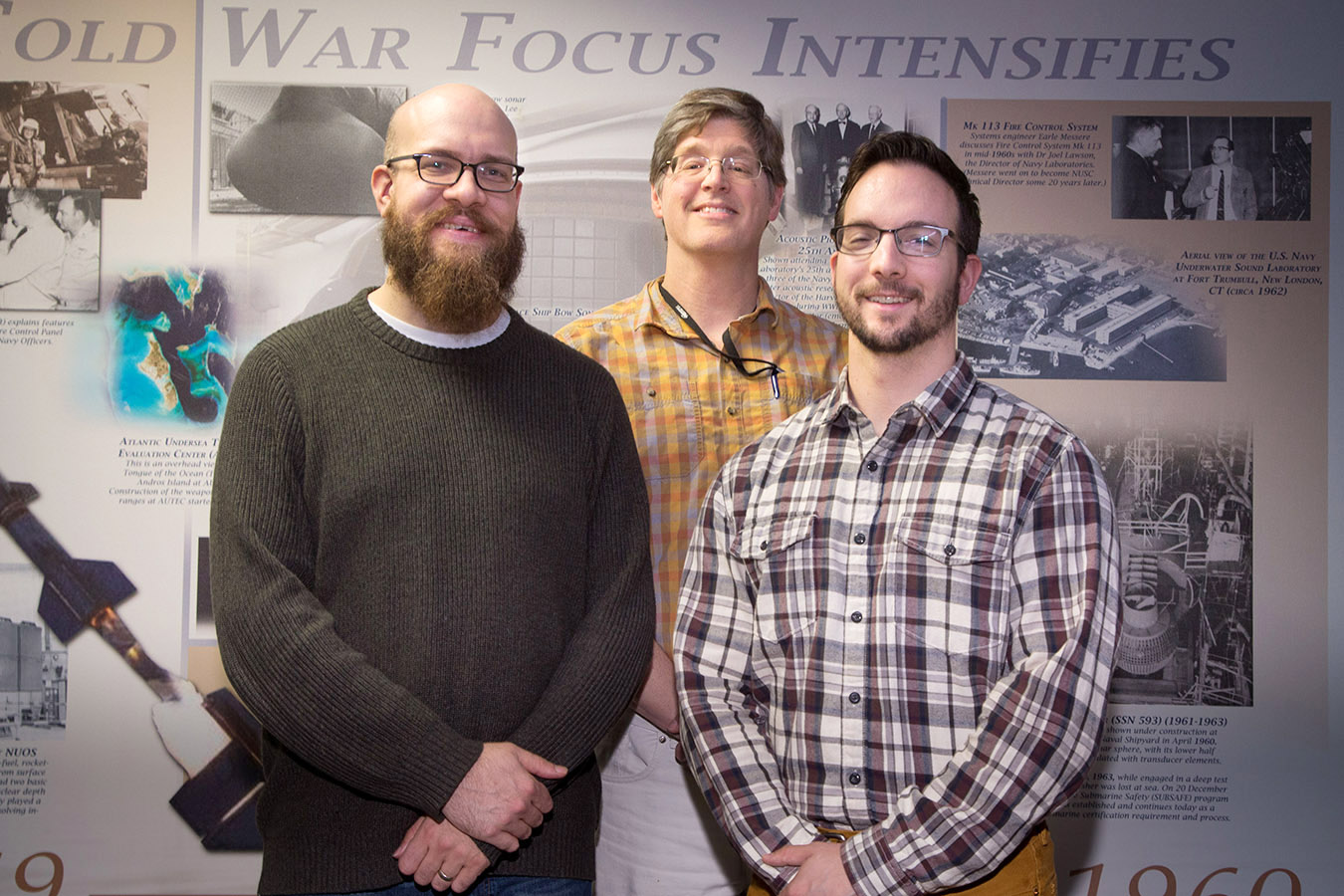
NEWPORT – Naval Undersea Warfare Center Division Newport engineer Gary Huntress recently issued a challenge to the 1-year-old NUWC Newport machine learning community of interest: develop an image classifier that would accurately distinguish cruise ships from merchant vessels.
Having participated in and won a technical challenge about 20 years ago, Huntress wanted to try something similar with machine learning enthusiasts at NUWC Newport, the center said in a press release.
ISO 9001:2026: A Practical Opportunity to Build for What’s Next
For Rhode Island manufacturers, ISO 9001 has been much more than a certificate on the…
Learn More
“The intent is to get people excited about the topic and one of the ways that I thought that we could do it is by having a contest,” said Huntress, and offering a $100 prize to each winner.
For the contest, participants had to work on their own time, using their own resources.
According to Huntress and the contest winners, Caleb Martin and Robert Bretz, machine learning is when raw data is used to solve a problem in a different way than it’s been done before, using complicated optimization schemes and curve-fitting routines – also known as regression analysis – the process used to find a line or curve that best fits a series of data points.
For image classification, Huntress used the example of classifying what is a cat.
“The traditional way would be someone with domain knowledge would say, ‘Cats have ears, I’ll detect ears; cats have eyes, I’ll figure out how to detect eyes,’ ” Huntress said. “The new way is to let the machine learning algorithm figure out what features are important.”
According to Martin, about 10 years ago the problem presented by Huntress would not even have been solvable by computational standards of that time.
In order to solve a machine learning problem, a trial-and-error process of sorts is required. The basic steps are to collect data, clean it up, try an initial model and then tweak the model until it is optimally efficient, NUWC Newport said.
“I really loosely defined the expectations to leave it open for whatever they produced, and I was really happy with the two submissions. They both worked great,” Huntress said in the press release.
Bretz, Martin and Huntress hope more machine learning can be applicable to their work at NUWC Newport, according to the press release, noting that it could be years away but could have relevant uses with unmanned undersea vehicles, sonar or tactical simulations.
Susan Shalhoub is a PBN contributing writer.