
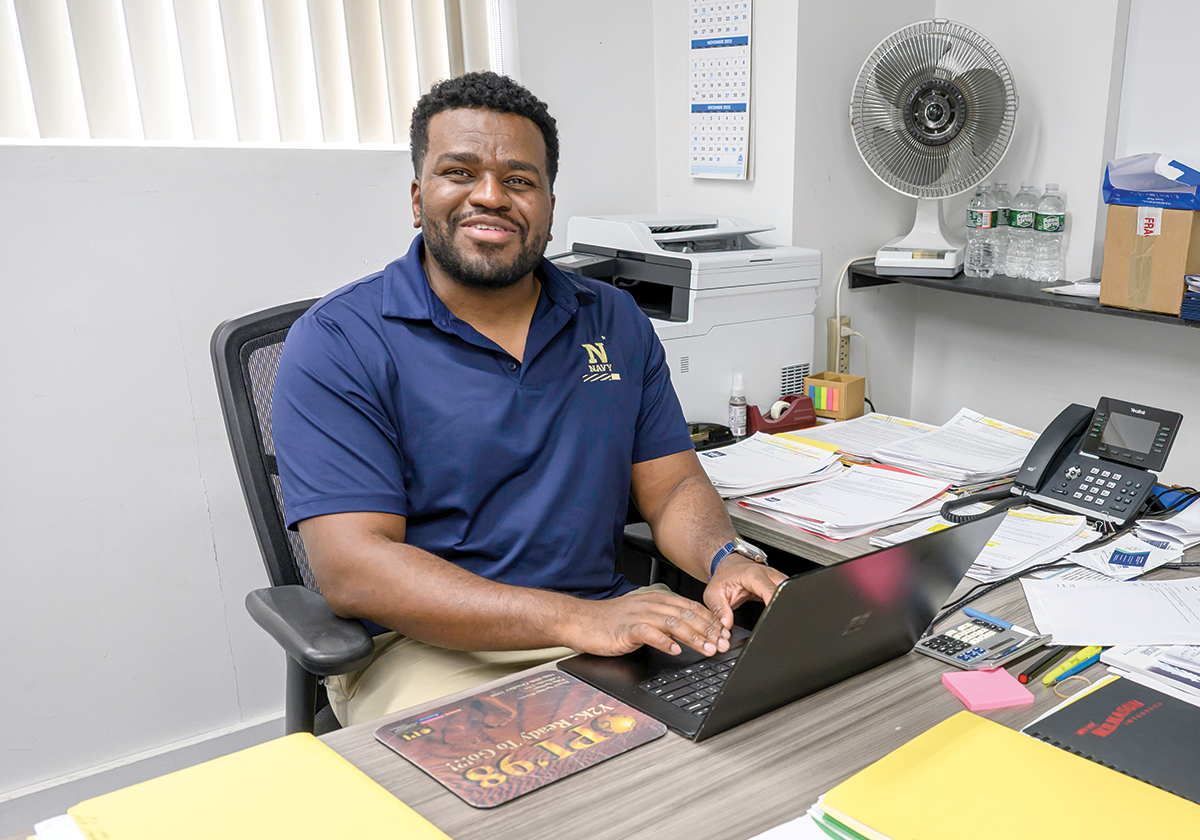
Darryl Lindie has been trying to boost benefits offerings for his employees since buying AA Sign & Awning in Warwick a few years ago.
He’s crossed paid time off and health care benefits off the list. But offering a 401(k) and retirement benefits to his 25 employees have stayed out of reach.
“It’s always been something that’s been on my mind – how do we add to benefits,” Lindie said.
Until now.
Lindie is enrolling in RISavers, the state’s first-ever public retirement savings program for employees in the private sector.
The program, which was enabled by the Secure Choice Retirement Savings Program Act of 2024, is meant for the more than 40% of private-sector employees in Rhode Island lacking a retirement savings plan.
“This is a really good step in the direction to help people who really haven’t had the opportunity to save for retirement presented neatly in a bow,” Lindie said.
Now that the program has been launched, any private employer in Rhode Island with five or more employees that doesn’t currently offer a retirement plan will have to register to offer workers access to RISavers. Employers with fewer than five employees also have the option of participating in the program.
RISavers was launched on Oct. 21 by R.I. General Treasurer James A. Diossa’s office and is administered by Vestwell State Savings, which runs similar programs in several other states. Rhode Island has also partnered with Connecticut, which launched its own program known as MyCTSavings in 2022.
Since it launched, almost 35,000 Connecticut residents have saved more than $52 million with MyCTSavings. And Diossa projects RISavers could save Rhode Island taxpayers more than $25 million by 2032.
Originally, Diossa expected the program to go live in the spring. But contract negotiations took longer than expected, as Diossa wanted to ensure “everything was in the greatest shape to officially launch RISavers,” Carla Rojo, a spokesperson for Diossa, said in a statement. Rojo did not respond to Providence Business News’ follow-up questions on the negotiations that delayed the program.
“While the process took longer than anticipated, ensuring that all details were properly completed was important to support a smooth and successful rollout,” Diossa said in a statement. “This is the first time our state is doing anything like this, and our top priority was ensuring that Rhode Islanders who participate in this program are protected and receive the best possible value.”
More than 170,000 Rhode Islanders lack access to retirement savings plans through their workplace, according to Rojo.
“RISavers is a big step forward for retirement security in Rhode Island,” Diossa said. “Everyone deserves a chance to retire with dignity and financial freedom.”
There is no cost for employers to participate in the program, aside from time to set it up. Employees will be automatically enrolled in the program, but they can opt out or reenroll at any time.
Accounts are structured as Roth individual retirement accounts, allowing withdrawals of contributions at any time without fees or penalties. The default savings rate is 5% of gross pay, meaning employers will withhold 5% of a worker’s pay and contribute it to the RISavers account each pay period.
Workers can adjust their individual contribution amounts and transfer their savings to future employers. Although, account balances in RISavers do vary based on market conditions and are not guaranteed or insured by Diossa’s office, the state or any financial organization.
The program has support from state leaders, including House Speaker K. Joseph Shekarchi, who noted he understands the challenges of offering retirement benefits as a small-business owner himself.
“Setting up a retirement plan for employees can be very challenging for small-business owners, who are already juggling many responsibilities, but not offering retirement benefits can hinder a small business’s ability to attract and retain employees,” Shekarchi said at the launch of RISavers.
Indeed, Lindie said the idea of RISavers made sense to him when he first heard about it from Diossa, as small businesses struggle to offer similar benefits as larger employers.
“There is a void,” he said, adding that his wife works for a large accounting firm, which offers retirement benefits and she has been able to save.
Lindie says he is in the process of enrolling for RISavers and employees are overall eager to participate in the program. Also, while he’d like to offer his own benefits, he said RISavers is a good way to help employees save and gauge their interest for those kinds of retirement savings.
“I want to eventually get there – to be able to offer retirement benefits, but the reality is that we’re not there yet,” Lindie said. “I think this is a great intermediate step to be able to give people more certainty in their financial future.”

