WASHINGTON – The nation’s savings rate rose last month as personal spending by U.S. consumers last month posted its sharpest decline since 2004, outweighing a slight increase in consumer prices, the U.S. Commerce Department’s Bureau of Economic Analysis said today.
Total personal consumption expenditures (PCE) nationwide fell 0.3 percent compared with the month before, after holding steady in August and July, the BEA found. Analysts had expected personal spending would fall 0.2 percent in September, based on the median forecast from a Bloomberg News survey of 73 economists. (Their projections for the PCE ranged from an increase of 0.3 percent to a decline of 1.0 percent.)
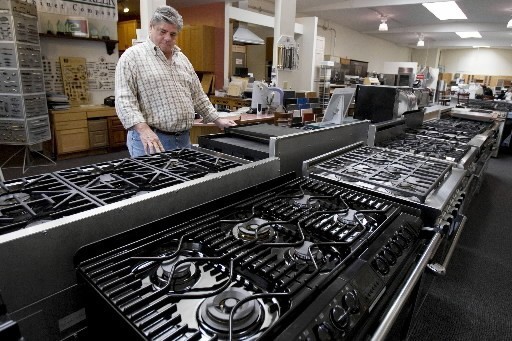
Durable-goods purchases fell 2.9 percent as people put off big-ticket purchases such as cars and household appliances, and purchases of non-durable goods fell 0.8 percent. But sales of services, which account for more than half of personal spending, rose 0.2 percent from the month before. Compared with September 2007, personal consumption spending fell 0.4 percent.
The PCE price index – a measure of prices paid by U.S. consumers – rose 0.1 percent in September, after edging up less than 0.1 percent the month before. The core PCE price index excluding food and energy – the Federal Reserve System’s favored measure of inflation – rose 0.2 percent, matching its August gain. Compared with September 2007, the PCE price index rose 4.2 percent, while the core index rose 2.4 percent.
U.S. personal incomes rose $24.5 billion, or 0.2 percent, extending August’s 0.4-percent gain. “Excluding rebate payments under the Economic Stimulus Act of 2008, DPI increased $30.3 billion, or 0.3 percent, in September and increased $44.0 billion, or 0.4 percent, in August,” the BEA noted. Wages and salaries – the largest component of personal income – rose $300 million in September, slowing from August’s $24.1 billion increase. Goods-producing payrolls shrank $4.0 billion, after rising $5.1 billion the month before, while payrolls in service-providing industries rose $4.3 billion, slowing from August’s $19.0 billion gain. Government payrolls grew by$4.0 billion, after rising $4.6 billion the month before.
Disposable personal income (DPI) also rose 0.2 percent, after falling 1 percent per month in August and July, the BEA report showed. Real DPI – disposable personal income adjusted for inflation – rose 0.1 percent, after falling 1.0 percent in August and 1.6 percent in July.
Meanwhile, the nation’s personal savings rate rose to 1.3 percent of disposable personal income, from August’s 0.8 percent, the BEA said. Total personal savings – DPI minus personal consumption expenditures and other outlays – increased to $140.3 billion last month from $82.5 billion the month before.
The personal-spending report follows news yesterday from the BEA that the nation’s economy contracted in the third quarter at a rate of 0.3 percent per year. Consumer spending fell at a rate of 3.1 percent per year as households cut spending on non-durable goods by the most since 1950, and slashed purchases of durable goods by the most since 1987, the gross-domestic product report showed. (The full GDP report is available at www.bea.gov.)
“Consumers have thrown in the towel,” Nariman Behravesh, chief economist at IHS Global Insight in Lexington, Mass., told Bloomberg News. “They have no choice but to cut back on spending in a very big way. This is going to be a fairly deep, long recession.” On the bright side, the lack of inflation gives the Fed “more room to maneuver” on interest rates, Behravesh added.
Additional information, including the 14-page Personal Income and Outlays news release, is available from the U.S. Commerce Department’s Bureau of Economic Analysis at www.bea.gov.