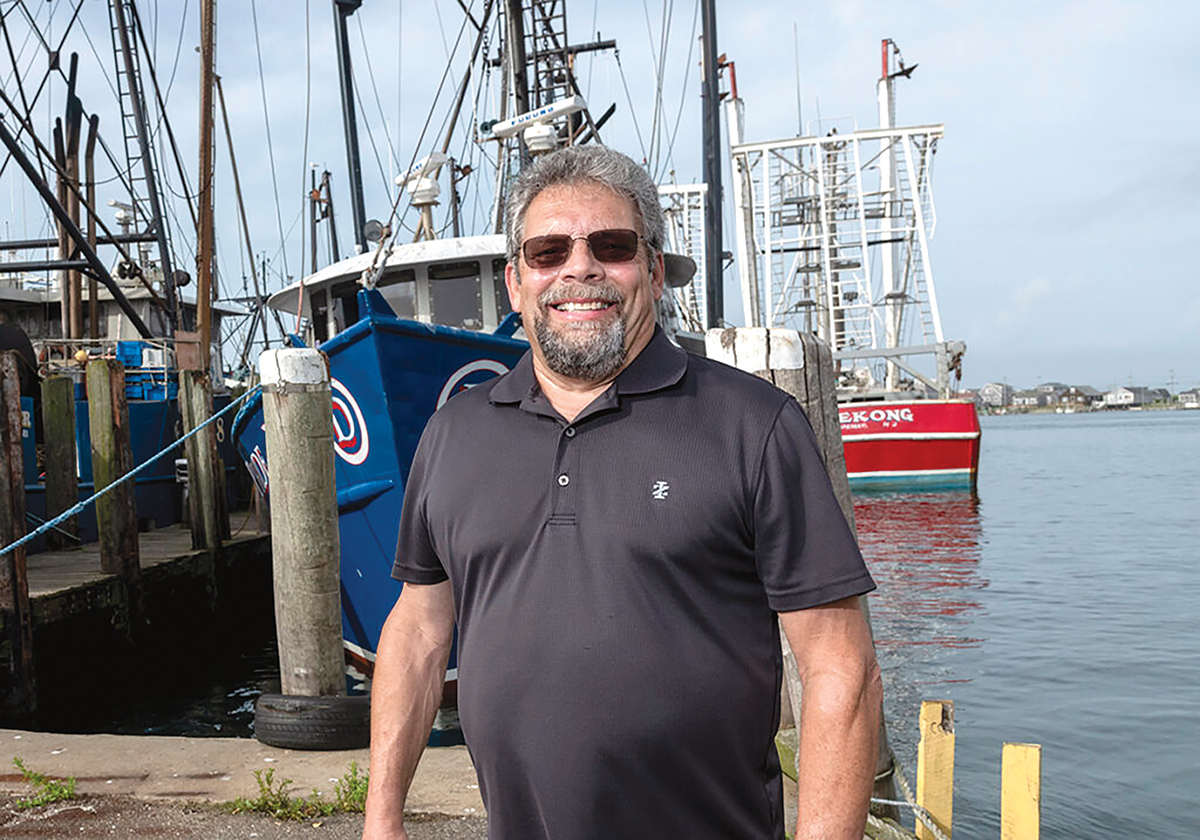
Fred Mattera, president of the South Kingstown-based Commercial Fisheries Research Foundation, can recall when foreign commercial fishing vessels could often be spotted off the East Coast decades ago.
While they’re not as visible these days, the activities of these foreign vessels can still have an effect on Rhode Island’s sizable fishing industry. That’s because many of them are not following the rules, depleting fish stocks and flooding markets with illegal catches.
“These countries need seafood, and they’ll do anything to obtain it,” Mattera said.
Now legislation co-sponsored by U.S. Sen. Sheldon Whitehouse, D-R.I., aims to crack down on illegal pirate fishing operations, blacklisting offending vessels from offloading catches at U.S. ports while increasing the capabilities of the U.S. Coast Guard to conduct at-sea inspections of foreign fishing vessels.
In 2020, the Coast Guard identified illegal fishing as the foremost global maritime security threat.
The legislation, called the Fighting Foreign Illegal Seafood Harvest – or FISH – Act, has unanimously passed the Senate Commerce, Science & Transportation Committee and has received bipartisan support. U.S. Sen. Dan Sullivan, R-Alaska, is a lead co-sponsor with Whitehouse.
The measure still has to be heard on the House and Senate floors.
In a statement, Whitehouse said that the bill would “halt illegal pirate fishing, ensuring fair competition for Rhode Island’s fishermen and processors committed to regulations,” which are vital for the sustainability of marine ecosystems and coastal communities.
Illegal fishing operations by foreign entities, now estimated to make up nearly 20% of the global seafood catch, have been linked to organized crime, human rights violations and ecological harm. Plagued by deceptive recruitment practices and worker exploitation, many deckhands come from poor and developing countries.
And the Rhode Island-based fishing industry is competing with those foreign entities in markets beyond the state.
In 2023, Rhode Island fishermen landed about 77 million pounds of seafood, according to the Rhode Island Food Policy Council, and a large share of that is exported. And a significant portion of the seafood consumed by Rhode Islanders – as much as 90% – is imported.
The fishing sector plays a crucial role in the state’s economy, supporting over 9,300 jobs and generating upward of $1 billion annually.
While he said there are likely no illegal vessels operating offshore of the Ocean State today, Mattera, who has been a fisherman for more than 50 years, has heard tales of the desperate measures taken by those involved in the pirate side of the business.
According to a 2020 Interpol report, illegal, unreported and unregulated fishing has been linked to money laundering, labor exploitation and government corruption.
“In some cases, members of crews have been killed for non-compliance. It’s akin to modern-day slavery,” Mattera said. “We import 80% to 90% of our fish from places where much of this underreported illegal fishing occurs.”
Mattera is concerned that products harvested by the hands of exploited workers could still infiltrate local markets. Although the U.S. Coast Guard and other agencies are tasked with much of the enforcement, the expanses of ocean that need to be covered are vast.
“There is nothing really enforcing regulations within 200 miles of our coast,” he said.
Groups of foreign fishing boats that operate covertly and without oversight have been the “dark fleet,” and China is widely regarded as the largest source of dark fleet vessels. In fact, China has been accused of depleting global fish stocks to satisfy its growing population.
Todd Clark, co-founder of Newport-based importer Endeavor Seafood Inc., which does much of its business with Chinese-based companies, said the legislation will help differentiate within the seafood importing and exporting markets the criminals from the law-abiding entities, targeting individual offending vessels instead of “imposing broad sanctions on entire countries,” he said in reference to attempts by previous administrations to address the issue.
For example, once hailed as progress in monitoring illegal fishing activity, the National Oceanic and Atmospheric Administration’s Seafood Import Monitoring Program “has been completely ineffective,” Clark said.
In 2023, Seafood Import Monitoring Program-related imports were valued at approximately $6.4 billion, making up about 32% of total U.S. seafood imports. The NOAA recently identified seven nations and entities implicated in illegal, unreported and unregulated fishing activities from 2020 to 2022, including China and Taiwan.
“In its five or six years in existence, it has failed to identify a single illegal fish entering the United States,” Clark said.
While the overall value of seafood landed in Rhode Island still exceeds $100 million annually, commercial fishermen have seen a 47.2% decline in seafood landings since 2000. About 40% of that catch is longfin and shortfin squid, but the Rhode Island fish industry is facing stiff global competition for those species.
“Most squid and shrimp are now harvested in Southeast Asia,” Mattera said.
And a lot of that product – caught and processed with little oversight – finds its way into grocery store freezers in the U.S.
“The problem we have is that we don’t monitor,” said Mattera, who estimated that less than 10% of imported seafood products are inspected. “This bill sends the message to the rest of the world: Clean up your act.”