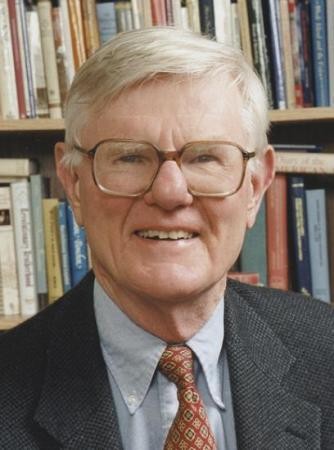
PROVIDENCE – Gordon S. Wood, Pulitzer Prize-winning American Revolution historian and emeritus professor of history at Brown University, has died at the age of 92 after being hit by a vehicle, multiple news outlets reported Monday.
Wood died Sunday at Rhode Island Hospital after being struck by a motorist in the parking lot at Shaw’s plaza in East Providence, his daughter Amy told WPRI-TV CBS 12 Monday.
Police found Wood Sunday with serious injuries after the driver hit him while he was walking. The driver remained on the scene and cooperated with police, according to WPRI. He currently is not facing charges, and the crash remains under investigation.
In 1992, Wood won the Pulitzer Prize in history for his book The Radicalism of the American Revolution.” In 2011 President Barak Obama awarded Wood the National Humanities Medal.
In recent years, younger academics increasingly alleged that Wood was too well-established, the epitome of the old-school historian who minimized the lives of slaves, women and Indigenous people. John L. Brooke, a history professor at Ohio State University, would fault him for “a distinct avoidance of interpretative paradox and complexity,” even as he cited Wood’s “scale and scholarly enterprise.”
In an email to The Associated Press, filmmaker Ken Burns praised Wood as a “teacher of generations of students and other historians.”
Woody Holton, an author and historian who clashed at times with Wood, told the AP that he admired his “willingness to encourage even a younger scholar like me who viewed the American revolutionary era very differently from him.”
“The tragic accident that killed him is especially heartbreaking in denying him, by less than a month, the chance to celebrate the country’s 250th birthday,” added Holton, a history professor at the University of South Carolina.
His success was immediate and lasting. His first book, "The Creation of the American Republic," won the Bancroft Prize in 1970 and lived on with generations of students who embraced and contended with Wood's findings that the Constitution was unintentionally subversive, a document devised by elites that led to “the destruction of the very social world they had sought to maintain.”
In a 2015 interview with the History News Network, Woods joked that his real "two seconds of fame" came when the main character of the 1997 hit movie "Good Will Hunting" makes a references to Wood and his writing during an altercation with a Harvard student in a bar.
"More kids know about that than any of the books I have written," he said in the interview.
Wood began teaching at Brown University in 1969. He was a professor of history and Alva O. Way University Professor.
Wood was born in Concord, Mass., on Nov. 27, 1933. He graduated summa cum laude and Phi Beta Kappa from Tufts University in 1955. While serving in the United States Air Force in Japan, he obtained a Master of Arts in history from Harvard University. After finishing his service, he obtained his doctorate in history from Harvard in 1964 under Bernard Bailyn.
Prior to joining Brown he taught at Harvard, the College of William and Mary and the University of Michigan.
Wood leaves his wife, Louise, his daughters, Amy and Elizabeth, and his son Christopher. He had five grandchildren and one great-granddaughter.
Services have yet to be announced.
(UPDATE: Material from The Associated Press, including comment from Burns added in fifth sixth, seventh, eighth and ninth paragraphs)