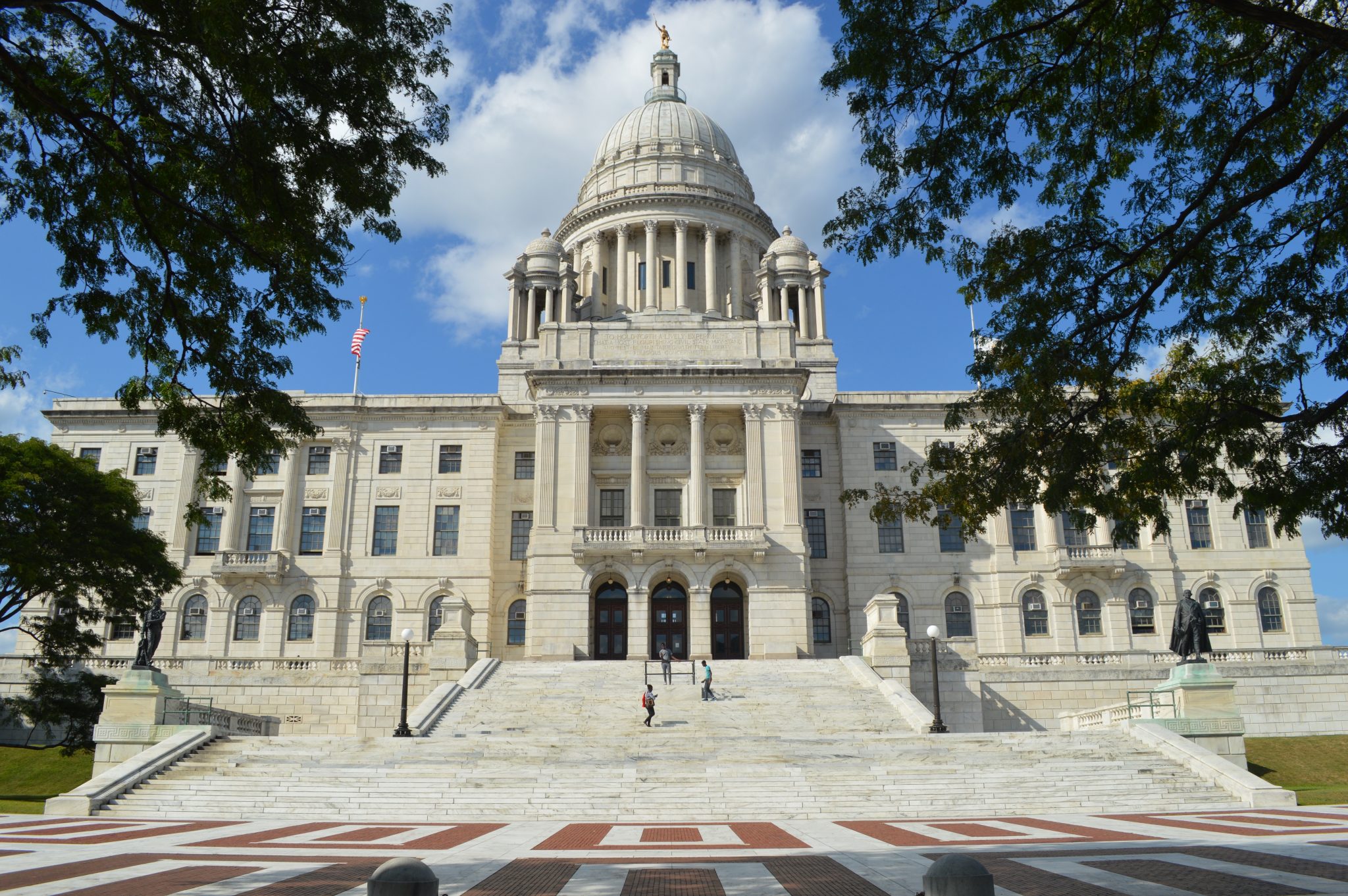
PROVIDENCE – The R.I. Senate voted to approve a $10 billion fiscal year 2020 state budget late Thursday evening in a 30-8 vote. The budget will now go to Gov. Gina M. Raimondo’s desk to be signed. The governor does not have a line-item veto.
The budget includes the continuation of the full funding to municipalities for the car tax phase out, a priority of House Speaker Nicholas A. Mattiello.
Your Business Has Gone Global. Has Your Insurance?
A decade ago, “doing business internationally” was mostly a large-company concern. Today, a manufacturer in…
Learn More
A proposal to create a 17-member board of directors for the University of Rhode Island, providing it a governance structure similar to those of other public universities, was also in the budget.
The budget included a preferred item of Senate President Dominick J. Ruggerio’s, establishing a special economic development district in the I-195 Redevelopment District in Providence, which would free it from certain local zoning oversight.
The General Assembly also said that the bill established a framework to expand the special economic development district designation to other state-owned tracts of 20 or more contiguous acres not controlled by the R.I. Department of Environmental Management. However, any additional district apart from the I-195 Redevelopment District would require passage of legislation.
The General Assembly specifically said that the move to establish the special district came after delays related to the Hope Point Tower proposal.
The budget also made the Hope Point Tower project eligible for up to $25 million, instead of the normal $15 million cap, and exempted the project from hitting the Rebuild Rhode Island tax incentive program cap.
The budget provided another $60 million for Rebuild Rhode Island, a signature economic development program created by Raimondo in 2015. But it moves all previously authorized state credits for sales and use taxes for Rebuild projects under the aggregate cap for the program.
This effectively will cut $41 million from the program’s capacity in future years.
The General Assembly highlighted that it had not included the governor’s proposed legalization of cannabis, did not implement her proposed tax on employers with employees that collect Medicaid, and declined to pass her proposed expansion of the sales tax to include services. One exception was the agreement to tax video streaming services.
The budget included provisions for a bill that offers a workaround for pass-through business owners related to the federal state and local tax exemption cap, allowing businesses to pay the federal tax on their own, instead of passing it through to business partners. The bill also allows a credit pass-through business partners can take on their personal and corporate state income tax returns to ensure that the business’s income isn’t taxed twice. If passed, the changes would take effect for the 2019 tax year. The move is projected to be revenue neutral for the state.
The budget also altered the allocation of 5% hotel tax collections from room resellers on third-party hosting platforms, shifting some revenue that had been allocated to the R.I. Commerce Corp. to the regional tourism districts. The funds shifted away from Commerce RI by the allocation change are projected to amount to $194,100 in fiscal 2020 and fiscal 2021.
The General Assembly fully funded the requested state education aid formula, increasing direct aid by $33.4 million over the current year’s amount. Legislators also granted the governor’s request to add $2.3 million to bring support for English language learners to $5 million, and added $2.9 million to expand pre-K classrooms, but it was still short of the governor’s request.
The budget did not include Raimondo’s proposal to expand the Rhode Island Promise program, but it funds the existing program.
The budget included the creating of the Rhode Island Small Business Development Fund, which the General Assembly said will encourage the formation of private capital investment in small business by federally licensed investment companies.
Other details from the budget:
- The bills approved $200 million in bonds for the reconstruction of the Providence viaduct
- The approval for licensing of additional compassion centers
- The issuance of $50 million for the R.I. Bridge and Tunnel Authority to issue up to $50 million in revenue bonds to finance renovations and repairs in the Mount Hope, Jamestown Verrazzano, Newport Pell and the Sakonnet River bridges
- The issuance of $51.5 million in revenue bonds for URI for the renovation and expansion of Memorial Union, the student union building, and $26.9 million in revenue bonds for a new combine health and counseling center.
- The minimum wage in the state was not increased for the year
Chris Bergenheim is the PBN web editor. You may reach him at Bergenheim@PBN.com.