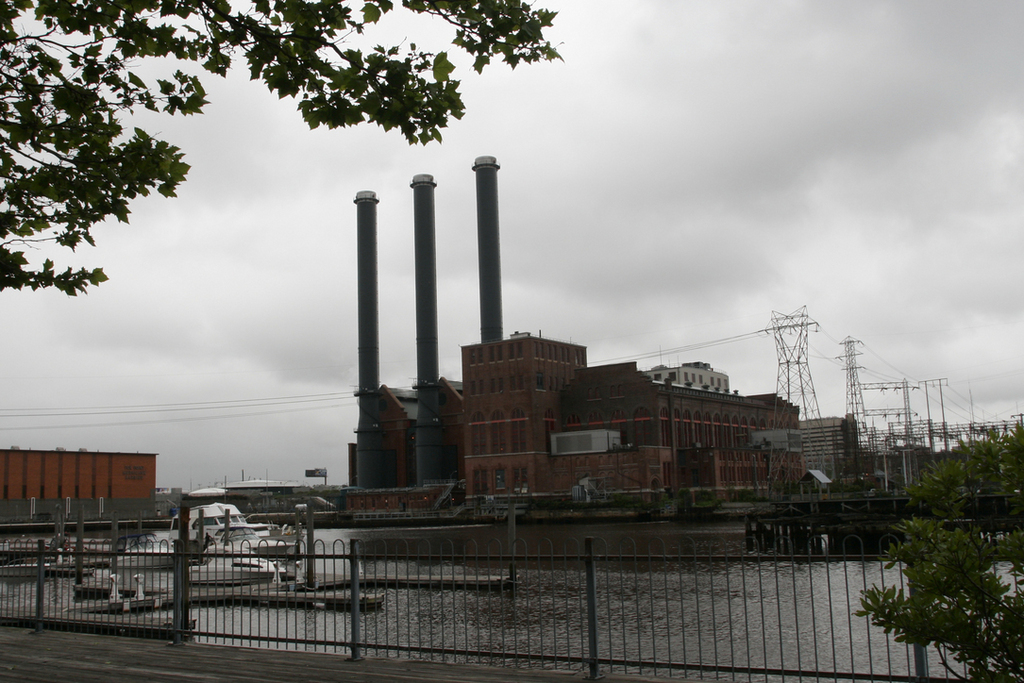
A hearing last week on proposed legislation to guide Rhode Island’s implementation of the Regional Greenhouse Gas Initiative raised new questions about how best to reduce the potential extra costs for consumers and about the resources needed to manage the effort.
State officials and environmental groups testified last Tuesday before the House Committee on Environment and Natural Resources on H-5577, a bill sponsored by Rep. Arthur Handy, D-Cranston, that would set parameters for RGGI implementation in the state.
Rhode Island was the last New England state to sign on to the pact, a regional effort to reduce carbon dioxide and other greenhouse gas emissions from power plants by 10 percent by 2019. The initiative first began in 2005. Massachusetts only signed on this year as well.
The pact takes effect in 2009, so rules on how each of the 10 states will implement it need to be in place by 2008 in order for a regional cap-and-trade system that is a key part of the pact to start working effectively by 2009, said Cynthia Giles, vice president of the Conservation Law Foundation’s Rhode Island advocacy center.
The system caps the amount of greenhouse gases Northeastern power plants can emit on an incremental basis from now until 2019. But, similar to how the Kyoto Protocol works, the pact allows states that are already below the caps to sell their surplus emissions allowances.
Handy’s measure requires the allowances to be auctioned off in a regional market and requires that the proceeds be used to support energy efficiency and renewable energy programs.
But that’s where the R.I. Department of Environmental Management and the R.I. Office of Energy Resources have an issue with the bill.
Andrew Dzykewicz, chief energy adviser to Gov. Donald L. Carcieri and head of the energy office, said he would like to see more flexible language as to how the proceeds can be spent.
“The whole premise of this is that there will be some increased costs [for energy consumers],” Dzykewicz said. Yet the bill does not allow for a percentage of proceeds from the sale of the allowances to go directly to consumers in the form of rebates or something of that nature.
“I don’t know what the mechanism would be for that,” he said. “But I’m sure we could find a way to do it.”
Matt Auten, advocate for Environment Rhode Island, said he doesn’t think the environmental groups would have a huge problem with having a direct rebate as an option. It’s more of a “do you want us to give you $1 today versus $4 tomorrow” scenario, he said, implying that the energy efficiency and renewable energy programs would produce returns to consumers by decreasing the cost of electricity in the long run.
Dzykewicz also said it might not be necessary for the state to hire an independent contractor to auction the allowances, as stated in the bill. He said the state would have to hire a broker regardless of whether it hired an auctioneer, and having both would cut into the proceeds.
Dzykewicz also would like to see more flexibility as to where the state can sell the allowances. If limited to just the Northeast – a regional market is being set up under the RGGI – it could reduce possible profits.
“We just want flexibility to maximize the financial benefit of this,” Dzykewicz said.
Both the energy office and the DEM also expect to need additional resources in order to implement the initiative. Michael Sullivan, director of the DEM, said the cost of implementing the initiative will be significant.
“Our work load was doubled last year with the passing of the comprehensive energy bill,” Dzykewicz said. “We’re all stretched kind of thin … state agencies might need more staff. … We signed on to RGGI; now we need to find a way to administer it.”
Environmental groups say the pact is important in the fight against global warming, which they say is already making an impact on Rhode Island. It focuses on power plants, Giles said, because they are “the second-largest source of greenhouse gas emissions in New England,” after cars.
Research has shown that the increasing temperature and rise of water along the coast of Rhode Island due to global warming could create an increase in tick- and mosquito-borne diseases and also put the state more at risk for a high-impact hurricane to hit, among many other side effects, said Sheila Dormody, Rhode Island director of Clean Water Action, also a supporter of the bill.
The mean temperature of Narragansett Bay has already risen by three degrees since 1950, and that has impacted the ecosystem by decreasing the winter flounder stocks, Auten said.
If successful, RGGI is seen as a possible model for similar global-warming-reduction efforts throughout the country.