NORTH KINGSTOWN – Though a representative sample of Rhode Islanders nearly universally find housing costs concerning, many hold to a "not in my backyard" mentality when looking for solutions, according to a recently released University of Rhode Island survey.
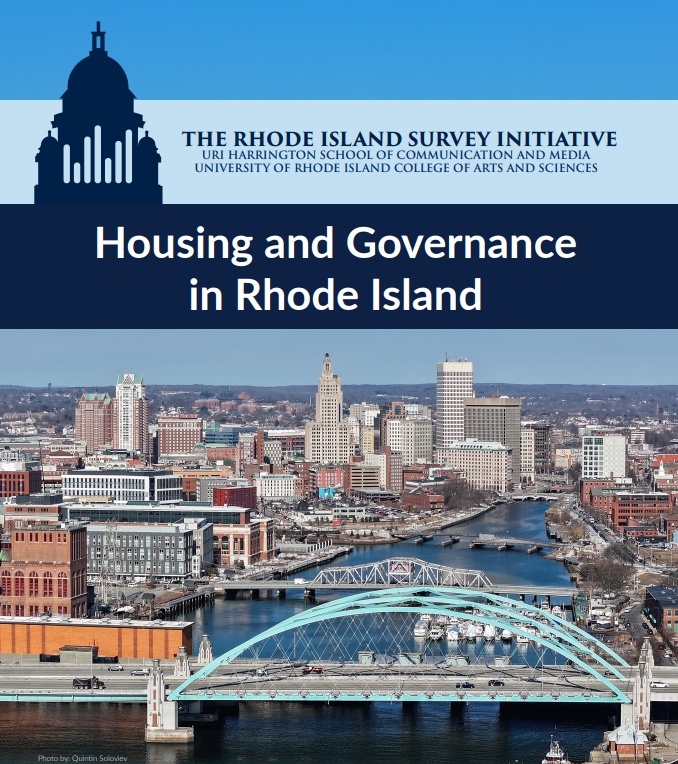
The third annual Rhode Island Survey Initiative report found that nearly all respondents, at 93%, believe housing costs are a problem, and 63% support sanctioning municipalities that try to stymie affordable housing. But just 42% of residents polled said they would support the construction of single-family, market-rate homes in their neighborhoods. At 21%, even fewer supported public housing production, and just 17% supported new homeless shelters.
“There can be support for housing, generally speaking,” said Ashlea Rundlett, an associate professor of political science at URI who led this year's study, “but we start to see some pushback as the housing gets closer to home.”
Survey respondents were far more likely to encourage the use of existing infrastructure to address the housing crisis, with 90% indicating that the state should repair existing affordable units, and 87% supporting the redevelopment of vacant or underused buildings into housing.
Most were also in favor of policy reforms: 72% support rent stabilization and caps on annual increases, while 64% said the state should expand voucher programs.
While measures such as repurposing existing buildings into housing have an important role to play in housing production, public pushback against new construction and "NIMBYism" pose a concerning outlook for the state's housing prospects, Rundlett said.
“I definitely think it’s a great approach,” Rundlett said of the more popular option. “It’s just not enough to only focus on repurposing. ... We also need to build in order to reach demand.”
Rhode Island has notoriously struggled in this area. Studies released over the past few years have repeatedly ranked the Ocean State last in the U.S. for new housing production. Meanwhile, all but one of Rhode Island's municipalities are falling short of the state's 10% affordable housing target, according to data compiled by HousingWorksRI at Roger Williams University, with Burrillville as the only exception.
The Rhode Island Survey Initiative, launched in 2023 by URI's Harrington School of Communication and Media, centers on a different focus area each year, with the third iteration focusing on housing. The university's Social Science Institute for Research, Education and Policy and the Department of Political Science also contribute to the annual effort.
The survey polled 500 Rhode Islanders ages 18 and older between Aug. 1 and Aug. 18, 2025.
Alongside the housing focus, the survey also asked residents about legislative priorities; the Washington Bridge closure's impact on their lives; the primary health care provider shortage; and who they would support for governor in the Democratic primary.
The survey saw a significant increase in concerns around health care, with 62% of respondents calling it a top priority, compared with 42% last year. Housing [51%], roads and bridges [41%], education [35%] and crime [25%] saw little fluctuation as priorities. While protecting the environment rose from 17% to 21% as a priority, clean energy decreased from 15% to 9%. The survey window closed days before the Trump administration issued a highly rebuked stop-work order for the nearly complete Revolution Wind project.
Donald Trump's presidency has correlated with a significant decrease in federal government approval among Rhode Islanders, the survey found. While approximately 60% of respondents said they have a fair or great deal of trust in state and local government this year and in 2024, 39% reported the same trust in the federal government – down from 54% in 2024.
To Rundlett, this decrease in federal-level trust stands out as the only major shift in the survey.
“What almost surprises me is how similar [responses are] for the core questions," she said.
Despite Gov. Daniel J. McKee earning just a 29% approval rate from respondents, he led respondents among potential governor candidates, at 18.5%, followed by R.I. Attorney General Peter F. Neronha [15%]; former CVS Health Corp. executive Helena Foulkes; and R.I. Speaker of the House K. Joseph Shekarchi. Remaining respondents indicated they were unsure [40.6%] or other [4.2%].
Most respondents, at 56%, continue to use television as their most popular news source, while print [19%] and radio [23%] slightly declined year over year. News websites and apps remained the second-most-popular way of following news but declined more significantly from 55% to 44% year over year.
Returning to the central question around housing, Rundlett thinks public opinion might sway if more people realize that they likely have families, friends and neighbors who are housing cost-burdened.
“It’s a lot closer to home than people think,” Rundlett said.
Jacquelyn Voghel is a PBN staff writer. You may reach her at Voghel@PBN.com.