
PROVIDENCE – Rhode Island nonprofit hospitals are falling short on their investments in the community, according to a new report by the Lown Institute.
The Lown Institute, which defines itself as a nonpartisan think tank, examined spending for more than 1,700 nonprofit hospitals across the United States, comparing their spending on financial assistance and community investment to the value of the hospital’s tax exemption to calculate an institution’s “fair share.”
Building a Strong Data Foundation in the Age of AI
Artificial intelligence (AI) has become a key priority in the boardroom and across management —…
Learn More
The results, published in the Hospital Index report on April 11, found that more than 77% of hospitals had a “fair share” deficit – meaning they spent less on community investment than the value of their tax breaks.
Rhode Island was one of three states – alongside Massachusetts, Minnesota and the District of Columbia – where the total deficit for all hospitals would be enough to “wipe out all medical debt on credit reports in the state,” according to the report.
“There are a lot of hospitals that are falling short, in terms of what they’re investing in the community,” said Vikas Saini, president of the Lown Institute.
Out of the 1,773 nonprofit hospitals examined, more than 1,350 hospitals have “fair share” deficits, the report found. The combined deficits of nonprofit hospitals totaled $14.2 billion in 2020, a value that is enough to wipe out the medical debt of 18 million Americans or rescue 600 rural hospitals at risk of closing, according to the report.
“There is a need for change, and the change needs to be driven by the health needs of communities. In too many cases, we have a system that’s driven by profit, by money,” Saini said.
Rhode Island’s total “fair share” deficit was $91 million, enough to wipe out medical debt for nearly 70,000 people in the state.
Data was available for six individual hospitals in Rhode Island.
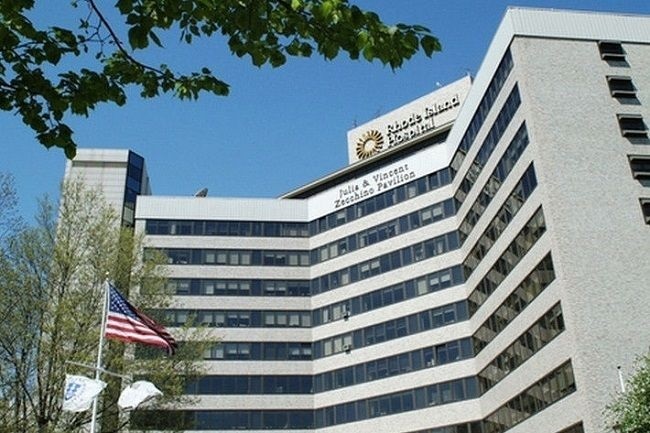
Rhode Island Hospital’s deficit was $61 million, enough to erase medical debt of 47,000 people in the state, according to the report. Lifespan Corp.’s other nonprofit hospitals, The Miriam Hospital and Newport Hospital, have deficits of $11 million and $4.5 million, respectively.
South County Hospital’s “fair share” deficit was $9 million, while Westerly Hospital’s was $4.5 million. Kent County Memorial Hospital was the Rhode Island hospital that had the lowest “fair share” deficit, at $258,467. Researchers said they did not include specialty hospitals or hospitals for which they could not find the proper tax form.
The institute calculated the “fair share” value by looking at the IRS Form 990 for fiscal 2020 and comparing the estimated value of a hospital’s tax exemptions to the amount spent on community investment.
To calculate the value of community investments, researchers looked at four categories from the financial assistance and community benefits cost portion of the form: community health improvement activities, contributions to community groups, community building activities, and subsidized health care services.
Three categories that the IRS considers part of community benefit spending were excluded from the calculations: Medicaid shortfall, health professions education, and research. Lown Institute said health policy experts have argued they do not constitute direct benefits for community health.
But Kathleen Hart, a spokesperson for Lifespan, said the excluded categories often target and benefit the community too. Including all categories, Rhode Island Hospital’s total community benefit expenditures accounted for $195 million, over 12% of its total expenses in 2020, according to the filing. In contrast, the Lown Institute calculated Rhode Island Hospital’s community contributions at $32.6 million.
Hart also pointed out Lifespan’s involvement with cancer research, which has made significant breakthroughs in recent years. Including these categories would bring hospitals such as Rhode Island Hospital at a “fair share” surplus.
Fiona Phelan, a spokesperson for Yale New Haven Health System, which owns Westerly Hospital, pointed out that the organization was in the top 25 health systems with the largest fair share surpluses in a previous Lown Institute report.
“While Lown’s methodology doesn’t take into account all the community support we provide, including unreimbursed care provided under the Medicaid program – which totaled over $358 million in 2020 – we will continue to sponsor, develop and participate in a wide variety of community-based programs and are dedicated to growing that support every year,” she said.
“South County Health disagrees with the report’s findings and has concerns about its intentionally narrow definition of community benefit that fails to consider the breadth of our health system’s total annual reinvestment into the community and the resiliency of the broader health care delivery system, which is valued at approximately $32 million,” said Aaron Robinson, CEO and president of South County Health.
Raina Smith, a spokesperson for Care New England Health System and Kent Hospital, said the report “is not an accurate depiction of Kent Hospital’s investments in the community, especially given its financial position since the COVID pandemic.”
A blog post published Tuesday on the American Hospital Association website also criticizes the report, pointing out it ignores categories “of great importance,” such as research, training and additional programs tailored to communities, and it overlooks the impact the COVID-19 pandemic had on patient volume and a hospital’s finances, among other fallacies.
This is the second year the Lown Institute produced this report but it’s the first time it expanded the scope to include hundreds of hospitals.
“There needs to be a paradigm shift,” Saini said. “What we need from hospitals in the 21st century is different from how we used to do things. Our goal with this is to ask a series of questions, ask everybody … to examine the question: how we should be doing this? Because the way we’re doing it, is not really meeting the needs of communities.”
(Update: Comment from Kent Hospital added in 20th paragraph.)
Claudia Chiappa is a PBN staff writer. You may contact her at Chiappa@PBN.com.











Time for hospitals to stop overpaying their administrators and start paying their fair share of taxes.