Boosting Rhode Island’s share of funding to K-12 public schools could relieve some pressure on municipal property taxes, according to a commission calling for an overhaul of the state allocation to local school districts.
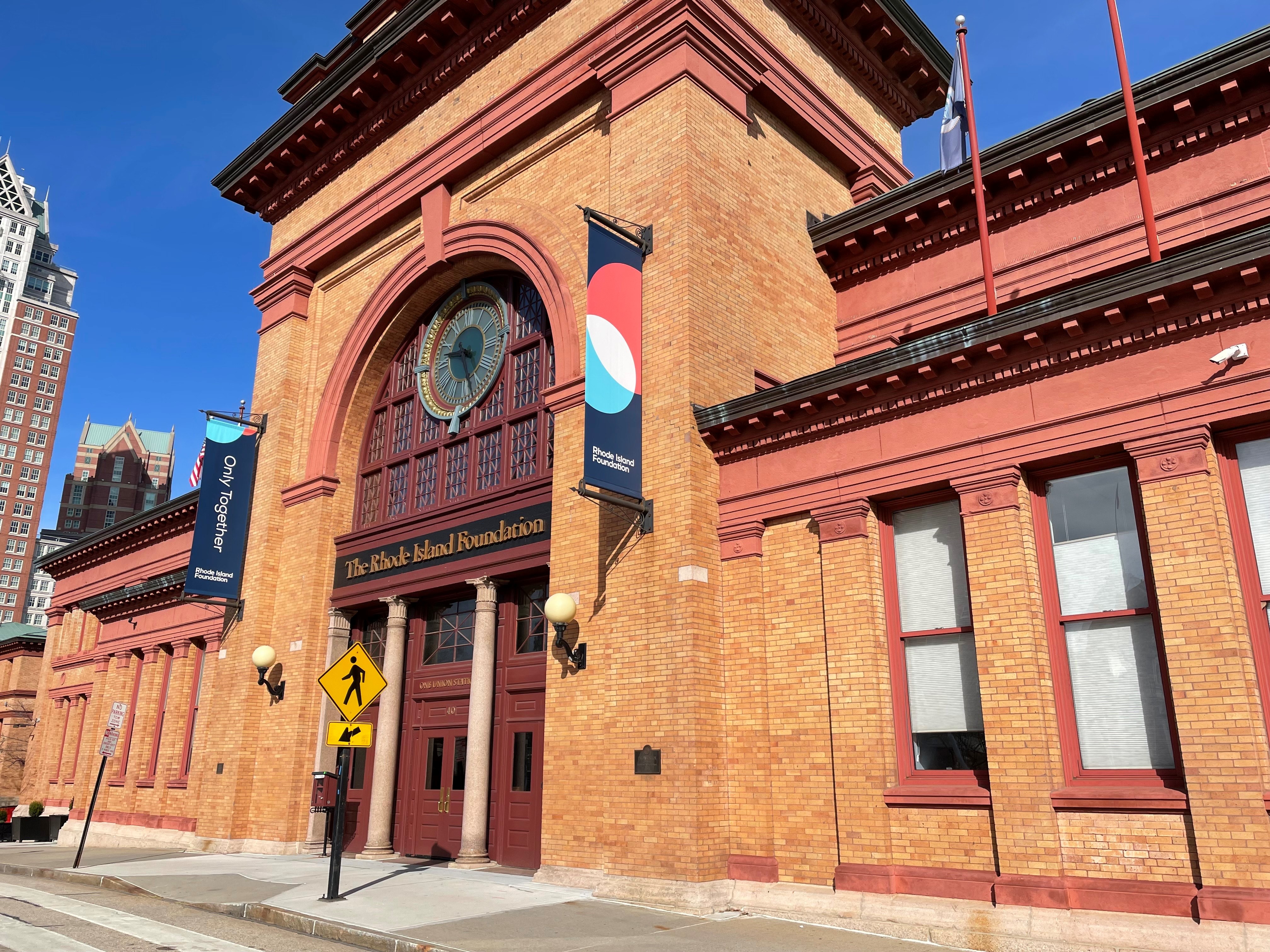
The group convened by the Rhode Island Foundation found the state only covers about 38% of K-12 education spending, an amount Rhode Island Foundation CEO and President David Cicilline called “really low” when compared to other states.
Your Business Has Gone Global. Has Your Insurance?
A decade ago, “doing business internationally” was mostly a large-company concern. Today, a manufacturer in…
Learn More
“If we don’t get this right and ensure that every student in Rhode Island has access to a high-quality public education to prepare them for a pathway into either higher education or a career, the future of our state is really in jeopardy,” said Cicilline, a former U.S. representative and Providence mayor at a December press briefing ahead of the report’s release.
The foundation’s Blue Ribbon Commission released recommendations in a report Monday, proposing that the state redo what constitutes “full funding” for municipal school districts, by incorporating costs such as transportation and teacher pensions into the state’s funding model. In addition, towns and cities would also have a clearer idea of their own fiscal obligations to their schools.
“I think most states are moving towards a system where the state assumes greater responsibility,” Cicilline said, partially because poorer communities often have a harder time generating the revenue needed to effectively fund their schools.
The commission suggested that a 58% state share would result in an increase of about $600 million a year in education spending.
Under the proposed changes, the total “foundation cost” of K-12 education, as the commission labels it, would be about $2.9 billion. State spending would rise from roughly $1.57 billion to $2.16 billion and the municipal share would fall from about $1.5 billion to $1.2 billion.
The 63-page report is the product of the Blue Ribbon Commission, which was established in December 2024 and co-chaired by Cicilline and Nora E. Gordon, a Georgetown University professor of public policy. The commission’s members included superintendents, union leaders, advocates, charter and public school officials, plus a youth working group of Rhode Island students. Brown University’s Annenberg Institute served as research partner and facilitator and prepared the final report.
The commission’s four big recommendations are meant to work in tandem and would need to be pursued as a complete set of reforms, rather than a piecemeal approach.
- Edit the funding formula so that the state covers a much wider range of K-12 costs, rather than focusing too much on instructional costs.
- Tweak the formula’s weights to determine how different students’ needs are served, such as students with disabilities, multilingual learners, and students with economic disadvantages.
- Require municipalities to have a minimum local contribution to their schools, based on the town or city’s property wealth, rather than the current suggested share.
- More requirements for transparency in local school finances. The report notes: “Dollars come to districts regardless of how the district has spent past dollars, what student outcomes it is achieving with those dollars, or how transparent they are about the use of funds.”
“What is occurring right now is that we have some students in the state of Rhode Island with a full bucket who are fully funded, and we have some students who are not,” said Brenda Santos, Annenberg Institute director of Rhode Island research partnerships and networks.
The commission also sketched an alternative wherein the state would maintain its approximate 38% share of local education funding, while still retooling the formula itself. In this scheme, municipalities would pay about $300 million more if all districts were to be fully funded.
Cicilline said lawmakers could write the new formula into law without immediately increasing the state’s overall K-12 spending. The state could phase in a higher share over several years, he suggested, as the budget allows.
The state’s current funding formula was first crafted by lawmakers in 2010 and instituted the following school year. As a recent legislative summary phrases it, “The core principle behind the formula is that state funding should follow the student; therefore, the distribution of state funds changes annually based on shifts in enrollment.”
In the commission’s view, however, not enough money follows students. The present formula’s “core instructional amount” provides municipal funding largely for teacher salaries and direct classroom costs. So that “core” amount, Santos and Cicilline told reporters at the December briefing, often ends up inadequate.
Santos offered the example of in-district transportation costs as something that shocked the youth working group, who were flabbergasted that the state does not subsidize busing for public school students.
“You cannot educate a child that’s not in the building,” Santos said.
The commission also took mathematical umbrage with how the current formula combines child poverty rates and property assessment values in its calculations. It noted Rhode Island is the only state to crunch the numbers in this specific way, can lead to uneven funding in places where high property values coexist alongside high child poverty.
The commission suggests relying solely on the property tax base to reflect a more accurate minimum contribution. The report’s third recommendation – to mandate a local minimum share of education funding – is meant to curb towns and cities whose local contributions have stagnated even as state aid and property values have increased.
Santos said the revised calculation is a way to ensure “every single city in town is paying the same rate under this proposed system.”
“So no one is a winner, no one is a loser,” Santos said. “There are no advantages for any district or any city or town like there are under the current system.”
She gave the example of Portsmouth, which currently gets about $3 million in state formula aid that would disappear under the new model. But the new model would also provide about $5 million for costs Portsmouth is paying locally, so the town would be about $2 million better off overall.
Pursuing either the 58% or 38% funding scenario would funnel state money in the following ways:
- In-district transportation, school safety, career and technical education costs, building maintenance, and early childhood screening are not included in the current funding formula and are kept afloat by municipal expenditures. The Commission recommends the state contribute to these costs.
- The state already splits with municipalities the payments for out-of-district transportation, certain special education expenses, and the pensions of teachers who are already retired. The commission recommends that the state absorb these costs in full.
Right now, both current and retired teacher pensions sit outside the formula and are split 40/60 between state and local funds. The commission thinks that the future pensions of current teachers should be absorbed into the core funding amount like any salary cost, while the state should shoulder alone the pension liability for already retired teachers, “a cost completely unassociated with current students who are in school,” Santos said.
The pension ask would eventually subside on the retiree side. In recent and upcoming fiscal years, the state has paid over $400 million for retired teachers’ pensions, but Santos said that state actuaries calculate that by 2036, the liability will fall sharply because of how the current benefit plan is structured.
State officials and legislative leaders were briefed on the commission’s report ahead of its release, and its recommendations are likely to become a topic of discussion at the State House when the legislative session begins anew in January.
House Speaker K. Joseph Shekarchi said over a recent email that state representatives “look forward to carefully reviewing the report during our upcoming legislative session.”
“A strong educational system is essential in making sure our students are well prepared for the rapidly-changing 21st century economy and is a critical component of our state’s future prosperity,” Shekarchi said.
Senate President Valarie Lawson, also who serves as the president of the teachers’ union the National Education Association Rhode Island, is still reviewing the final document, according to spokesperson Greg Paré.
Paré said the commission “raises important issues” the Senate will soon explore this legislative session, and he added that the entire Senate is scheduled to receive a presentation on the report from the Foundation on Jan. 15.
Gov. Daniel J. McKee said in a an email that his administration “will carefully review their recommendations as we work with education leaders, the General Assembly, and communities to ensure our funding system is fair, transparent, and aligned with student success.”