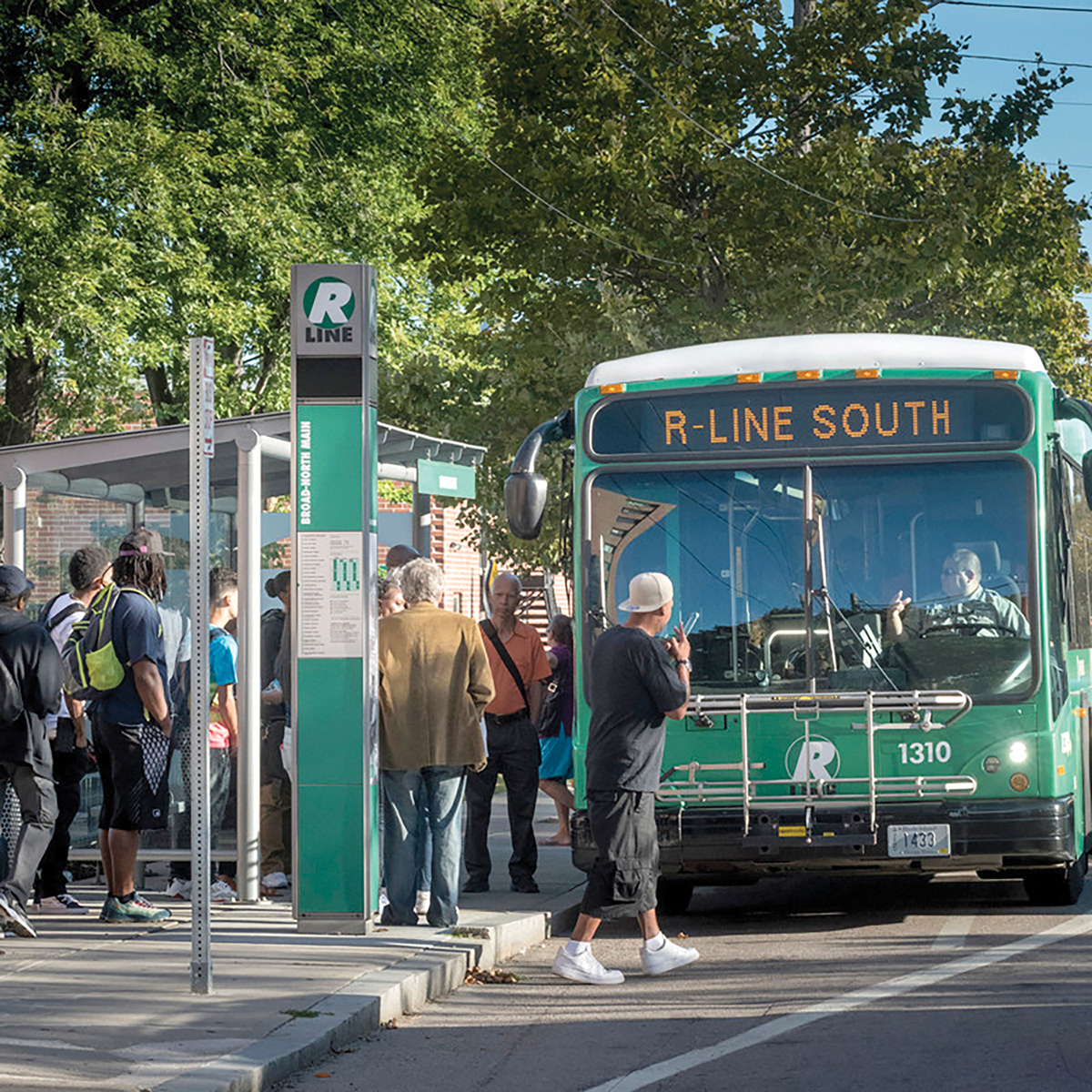
After a year of trimming its finances to try to stave off job cuts, the R.I. Public Transit Authority still faces a nearly $14 million budget deficit under its latest financial plan approved by the agency’s board of directors.
RIPTA’s board Thursday voted 7-1 to submit the bus agency’s $158.9 million spending plan to Gov. Daniel J. McKee, with the hope either he or state lawmakers will find a way to plug the hole by the time fiscal year 2027 begins in July 2026.
ISO 9001:2026: A Practical Opportunity to Build for What’s Next
For Rhode Island manufacturers, ISO 9001 has been much more than a certificate on the…
Learn More
“I think we’re headed in a good direction,” Christopher Durand, the agency’s CEO, told Rhode Island Current after the meeting.
Durand acknowledged the deficit, but said it’s better than initial projections. When crafting its last budget recommendation, the agency had forecast a $39.8 million deficit for fiscal 2027.
The narrower gap is mostly due to the General Assembly providing the agency a $15 million infusion through a 2-cent increase on the state’s gas tax. It also upped the agency’s share of the state’s Highway Maintenance Account.
The budget also assumes savings in cutting 51 vacant positions.
RIPTA’s fiscal 2027 plan assumes a slight revenue bump from plans to increase the bus fare, which has been $2 per trip since 2010. McKee has told the agency to look at increasing fares in return for a $3 million plug for its most recent deficit.
Even those recent state actions were not enough to stop the agency from enacting sweeping service reductions impacting 46 of its 67 routes. Durand told the board that some routes have started to see service return, mostly in southern Rhode Island.
But the agency’s budget does not assume service will fully return to where it was before the cuts.
The agency’s budget proposal assumes a little more than $12.7 million in revenue from passenger fares in fiscal 2027 – a nearly $1.2 million increase from what RIPTA projects it will receive by the time the current fiscal year wraps up at the end of June.
Raising fares requires an official study by RIPTA, which Durand told Rhode Island Current should be complete by the spring. He said the plan is to raise fares by the time the next fiscal year begins in July.
Transit advocates who attended the meeting made it clear they want fares to remain the same, especially as most service reductions remain in place.
“It’s known that fare hikes often lead to no gain in revenue because people stop riding buses,” Randall Rose of the Kennedy Plaza Resistance Coalition told the board.
RIPTA board Chairman Peter Alviti Jr., who also heads the R.I. Department of Transportation, commended the agency for being able to reduce its deficit and said he felt confident that the state would fill the remaining gap.
“You’ve made considerable headway,” he said.
Normand Benoit, the lone vote against the budget submission, was skeptical that McKee would remain committed to filling the deficit after declining to do so last year, leaving RIPTA with an initial shortfall of $32.6 million.
“If it goes in again with a deficit, we’re going to get hit with the same thing I heard over and over again from the General Assembly which was if the governor didn’t put it in his budget, then why should we?” he said.
McKee’s office did not respond to request for comment.
Benoit instead suggested that RIPTA’s board support a tax on Rhode Island’s highest earners to fill the agency’s remaining budget gap. It’s a move that he admitted he wouldn’t have supported in the past.
That elicited a smirk from board member Patrick Crowley, president of the Rhode Island AFL-CIO who has long advocated for raising the state’s top marginal individual income tax rate from 5.99% to 8.99% on income above approximately $625,000.
Companion bills to enact the so-called millionaires tax failed to make it through committee this year.
Senate President Valarie Lawson and Senate Majority Leader Frank Ciccone both told the Boston Globe earlier in the month they would support such a proposal to tax the rich should the legislation be filed again during the 2026 session.
“There’s no other solution for us,” Benoit said. “I think it’s going to pass this [next] year — it behooves us to be pushing for this thing.”
Vice chairman James Lombardi was opposed to joining in on the potential resolution.
“The more money we tax, the more money we spend,” he said. “There’s got to be other cuts that we can make or the state can make to fully fund us.”
Christopher Shea is a staff writer for the Rhode Island Current.