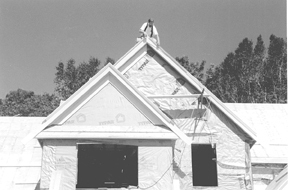
There may be fewer new homes being built across the country, but in Rhode Island business is steady.
According to the Rhode Island Builders Association, 1,603 permits were issued in the state’s 39 cities and towns during the three-month period ending Sept. 30 – only three less than last year. And while October’s numbers haven’t yet been tallied, many in the local industry expect the same kind of consistency.
“The statistics show that demand for single-family homes remains strong,” said Roger Warren, executive director of the RIBA. “It’s clear that low mortgage rates continue to make home building attractive, even with the continuing slump in the market.”
Selling Luxury Real Estate Requires More Than Exposure
By Emilio DiSpirito IV License Partner | Private Office Advisor Engel & Völkers Oceanside www.DiSpiritoteam.com…
Learn More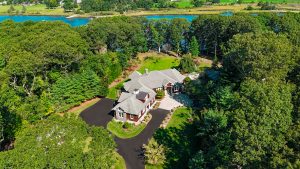
David Palmisciano, head of the New England Regional Council of Carpenters, said home construction is one area of the building market that hasn’t faltered as a result of current economic conditions.
“This is one market that hasn’t softened,” he said. “Other markets have definitely been affected, but the home building market is still going strong.”
So far this year 1.444 million homes have been started nationwide – the strongest January-October period since 1986. And while economists don’t think that housing will continue to carry the economy in the coming months as it has over the last year, they say falling mortgage rates, record home sales, and more building permits will probably keep construction elevated.
Home construction “did a pretty good job through the recession and the recovery,” said David Seiders, chief economist at the National Association of Homebuilders. The pace of construction “will be easing off a bit to a plateau. So don’t keep thinking about it as a growth engine for the economy.”
Ronald Smith, vice president of single-family homes at Picerne Homes, a Warwick-based building company, is cautious about calling the current situation a “slowdown.”
“I follow trends a lot and what I am seeing now is things coming back closer to normal,” he said. “Yes, it has slowed from its peak, but it’s still ahead of the norm.”
In fact building permits, a gauge for future construction, remain steady both locally and nationally. Jeffrey O’Hara, building inspector for the town of South Kingstown, considered one of the fastest growing areas in the state, said he issued seven more building permits in October 2002 than he did in 2001. Overall, he said, the number of permits issued between January and October this year is 108 – four less than during the same period last year.
“It’s just the way that it goes,” O’Hara said of October’s numbers. “The (building permits) number doesn’t mean anything. Sometimes plans sit here for three or four months while people find the funding, or arrange for the work to be done. I don’t think the pace has slowed that much.”
Smith said the state has only built on 25 percent of its land, so the building industry has room to continue growing.
“People are definitely moving outside the local circles, but there is room,” he said.
National economists had predicted that construction numbers would fall in October, noting that the rate of new homes started in September was the highest rate since 1986.
But even with October’s decline, the National Association of Home Builders expects 2002 to be a record year for the new home building industry, with builders likely to sell 935,000 new homes – exceeding last year’s record by 270,000. In addition the group’s homebuilder optimism index rose to 65 in November – it’s highest point in nearly two years. Scores above 50 indicate that more builders consider conditions as good than those who view them as poor.
Smith is forecasting the same good fortune for local builders.
“Historically, the number of absorption for new homes has been between 2,000 and 2,500 annually,” he said. “I don’t see that changing. We might see a slight downturn of one or two percent, but that is really only one or two homes. I still have orders to fill and there are still houses out there being built.”
Bloomberg News contributed to this report.
For the complete current issue, visit our subscription Web site, or call (401) 273-2201, ext. 227 or 234.