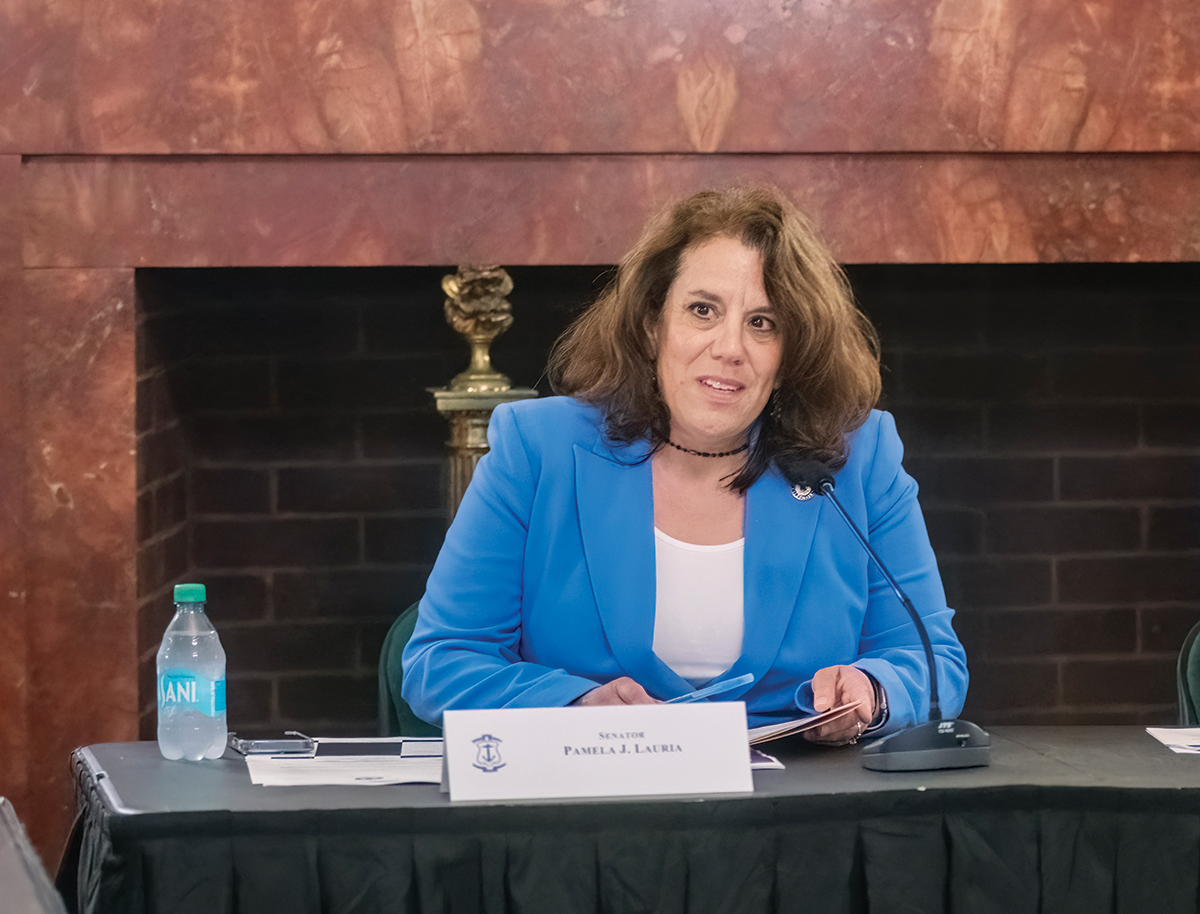
As a nurse practitioner at Brown University Health’s East Greenwich office, Pamela Lauria has met with new patients who tell her that she’s their fourth primary care provider within the past two years.
It’s a troubling, but perhaps not shocking, reality. In 2025, the Rhode Island Medical Society estimated that in less than one year, 29,500 Rhode Islanders lost primary care access due to shrinking or shuttered practices.
While primary care shortages extend throughout the country, Rhode Island faces a particularly grueling uphill battle in recruiting and retaining providers. Notably, the Ocean State trails neighboring states by about 20% in reimbursement rates across medical services. Combined with high costs of living and tuition in healthcare degree programs, many primary care providers can’t afford to practice in Rhode Island.
Instead of leaving the Ocean State entirely, some are turning to a different model: concierge care, a system in which patients pay a monthly or annual membership fee to see a provider with a much smaller patient load.
The model takes stress off providers, who can see their patient loads drop from the thousands to the hundreds. But observers – including Lauria, who is also a Democratic state senator representing Barrington and East Providence – worry that the concept will intensify already glaring disparities in the statewide healthcare system.
Concierge medicine fees can easily climb into the thousands of dollars per year. To the north, Massachusetts General Hospital offers a concierge service that charges members $10,000 annually.
“I understand why clinicians make that choice,” of switching to concierge, Lauria said, “particularly after a long career of working hard with a lot of patients and a lot of duties, but ... I don’t think it’s good for the overall healthcare system, access and equity.”
Some patients – particularly those who have complex health needs and long-established relationships with their primary care providers – may also feel that paying steep concierge fees is a necessary tradeoff to ensuring continued care, Lauria said, even if the membership causes significant financial stress.
The concierge model has grown rapidly in recent years. In December 2025, a study by Harvard Medical School’s Blavatnik Institute, Johns Hopkins University and Oregon Health & Science University found that from 2018 to 2023, the number of concierge and direct primary care practices in the U.S. increased by 83%, while the number of clinicians in those practices rose by 78%.
Additionally, the study noted, these practices are increasingly owned by corporate entities.
The R.I. Department of Health did not address the number of Ocean State concierge practices in its last formal report, the 2015 Statewide Health Inventory, said RIDOH spokesperson Joseph Wendelken. But in surveys for the next report, 6% of respondents so far have said that they provide concierge services.
State officials have also taken note of the trend toward concierge care.
While introducing a legislation package aimed at addressing the state’s healthcare crisis, Attorney General Peter F. Neronha highlighted the draw of concierge medicine, alongside dismal reimbursement rates, as a major barrier to recruiting primary care physicians and keeping them within the state.
State Rep. Marie A. Hopkins, D-Warwick, this year has submitted legislation, titled the “Primary Care Preservation Act,” that would allow practices to offer concierge-style membership and traditional insurance-based services out of the same office. In March, Sen. Louis P. DiPalma, D-Middletown, led a group of Democratic senators in sponsoring companion legislation. Both measures remain in committee.
Lauria is concerned that the proposal was unintentionally written “in a way that now, this could allow concierge [services] to also bill insurance at the same time,” she said. “I think if we did allow that ... you’d have to spell out [safeguards] much more specifically.”
Observers are also bracing for new and intensifying challenges in addressing the state’s healthcare crisis.
HealthSource RI, the state’s health insurance marketplace, estimates that more than 10,000 Rhode Islanders lost coverage when Congress declined to renew pandemic-era enhanced Affordable Care Act premium tax credits, causing dramatic spikes in monthly rates. President Donald Trump has also curbed financial aid access in various healthcare degree programs, and has proposed Medicaid and Medicare cuts that would go into effect in the fall.
Legislators are making efforts to relieve prior authorization responsibilities among primary care providers, Lauria said, and are “working hard to increase reimbursement rates.”
A sharpened focus on team-based approaches that incorporate other healthcare professionals such as pharmacists, behavioral care providers and case managers can also provide some relief for overburdened primary care providers, she said. But for now, the system remains largely broken.
“I’m not angry with the clinicians who choose this. I understand that for many of them, it may end up being career-extending, because they’re burnt out.” But the state needs “to work on that end so they’re not burnt out towards the middle and end of their careers,” she said.