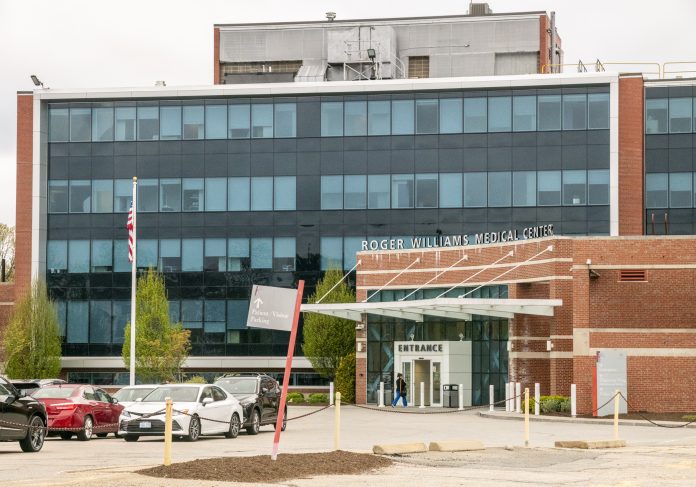
PROVIDENCE – The Centurion Foundation, the financially stymied but leading potential buyer of Roger Williams Medical Center and Our Lady of Fatima Hospital, now has through the end of January to secure enough funding to close the sale.
The Atlanta-based nonprofit is now the only organization actively pursuing the two hospitals after a second suitor, The Prime HealthCare Foundation, yesterday retracted its last-minute bid.
The state had previously agreed to cover partial operating costs for the hospitals, which are owned by the bankrupt Prospect Medical Holdings, to keep the facilities open through the end of the year. Under the extended agreement, Rhode Island will continue providing financial support through an escrow fund controlled by the R.I. Attorney General's office. The office acquired this funding from private equity firm Leonard Green & Partners, which formerly owned Prospect.
“Right now, the goal is to get Centurion to the finish line,” Neronha said in a Friday afternoon virtual press conference.
During the press conference, Neronha said that Prime was not willing to agree to key conditions such as picking up Prospect's nearly $91 million in bankruptcy expenses. Prime also would not agree to keep existing service lines or assume labor contracts, he said, and required money from outside of the hospital fund to cover additional management fees.
Centurion has previously raised concern not only for its fundraising difficulties, but lack of experience running a health system.
But unlike Prime, the nonprofit is willing to pick up bankruptcy expenses and maintain existing service lines and labor contracts, Neronha said, and did not ask for additional state money to manage the hospitals.
Earlier this week, Centurion CEO Benjamin Mingle emphasized the nonprofit's continued commitment to closing the sale.
Neronha also criticized R.I. Secretary of Health and Human Services Richard Charest's involvement in attracting Prime as a suitor. Charest formerly served as CEO and president of Landmark Medical Center in Woonsocket, which Prime purchased in 2013.
The Prime Healthcare Foundation is the nonprofit arm of California-based Prime Healthcare Inc., a for-profit system.
Charest “has been pumping Prime’s tires for a long time,” Neronha said, adding that he warned the health secretary that these conversations, if held during a period when Prime had an exclusivity agreement, would run the risk of the state being sued for interference.
When that deadline passed in October, “everything was on the table,” Neronha said. But “It became very clear to me when Prime issued a statement that included a statement from Sec. Charest telling us how wonderful Prime was, that he was having negotiations with Prime.
“I can’t negotiate with Prime if Prime believes that the state will welcome them unconditionally” to the hospitals, he added. “It’s very difficult to do that if the secretary is having conversations with Prime to which I am not a party and telling them that they can have these hospitals on whatever terms they want.”
Neronha added that he has never encountered “a situation where a public servant is quoted in a press release by a private party on a yet-to-be-concluded transaction” in his 30 years as a public servant.
“I think it is remarkable, and it tells us everything we need to know,” he added.
A spokesperson for Charest did not immediately respond to a request for comment on Friday.
Roger Williams and Our Lady of Fatima hospitals, which host about 500 beds combined, need a total of around $200 million in investment funds. State leaders have warned that the hospitals' closures would have devastating impacts on the state's health care system.
Neronha said that his office met with Gov. Daniel J. McKee, R.I. House Speaker K. Joseph Shekarchi and R.I. Senate President Valarie J. Lawson in October and November to discuss Centurion’s fundraising difficulties, and has kept General Assembly leaders updated since that time. But the state has not offered any additional funding towards the hospital, Neronha said.
“I’m not second guessing that decision,” Neronha said, but the office’s escrow fund “won’t last forever.”
“It might become necessary for someone ... to step up” and allocate more money to the hospitals, he noted.
Jacquelyn Voghel is a PBN staff writer. You may reach her at Voghel@PBN.com.