BRISTOL – Researchers at Roger Williams University have developed a new technology that can quickly detect an illness that could significantly impact quahog populations.
Though harmless to humans, the disease,
hemocytic neoplasia, can affect
clam populations “to the point that sometimes farmers just aren’t interested in clam aquaculture anymore, because it’s not profitable to them," said Abigail Scro, molecular research and lab manage at RWU's Aquatic Diagnostic Lab.
Working in partnership with the University of Rhode Island, Woods Hole Oceanographic Institution and Cape Cod Cooperative Extension, Aquatic Diagnostic Lab researchers have developed a new qPCR diagnostic test, which uses a blood sample to determine if a clam has the disease.
With this technology, researchers can get results in two weeks, compared to an older method that used tissue samples and took six weeks. The test is also non-fatal, unlike previous diagnostic methods; more cost-effective; and can detect the disease at lower levels, researchers say.
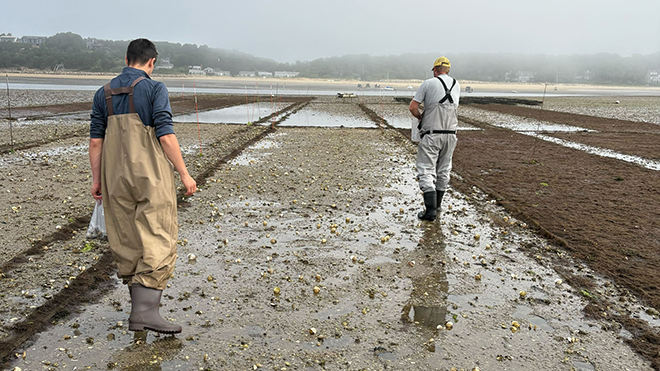
The research was sparked by a large decline in hard shell clam populations, including quahogs, around 10 years ago, primarily in the Cape Cod area. Researchers identified the cause as hemocytic neoplasia, a contagious blood cancer, which had previously been found only in soft shell clams.
Diseased clams either die from illness or related difficulty remaining burrowed in seafloor sediment – healthy clams will typically remain burrowed, for two to three years before reaching market size, rising only to feed. Clams unable to burrow are vulnerable to predators and temperature stress.
Hemocytic neoplasia has yet to be confirmed among wild quahogs in Rhode Island waters, said Evan LaCross, a spokesperson for the R.I. Department of Environmental Management.
But the disease "seems to be very adaptable and can spread to a lot of regions,” said Michael Torselli, an Aquatic Diagnostic Laboratory Research technician, adding to the importance of improved diagnostic measures.
LaCross said that the DEM also "recognizes the threat the disease represents to [quahogs], as well as to local aquaculture," LaCross said. "DEM tests for neoplasia before transplanting quahogs between bio security zones to prevent disease spread."
The team plans to share the process for other labs to use for research or business purposes, Scro said, with a goal of publishing the research within the year and attaining U.S. Department of Agriculture Animal and Plant Health Inspection Service certification.
“We're hoping a lot of farmers take advantage of the test to be proactive about the disease and how it spreads,” Torselli said in a statement. “This can have a major positive impact on the shellfish industry.”
The project received grant funding from the Northeastern Regional Aquaculture Center and the USDA.
Jacquelyn Voghel is a PBN staff writer. You may reach her at Voghel@PBN.com.