LINCOLN – If you were hoping for a tax break or are planning to lobby for a new program at the Statehouse this year, don’t go to House Speaker K. Joseph Shekarchi.
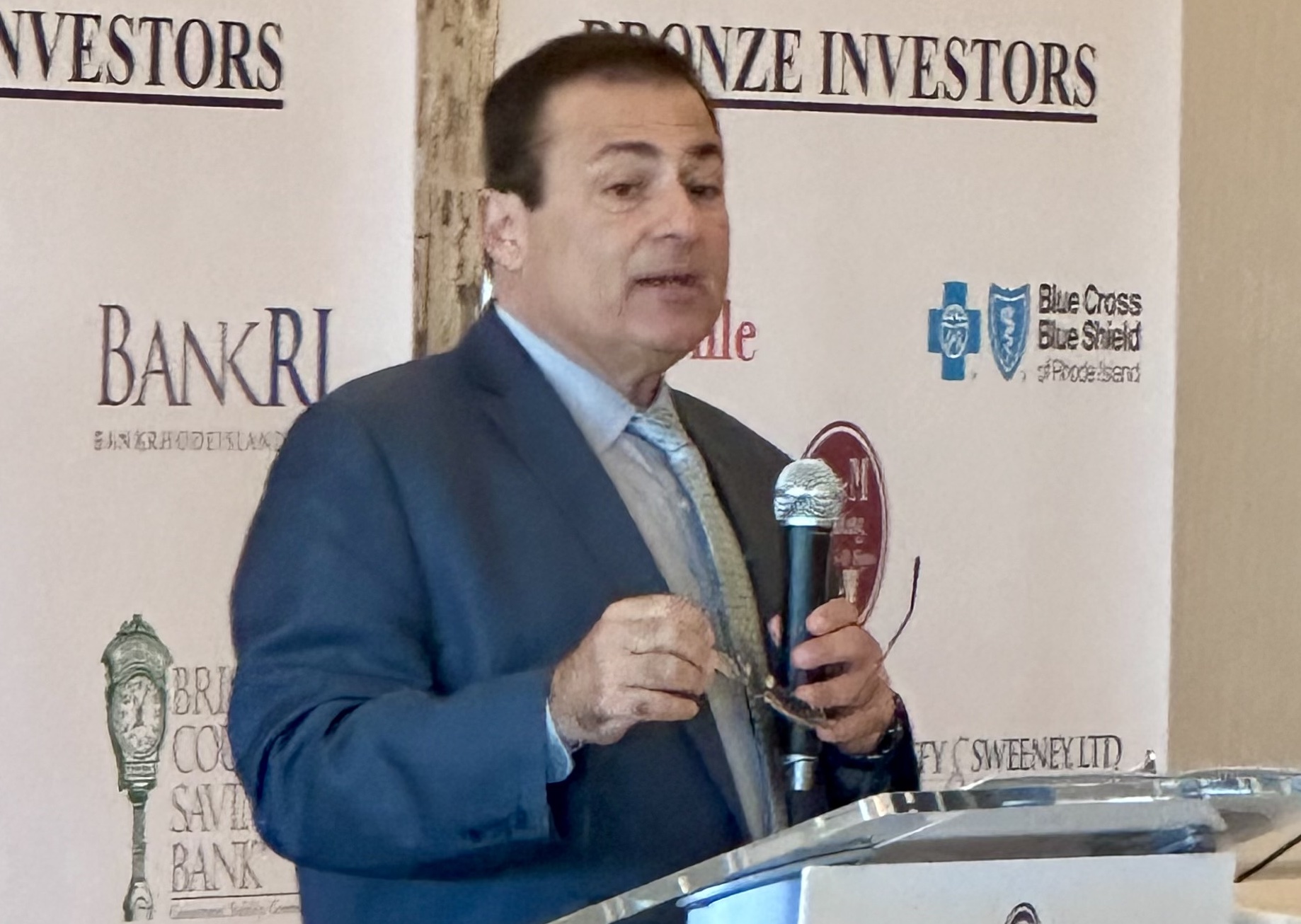
Speaking Wednesday before a crowd of more than 100 members of the business community during the Northern Rhode Island Chamber of Commerce’s annual “Eggs & Issues Breakfast” held at Kirkbrae Country Club, Shekarchi said he would not support any new programs for the 2026 fiscal year budget, and indicated that zero change to business tax rates is the best Rhode Island businesses should hope for.
“If anyone is looking for tax cuts, I don't see it happening this year,” he said. "I don't want to raise taxes. But I need to keep everything on the table. Because we don't know.”
"But feel free to lend some ideas, he added, “As long as they don't cost any money.”
The state is projected to open fiscal 2026 on July 1 with a $330 million deficit despite ending the current fiscal year with a $77 million surplus. The November Revenue Estimating Conference, which projects the budget gulf could widen to more than $680 million by 2030, cited new collective bargaining agreements with public sector unions and expenditures rising faster than revenues in several categories, including education, Medicaid and other health and human services as reasons for the projected 2026 shortfall.
The next step that may alter the current budget math is when Gov. Daniel J. McKee submits his fiscal 2026 proposal in the coming weeks.
“I know it will be balanced,” said Shekarchi. “But I have no idea how it will be balanced.”
Either way, Shekarchi said “barring some unforeseen result” come May when the state has a clearer idea of incoming revenues, businesses should prepare for some kind of tax increase.
“The work ahead of us is monumental, "said Shekarchi. “We have to learn, like all of you do in business, to live within our means.”
First elected speaker in 2021 Shekarchi, who grew up in Lincoln and was reelected for another term as House Speaker Tuesday, said his priority for 2025 is to vet the investments the state has already made during the years when it befitted from generous federal funding by the Biden administration.
But a new administration in Washington means a new local reality.
“We are trying to preserve the investments we have made,” said Shekarchi. "Are we delivering on time and on budget? If a program is effective, then it tends to rise.”
Citing the R.I. Department of Housing as one example, the Speaker said taxpayers and businesses will now be looking for evidence of its investment return in a state where the price of homes has nearly doubled over the last five years and six-figure salaries are no longer enough to purchase a home.
“We want them to do more, “said Shekarchi. “Where are the gains? People need to know that.”
Asked about the promised oversight hearings on the Washington Bridge, Shekarchi said he is aiming to begin those by the end of the month or early February.
There is also the potential move by Hasbro Inc. to Massachusetts, a development Shekarchi still has faith can be prevented. He said it's likely the company will be making its final decision within 45 days.
"We are putting full-court press on,” he said. “I think we have just as good a chance as Massachusetts. So we are going to try hard to put our best foot forward."
Asked by a Bally’s Corp. representative if there was support for any additional economic development incentives for businesses, Shekarchi responded directly to the company's national expansion, “spending billions of dollars in Chicago and even more in Las Vegas,” he said, noting the 20-year no-bid contract awarded in 2021.
“If they didn't have that I would bet that Bally's would not be headquartered in Rhode Island.”
A positive point regarding state revenues was the recent court decision that “validated” the legal concept of truck tolling but found the lower rates given to in-state truckers unconstitutional. Shekarchi had to cut his vacation short to meet with McKee after the decision was handed down and said he was “confident” that, barring an appeal by the American Truckers Association, the gantries would be turned back on.
“It's relatively good news for the state. It's a program that was self-sufficient and was working,” he said. “We are operating with the understanding there will be no more appeals. Because it's no secret we have a bridge and funding problem.”
Shekarchi’s departing message to the business community was to get involved.
"You need to be seen and be heard at the Statehouse,” he said. “Nothing resonates more with a state representative than when a local businessperson calls and says ‘what you do is going to affect my business. I can't afford to pay more taxes.’”
Christopher Allen is a PBN staff writer. You may contact him at Allen@pbn.com.