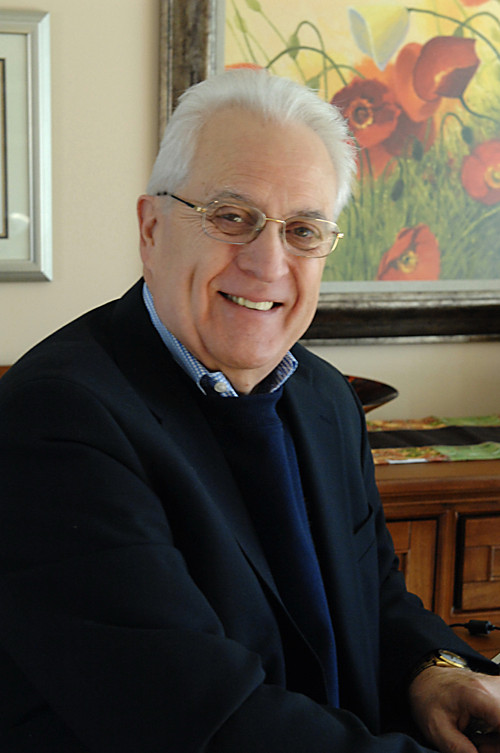
When you flip a light switch in Burrillville, chances are good that the Pascoag Utility District delivered the electricity needed to power it. The quasi-municipal utility services some 5,000 electric customers in the town and is unique in that it has no corporate parent or investors. The setup means a very different business model for the utility headed up, until recently, by Ted Garille.
On Jan. 14, Garille retired after 15 years as the utility’s general manager.
He recently spoke with Providence Business News about his tenure, the district and the proposed wind farm off Block Island.
PBN: Why have you decided to retire?
GARILLE: I’ve been in this industry in excess of 44 years. … It has opened a lot of doors for me and I’ve met a lot of wonderful people along the way. I just think a person knows when it is time.
Your Business Has Gone Global. Has Your Insurance?
A decade ago, “doing business internationally” was mostly a large-company concern. Today, a manufacturer in…
Learn More
PBN: How was it to manage the Pascoag Utility District for almost 15 years?
GARILLE: The Pascoag Utility District is Rhode Island’s only public power, nonprofit utility, which makes it obviously very, very unique. When I came here, I had a background … with an investor-owned utility, Southern California Edison. … I came here in 1996, which coincided with Rhode Island’s utility restructuring act, which is commonly known as deregulation. That presented a whole group of challenges. … [But] I thought, what a wonderful opportunity to be here in my home state and be able to literally oversee a small, stand-alone utility.
PBN: How did deregulation affect Pascoag Utility District? PBN: So why do customers stay? PBN: You’ve actually lowered rates over the last couple of years, correct? PBN: How did you lower prices when they are rising elsewhere? PBN: Do businesses also see savings? PBN: What do you see in the district’s future? PBN: Politics aside, what will the proposed Deepwater Wind farm off Block Island mean for electric customers? INTERVIEW
GARILLE: The Pascoag Utility District is literally a microcosm of a larger utility. We were offered an exemption for competition, meaning that other utilities could not come in and try and steal our customers. But we declined that exemption and felt we could provide both the pricing and the service necessary to retain our customers.
GARILLE: It’s a community-based utility. It’s owned by the ratepayers. We don’t have any shareholders to be concerned about. We don’t have to turn a profit per se. Anything and everything we do is with the consumer in mind.
That is why … since 1996 and even a few years before that we have been the lowest-priced residential rates for electricity here in Rhode Island.
GARILLE: Yes, we’ve been out there sort of pounding the bushes and seeing what’s available and taking advantage of a trough in the cost of natural gas. Last year we reduced our rates overall by 1.2 percent and just [a few] weeks ago the R.I. Public Utilities Commission approved … a 2.2 percent rate reduction.
GARILLE: We do not hedge our power needs totally each year. So we are very fortunate. We have the ability to go out and seek new sources of power for our portfolio.
Additionally, the Pascoag Utility District, because we are nonprofit, qualifies for hydroelectric power generated up on the St. Lawrence Seaway and provided by the New York Power Authority. … That water being a federal seaway, New York must share that with their nearby states. So we negotiated two contracts with the New York Power Authority: very long-term contracts. And the cost of those – the power coming in, delivered to Rhode Island – is about 2.5 cents a kilowatt-hour.
GARILLE: Yes, back in 1997 there was some discussion as to whether or not the commercial and industrial customers that we have here would qualify for that New York Power Authority Power. We sought an opinion and actually appeared with some Federal Energy Regulatory Commission staff down in Washington, D.C., and received a favorable decision.
GARILLE: I would not be surprised to see those who come after me look at the possibility of expanding our sales, our standard-offer service. I would hope that maybe somebody would look at that and consider selling it to others at least starting with the rest of the town of Burrillville and maybe even statewide.
GARILLE: It’s very difficult to comment on Deepwater sans politics. …
As far as renewable energy goes, I am absolutely, 100 percent in support of it. As far as wind power goes, I support it completely. In fact, Pascoag just signed a contract for a small amount of power from a wind farm in Maine. The cost of that power is about 10 cents per kilowatt-hour. Comparatively speaking the cost of Deepwater is around 23.5 cents a kilowatt-hour.
Now, Pascoag was able to negotiate [with the Maine farm] that we would get the renewable energy credits, which have a value, and also that we would get the capacity credits from this wind farm. So our net cost is going to be about 7 cents.
My concern about the Deepwater project is twofold: The cost upfront of about 23.5 cents and the fact that there is a 3.5 percent increase each year. … Now, taking it from the perspective of a Block Islander who may be paying 35 cents per kilowatt-hour in the summertime, 23.5 cents looks pretty attractive.
[But] when … you’re at 14 cents or 14.5 cents all in, 23.5 cents does not look attractive. •
TED GARILLE
POSITION: Retired general manager/CEO of Pascoag Utility District
BACKGROUND: Ted Garille became general manager at the Pascoag Utility District in 1996. Prior to that, he held positions at Brown University and Southern California Edison.
EDUCATION: Bachelor’s in management from Pacific University in 1981
FIRST JOB: Helping install carpet for his father’s business at the age of 9
RESIDENCE: North Providence
AGE: 64