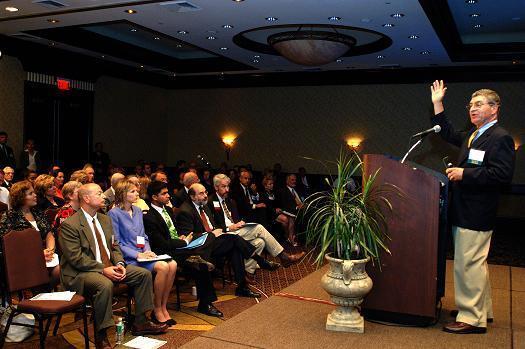
The irony, says Dr. Allan H. Goroll, is that the case for primary care has never been stronger. Study after study has shown its value in improving health through prevention and early detection of disease, in reducing mortality rates, and in cutting costs in the system.
Plus it makes patients and doctors alike happier. Patients want someone to truly take care of them; doctors want to make a real difference.
For Leaders Who Don't Have Time to Get Sick
Top performers guard their calendars, delegate relentlessly and optimize every hour of the day. Health,…
Learn More
And yet primary care in America, Goroll and all the speakers at a symposium sponsored by Blue Cross & Blue Shield of Rhode Island last Wednesday agreed, is a dying field. The true believers, doctors who entered the profession in the 1970s and ’80s, are aging into retirement or pursing new paths. And new doctors are avoiding primary care.
It’s this dire, Goroll said: In the course of a decade, there’s been a 70-percent decline in the number of internal medicine residents choosing primary care as a career, and there’s been an 80-percent decline in applications to family medicine residency programs.
“And it’s going down by double digits every year,” said Goroll, a professor at Harvard Medical School, primary care internist at the Massachusetts General Hospital and former president of the Massachusetts Medical Society.
The trend has not gone unnoticed. An American College of Physicians study last year, for example, warned:
“Without primary care, the system will become increasingly fragmented, over-specialized, and inefficient – leading to poorer quality care at higher costs.”
But if you agree with that assessment, what do you do to save primary care?
Money is part of the answer, Goroll and others said. Goroll noted that while payments for specialists had increased by more than 200 percent over 10 years, primary care doctors had only seen their pay increase by about 21 percent (and other doctors noted that in that same timeframe, the cost of running a medical practice had risen by far more).
Yet paying doctors more for, say, an annual checkup, or for treating a cold, isn’t enough, symposium participants agreed. The procedure-based pay system now in place, several said, is inadequate for primary care.
At its best, they noted, primary care is about relationships, about getting to know the patient and having in-depth conversations about the person’s health, diet, exercise, etc. It’s about connecting people to resources in the community, and if they need specialized care, guiding them to the right experts and helping them navigate the system.
And for pediatricians especially – but really for everyone – it’s about being there when you’re needed, even if the baby’s fever comes on at 2 a.m. or on a Sunday.
Doctors aren’t paid for taking calls at 2 a.m. now, and there’s no billing code for spending an extra 15 minutes with a patient to talk about lifestyle changes.
At the same time, Goroll noted, most primary care today really isn’t as good as it should be. Not only are doctors rushing through office visits, but they are working in isolation, rather than connecting with all the resources their patients need.
Another model for primary care has emerged, Goroll noted: the so-called “advanced medical home,” which involves a physician-led, multidisciplinary team that together can meet most of any person’s needs – a nutritionist to help with dietary issues, a social worker or psychologist to work on stress and lifestyle issues, etc. and a doctor freed up to keep abreast of the latest medical advances, providing expert advice to the patient.
Such a practice will be accessible to patients whenever they need it, whether it’s in person or by phone or by e-mail. And it will use electronic medical records, Goroll noted, because they make it possible to keep track of how well it’s caring for people – whether everyone who needs a colonoscopy is getting one, for example.
“If you don’t know what you’re doing, there’s no way you’re going to improve your practice,” he said.
So how about this for a solution, Goroll proposed: a new “social contract” between primary care doctors and payers.
“If society really wants to get the benefits that true primary care is able to deliver,” he said, “then primary care has to step up to what it has to deliver, and reorganize, and society has to turn around and say, we’re going to pay you for the value you create.”
Goroll has devised an actual payment structure that would reimburse doctors for creating advanced medical homes, with a per-patient payment that covers the doctor, other key professionals and office costs.
And models for such practices already exist, Goroll noted; Rhode Island has some, and payers here have been “very savvy” about promoting the concept. With a national election coming up next year, and the potential for major public-policy changes, this is the time to demonstrate that those models work, he said.
Dr. Michael Fine, who heads Hillside Family and Community Medicine, said Rhode Island physicians have been talking about these issues for a decade, and they agree that they want change.
“We want to be part of practices that are five to eight physicians and multidisciplinary teams,” he said. “We all agree on that. We all want to live this way, including behavioralists, physical therapists, nutritionists, case managers, visiting nurses, lab and X-rays, in a way that we can deliver 90 percent of what people in the community need.”
Fine and others said the key question is whether Rhode Island – and the nation – can muster the political will to actually change the system.
Blue Cross President and CEO James E. Purcell noted that the insurer is strongly committed to primary care, and it’s putting money into the system, providing substantial pay increases to practices, especially if they adopt electronic medical records and provide enhanced care.
Yet while speakers at the event praised Blue Cross for what it’s doing, the general sense was that far more dramatic action is needed in the state. As Dr. Albert J. Puerini Jr., president and CEO of the Rhode Island Primary Care Physicians Corp., put it: “We are at a crossroads in health care right now. If we don’t make changes, I do believe it will be the end of primary care.” •