With a move from Providence’s East Side to Olneyville, United Way of Rhode Island (UWRI) hopes the location of its new headquarters will show it is serious about becoming more involved in local neighborhoods.
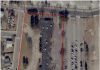
By this June, the organization – the fifth-largest nonprofit in Rhode Island based on revenue, according to Providence Business News’ 2008 Book of Lists – will move into a 50 Valley St. office that will increase its available space, said UWRI President and CEO Anthony Maione. The 22,000-square-foot building is smaller than its current 43,000-square-foot headquarters, but United Way won’t share the space with tenants, as it does now.
And it will be brand new, Maionesaid, which will be more comfortable for UWRI’s 52 employees.
“We felt that if we were going to invest some money, we would push our mission forward and, at the same time, get something with brand-new infrastructure and systems,” he said.
The new office is part of Calender Mills, a mixed-use development now being completed by Baltimore-based developers Struever Bros. Eccles & Rouse Inc.
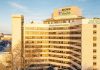
United Way will have a lease-to-purchase agreement with the developer. That deal will be funded by the $4.38 million sale to R.I. Acquisitions LLC of 229 Waterman St. – the East Side property that has been the United Way’s headquarters since the 1970s, when it was donated by the former Factory Mutual Insurance, one of the companies that later combined to form now FM Global.
Maione said the possibility of moving to a neighborhood where the nonprofit can spur positive change was important in the United Way’s decision.
“We’re trying to be more relevant, more up-to-date and more involved,” he said in a Jan. 11 phone interview with PBN. “So for us, relocating to a neighborhood that is redeveloping, that does have needs in it that align with our core issues – we thought that would be not only symbolic but on-the-ground helpful.”
Eventually, United Way 211 – the nonprofit’s statewide social services information and referral hotline – will move from its current office at Crossroads Rhode Island to the Valley Street office. That move is another part of United Way’s strategic plan, Maione said.
“About five years ago, United Way made a strategic decision to try to be a catalyst for community change around a few social issues,” he said. Those issues include affordable housing and job-skills development. “It’s a shift, in a way, to try being an agent of change – someone who’s getting results in the community – not just a pass-through for our donors to give their dollars to their favorite charities.”
Maione added that other community agencies, including the Olneyville Housing Corporation, are welcoming the nonprofit into the neighborhood.
Olneyville Housing’s executive director, Frank Shea, said the two agencies already work together through an earned-income tax-credit (EIC) program and neighborhood cleanup efforts.
“They fund a program that we do – a program of the Olneyville Collaborative, working with Olneyville merchants and the Woonasquatucket River Watershed Council,” Shea said. “We got a three-year grant from the United Way that allows us to hire a staff person who works with volunteers in the neighborhood … It’s sort of like a one-person, business-improvement district.”
Although the agencies’ relationship isn’t necessarily location based, having United Way in the neighborhood will definitely be a positive step for Olneyville, Shea said.
“There’s got to be an advantage to having them nearby and having them more familiar with our work,” he said. “They’ll certainly know a lot more about what we’re doing, and our work will impact them a lot more directly because they’ll be in the neighborhood with us. We need all the involvement we can get in Olneyville, so it’s very welcome.”
United Way of Rhode Island operates on an annual $4 million budget, along with about $17.5 million for programs, $7.5 million of which are at the discretion of UWRI, Maione said.
Already, the agency has made a “robust” investment in Olneyville, he said.
“In seven years, from 2002 to 2009, we’ve already invested about $2.2 million in the Olneyville neighborhood” through local organizations, Maione said. •

No posts to display
Sign in
Welcome! Log into your account
Forgot your password? Get help
Privacy Policy
Password recovery
Recover your password
A password will be e-mailed to you.
- Featured Event -