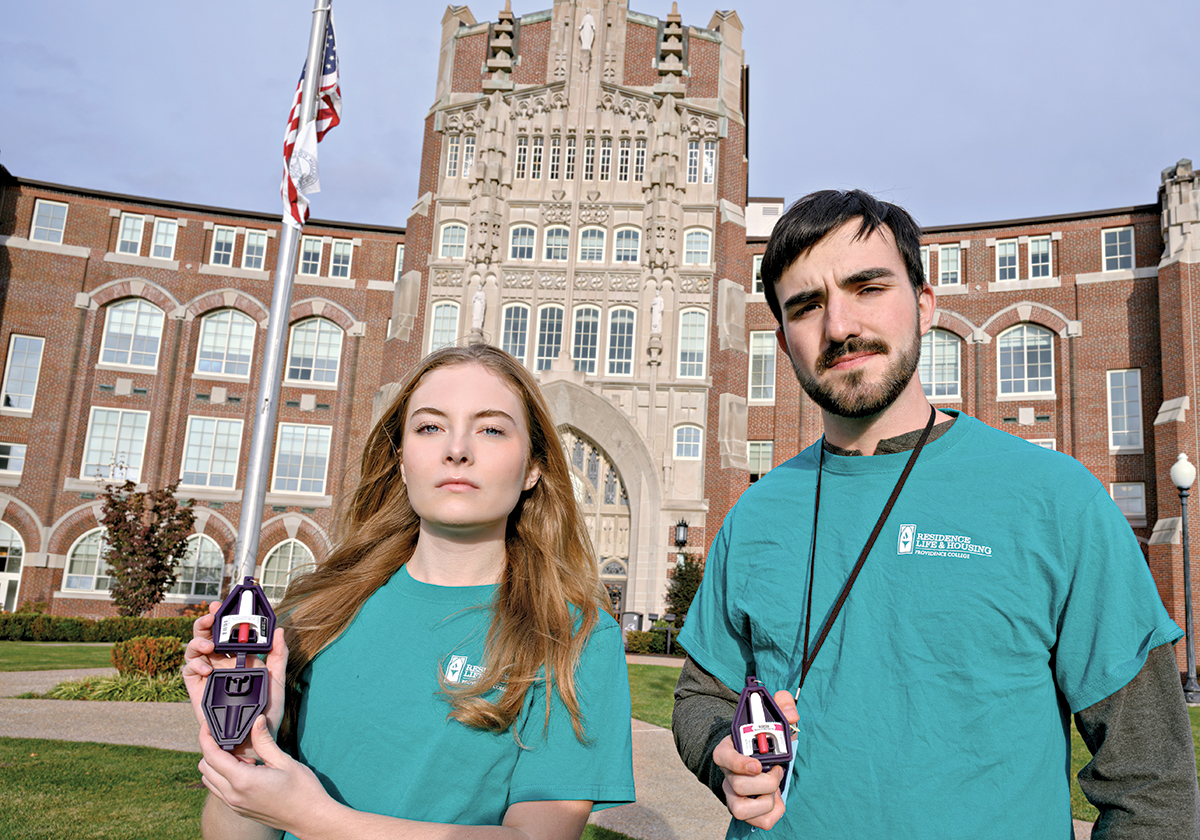
Amid routine preparations for the school year ahead, this past summer resident assistants at universities across Rhode Island received new training on how to administer the opioid overdose reversal medication naloxone.
While opioid overdoses are decreasing statewide, 69% of overdose deaths were still attributed to opioid usage in 2024, according to the
R.I. Executive Office of Health and Human Services.
Research collected in 2019 by the
University of Rhode Island shows that about 13% of students at the school reported having misused opioids at some point in their lives.
The response from the state was compassionate and action-oriented: A new law was passed in June mandating that all colleges in Rhode Island have naloxone stocked and RAs trained on how to administer it.
Shepherded by Rep. Michelle McGaw, D-Portsmouth; Sen. Melissa Murray, D-Woonsocket; and the
Rhode Island Pharmacist Association, the law promotes widespread accessibility to naloxone on college and university campuses.
“This is a preventative measure, and I think having those in a leadership position in housing facilities [at] universities fully understand what [an overdose] looks like and how to properly respond ... is incredibly valuable,” McGaw said.
Initiatives such as those pioneered by the Community First Responder Program, a state-sponsored initiative at URI, address the need for opioid reversal on campus and play a role in reducing the stigma associated with opioid use.
The director of the program, Anita Jacobson, was contracted by the
R.I. Department of Health to act as the central coordinator for naloxone in Rhode Island.
“All of the naloxone that is distributed by all organizations throughout Rhode Island – [they] get their naloxone from us. We distribute over 55,000 kits per year,” Jacobson said.
URI distributes naloxone and provides training on its administration to most colleges in the state. The remaining few, including
Brown University, had preexisting sources of naloxone before the law was passed.
Tanya Purdy, director of Brown’s BWell Health Promotion, noted that the school receives the opioid-reversal medication through state grants and relies on its in-house pharmacy when grants are unavailable.
So far, RAs at
Providence College have reportedly not had to use naloxone, but they feel grateful to be prepared should such an occasion arise.
“It feels good, being able to be a part [of] saving someone’s life, especially when time is always of the essence,” said Jack Pawlowski, head RA and a junior at Providence College.
For Chloe Johnson, head RA and a senior at Providence College, the naloxone training was powerful in raising awareness about opioid use on campus and learning how to help if ever faced with an incident.
“It’s been helpful to increase the knowledge that resident systems have about when and how to use Narcan [the brand name for a device that delivers naloxone], and how to spot a drug overdose,” she said.
However, Johnson raised the concern that if a student was using opioids, they likely would not confide in their RA about it. After all, it’s difficult to compel students to talk to their RAs about far-less grave matters such as alcohol use or lighting a candle in their dorm.
Ellen Reynolds, vice president of student affairs at URI, maintains that an RA’s nightly rounds provide an ideal opportunity for opioid users to lean on their RAs for help. Reynolds also said that students do contact their RAs, on occasion, when they’re in need of assistance.
URI’s efforts to destigmatize opioid use aim to cultivate a judgement-free environment where students can get the help they need.
“We do a lot of outreach at universitywide events,” Reynolds said. “We really talk about the resources we have available and … normalize those conversations because I think we all know somebody in our lives that has been impacted by this.”
Jef Bratberg, clinical professor at URI, remarked on the change he’s noticed in attitudes around opioid use.
Ten years ago, people didn’t see the importance in learning about opioid reversal medication and looked down upon opioid users, he said. Whereas now, he has a student who wants to write a paper on naloxone and carries the medication with him everywhere.
“For two years, we’ve had naloxone and fentanyl test strips in our vending machines [on] our campus and they’re being used,” Bratberg said.
Resources for those living with opioid addiction are widely available at web.uri.edu/rota-r. Anyone can request a seminar and order naloxone by mail. Jacobson encourages groups to reach out to her organization and request naloxone for their community.
“We want people to take advantage of [this] resource because we know that about 80% of overdoses in Rhode Island occur in private residences,” she said. “A lot of times someone else is home, and there is an opportunity to make an intervention that is missed if they don’t have naloxone available. This could be happening in your home. It is something you want to have and know how to use.”