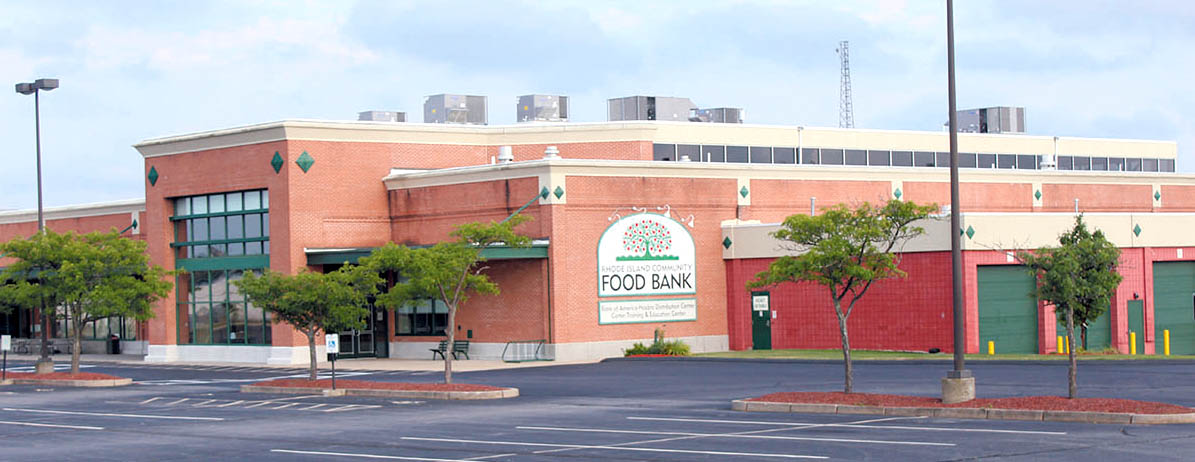
PROVIDENCE – While SNAP benefits ended on Nov. 1, the Rhode Island Community Food Bank was preparing to go into crisis management since early October, a response on a similar level to the COVID-19 pandemic.
“Food banks are designed and set up to respond to disaster and crisis because the people we serve are in crisis every day,” said Food Bank CEO Melissa Cherney, who assumed the
position in August of this year.
About 38% of Rhode Island’s population is considered food insecure, and 143,000 of those receive SNAP benefits The Food Bank could not replace, which amounts to about $1 million per day, Cherney said, so the organization focused its efforts on getting as much food to as many people as possible.
Since Nov. 1, about $1 million worth of food has been purchased, all drawn from funds donated in response to the SNAP crisis. Corporations and foundations have made sizable gifts, such as the $50,000 from the Rhode Island Energy Foundation on Nov. 3, but many have also come from individuals.
“Whether they give $10 or $20, they want to be a part of this,” Cherney said. Of the 5,000 online gifts this month, 2,100 are from new donors galvanized by the shutdown.
Even with the community’s generosity, food pantries are stretched thin, reporting anywhere from double to triple the amount of people standing in their lines and exceeded even COVID levels. “They’re having a harder time making sure everyone gets something because they’re short on food,” Cherney said. “Every time we have a donation come in, we are purchasing food that we know our agencies want and get that food to them as quickly as possible.”
The focus is primarily on produce, eggs, canned fruit and vegetables, pasta and rice – “making sure that we have those staple items that everyone is looking for in their pantry,” she said.
The issue is that every other food bank in the country is looking for those items as well. Funding is only half the problem. Logistics is the other, such as finding food to purchase, as food banks are competing for a limited supply, sometimes outbidding each other.
“This isn’t a Rhode Island problem; it’s a national problem,” Cherney said.
To mitigate this, the organization has leaned into local sources, purchasing food from local farmers, fishermen and retailers, keeping those businesses sustained and decreasing competition at the national level. “Even prior to the crisis, there was a focus on purchasing local because when we invest in the local community, we are helping keep people out of our lines,” Cherney said.
Cherney emphasized collaboration with other food banks to share truckloads and communicate purchases, reducing bidding wars and ensuring more efficient distribution. “We’re all in this boat together,” she said.
While funding and donations have been on the rise, Cherney sees the crisis only deepening the longer the shutdown drags on. “If the shutdown continues after Thanksgiving, we will definitely be challenged with having enough food,” she said. “For us, this is a marathon not a sprint.”
Thanksgiving and the following holiday season are traditionally a time of giving, with annual food drives being moved up due to the shutdown. However, the need will remain after the government reopens and the SNAP crisis is off the news cycle. After going without a paycheck for a month and a half, Cherney said, getting paid does not eliminate a household’s problems right away after the hard decisions that had to be made prior.
To those affected she said to look for helpers as there are food pantries in communities who are here and willing to help. “I struggled with hunger growing up and know how hard it is to ask for help,” she said. “But that is what we are here to do.”
Veer Mudambi is the Special Projects Editor at Providence Business News. He can be reached at mudambi@pbn.com.