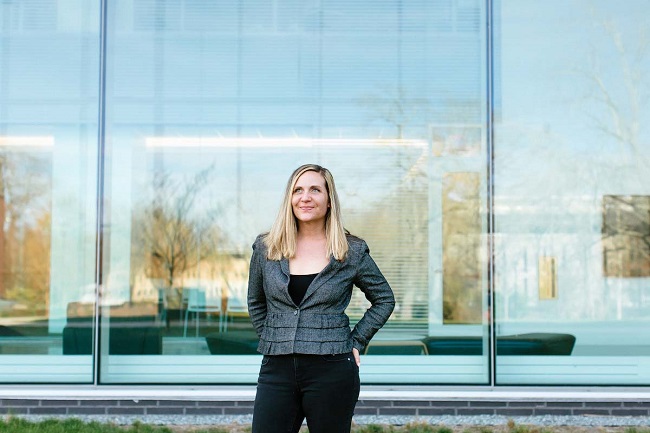
SOUTH KINGSTOWN – While residential treatment is among the most effective methods for substance use disorder, those who leave face challenges reintegrating into their normal lives.
As many as 40% to 70% of people who complete residential treatment return to using substances shortly after being discharged, according to University of Rhode Island psychology associate professor Nicole Weiss.
ISO 9001:2026: A Practical Opportunity to Build for What’s Next
For Rhode Island manufacturers, ISO 9001 has been much more than a certificate on the…
Learn More
This is because people are put back into situations where substances are readily available again. Also, returning to old routines and social networks can challenge recovery goals. Many face economic or housing instability, increasing their stress, which may lead them to return to substances to cope. Most who return to using do so within the first week, Weiss said.
“These findings signal a need for research that can help us identify high-risk states for return to use, as well as factors that can attenuate that risk during reentry,” said Weiss, who leads a study funded by a $3.5 million grant from the National Institute on Drug Abuse with researchers at Brown University, the University of Connecticut and Rutgers University. “We know residential treatment is effective in reducing substance use, but we have seen that this period of community reentry challenges those gains. We hope to develop an evidence-based tool to help prevent a return to substance use.”
Weiss plans to recruit 300 people to participate in the study as they leave residential treatment facilities. For 30 days each participant will wear a biosensor, like a Fitbit, which will measure heart rate, perspiration and temperature.
Weiss is particularly interested in heart rate variability, which is involved in regulating behavioral, cognitive and emotional responses and may be an important bio-signal for detecting risk of return to substance use.
“If our hypotheses are correct and heart rate variability predicts return to use, this may indicate the utility of wearable biosensors. Such a tool could vastly improve clinical decision-making, allowing for early intervention,” Weiss said.
Participants will also answer questions on a smartphone app about their experiences in that moment such as who they are with, what they are doing, cravings for substances and psychological responses like emotions, coping methods and any mental health challenges.
“It’s important to merge the biosensor data with information about the individual in those moments,” Weiss said. “We can better understand why they’re having the physiological responses we are observing. We’re hoping that data will improve our prediction models and ultimately inform tools that can help us better detect return to substance use.”
After 30 days, participants will visit Weiss’ STRESS lab in Providence. There, they’ll be asked about the period of community reentry, including what types of treatments and services they think people will need to be successful and what are the barriers preventing people from accessing those resources. The information will directly inform the development of resources and tools for the period of community reentry.
“We are centering the voices of individuals who have lived experiences of substance use, and leveraging the knowledge they share to inform our future work in this area,” Weiss said. “There is a lot of variability in people’s experiences following residential treatment. If we think of substance use risk as constantly changing and appearing without warning to an individual, we can really see the utility of a person having access at their fingertips to a tool that can provide them with the immediate resources and support they need. Given the extensive barriers they face, it is important to develop novel, low-barrier tools to assist them in their recovery.”
Katie Castellani is a PBN staff writer. You may contact her at Castellani@PBN.com.