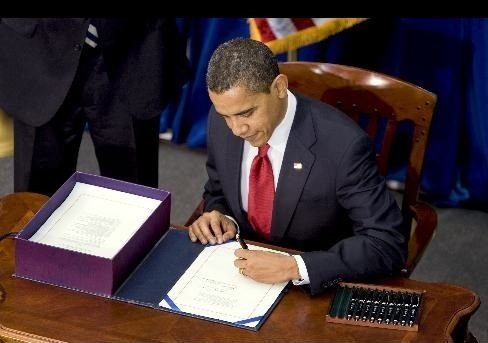
WASHINGTON — Technology companies stand to generate more than $100 billion in additional revenue thanks to the $787 billion economic stimulus bill that President Barack Obama signed in February, the research firm IDC estimates.
The Framingham, Mass.-based analysis firm is forecasting that tech companies will see $77.6 billion in sales from stimulus spending on energy programs; $20.4 billion from health information digitization; and $2.5 billion from government IT purchases.
Rhode Island's Market Has Changed. Developers, Builders, Investors and Sellers Must Change With It.
By Emilio DiSpirito IV License Partner | Engel & Völkers Oceanside Leader | The DiSpirito…
Learn More
Slightly more than 74 percent of the nearly $800 billion appropriated by Congress in the American Recovery and Reinvestment Act of 2009 is projected to be spent between now and September 2010, according to the Congressional Budget Office.
However, analysts told Bloomberg News the stimulus package’s high-tech outlays would have a more limited short-term impact on the broader economy than other areas such as infrastructure projects.
Still, the government boost is good news for the technology industry in a tough year. Analysts with the research firms Gartner and Forrester forecast a decline in worldwide IT spending of more than 3 percent this year, The Financial Times reported.
At the same time, two federal agencies — the National Telecommunications and Information Administration (NTIA), which is part of the U.S. Commerce Department, and the U.S. Agriculture Department’s Rural Utilities Service — are drafting the regulations that will govern the distribution of $7.2 billion in grants and loans for broadband infrastructure projects over the next year and a half, CNET News reported.
The two departments and the Federal Communications Commission (FCC) held public meetings last month in Washington, Las Vegas and Flagstaff, Ariz., to solicit input on how to distribute the money.
The broadband money must be split among projects in all 50 states, but the bill specifically designates that the money be spent to assist “unserved” and “underserved” regions — two terms which have yet to be defined, CNET reported.
Federal officials said they expect to begin accepting applications for the money, which is split between the two agencies, between now and June.
But the nation’s two largest phone companies, Verizon and AT&T, do not plan to apply for broadband grants, Bloomberg News reported.
“We don’t have any plans to apply; we also have not made a decision not to apply,” Verizon Executive Vice President Thomas Tauke told reporters last month, according to the news service. Verizon is currently rolling out its fiber-optic TV and Internet service, FiOS, in Rhode Island and Massachusetts.
They and other major carriers are lobbying the government not to subsidize new competitors in regions that they already serve, or to set new guidelines on how they treat different types of Internet content.
“I don’t think there’s much for them to gain financially from going after this money,” Rebecca Arbogast, an analyst at Stifel Nicolaus & Co. in Washington, D.C., told Bloomberg.
If they do apply, they are likely to apply for the NTIA’s funds, which are not earmarked for rural areas only, Bloomberg said.
Former FCC Chairman Michael Powell told the news service he expects NTIA to receive a “massive” number of applications, most of which will come from small companies. Officials at the agency say more than 2,000 companies, municipalities, community groups and consumer advocates have contacted them for information on requesting the stimulus funds.