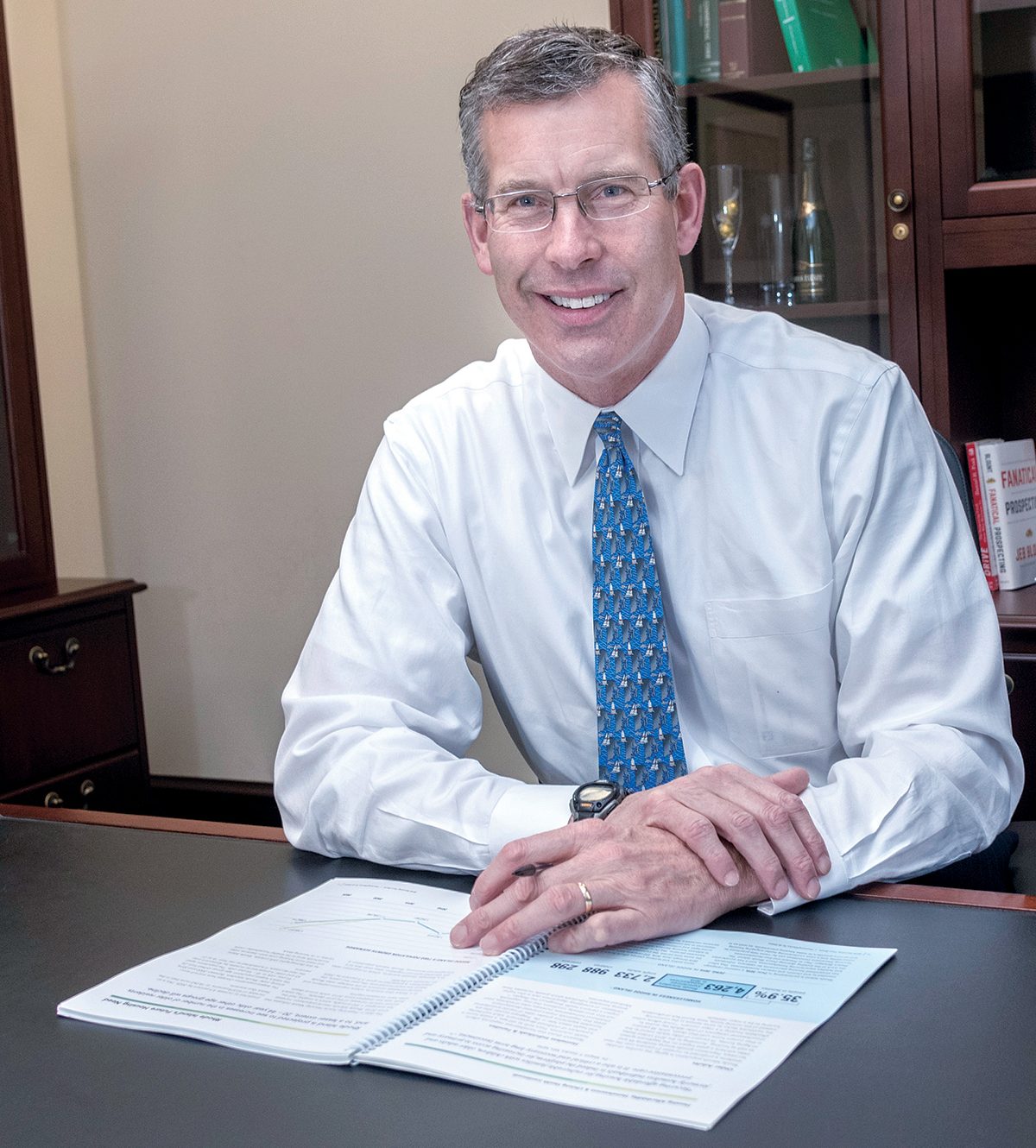
WESTERLY – Washington Trust Bancorp Inc. CEO and Chairman Edward O. “Ned” Handy III said Tuesday that the company's first-quarter results reflected uneven fee income, higher credit reserves and early gains from new wealth and institutional banking efforts that have yet to boost earnings.
The results also reflected the absence of prior-year one-time items, he added, including a pension-related gain, that affected year-over-year comparisons. On Monday, the parent company of the Westerly-based bank reported that profits rose year over year. However, revenue fell, pressured by weaker noninterest income and timing shifts in fee activity, including the absence of transactional swap income that boosted the prior quarter, Handy said.
“We did have a swapping income in the fourth quarter that we didn’t have in the first quarter, and those are kind of transactional,” he said. “They happen whenever they happen.”
Washington Trust's Chief Financial Officer Ronald S. Ohsberg said the earnings miss versus Wall Street expectations was driven largely by credit provisioning, not underlying operating performance.
He pointed to pre-provision net revenue, which strips out credit-loss reserves, as a more accurate read on the quarter.
“The miss was on the provision expense for credit,” Ohsberg said, noting that pre-provision net revenue exceeded expectations. “Our PPNR actually beat analyst expectations. They just didn’t see the large reserve that we were going to book.”
Wealth management results were softer amid market volatility and client-driven outflows that president and chief operating officer Mary E. Noons described as routine.
The first quarter of 2026 was “a little higher than we anticipated," Noons said, "but it’s not a warning sign.”
Meanwhile, Handy said recent investments in wealth management, including a small advisory acquisition, remain focused on long-term organic growth rather than near-term earnings impact.
Another growing focus for the bank is institutional banking within commercial and industrial lending, which Handy said is beginning to build pipeline but remains early in its contribution, including the recent hiring of chief commercial banking officer James C. Brown.
The shift is part of a broader 2024-initiated repositioning toward greater reliance on commercial and industrial lending and reduced exposure to commercial real estate and residential mortgage assets.
“The most immediate benefit from this group is going to be high quality loans to institutions,” Handy said, citing universities and nonprofits as key targets. “It’s not a real estate deal. It’s an operational loan.”
Handy said those relationships typically expand over time into deposits, cash management and eventually wealth services.
“That might take a couple of years before we’re really their total relationship bank,” he said.
Overall, Handy framed the quarter as one shaped more by timing, credit reserves and prior-year one-time items than by changes in core strategy, which continues to shift toward commercial and industrial lending and fee-based businesses.
Matthew McNulty is a PBN staff writer. He can be reached at McNulty@PBN.com or on X at @MattMcNultyNYC.