While Rhode Island may not have lost a massive chunk of its workforce with Zilmet USA’s move to South Carolina, observers say the shift should stand as a loss-and-learning experience for the Ocean State.
Zilmet USA, the American subsidiary of Italian expansion tank and plumbing products manufacturer Zilmet SpA, last month celebrated the grand opening of a 150,000-square-foot manufacturing facility in South Carolina.
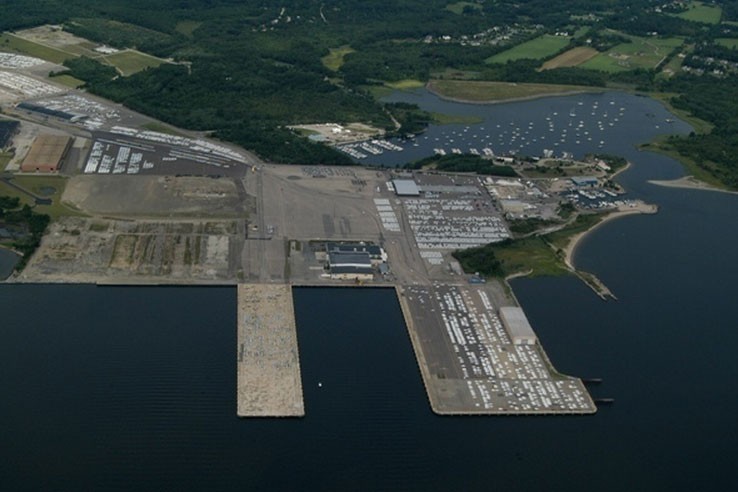
With the new facility, the company will leave Rhode Island, where it had operated its U.S. headquarters and a distribution facility since 2012. Initially based in East Greenwich, Zilmet moved to Quonset Business Park in North Kingstown in 2021 for additional space.
Zilmet USA General Manager Scott Jacobsen previously told Providence Business News that he had wanted to keep the company in Rhode Island, but received no assistance when he approached R.I. Commerce Corp. about growth opportunities within the Ocean State. South Carolina officials, meanwhile, had gone “above and beyond” to ease a transition to a new facility, Jacobsen said.
In response, R.I. Commerce says that it has previously provided Zilmet incentives through a partnership with Quonset Development Corp., and that the company was eligible for other state programs that could have helped with a Rhode Island expansion.
Either way, the manufacturer followed a well-worn path of businesses leaving the Northeast for economic incentives in Southern states, said Tim Howes, a professor of finance at Johnson & Wales University.
For decades, there’s been a trend of “jobs first moving South, and then overseas,” Howes said, and Rhode Island’s experience was no different, beginning in the 20th century.
While Northeastern states tout a higher quality of life, businesses are tempted by cost-saving measures such as lower energy rates and taxes, as well as fewer regulatory measures in the South.
“At the end of the day, it comes down to incentives and costs,” Howes said. “They’re going to where they can save the most.”
States such as South Carolina also make a show of “rolling out the red carpet” for potential newcomers, he added, and host a large number of technical schools that graduate skilled workers.
Zilmet wasn’t a stranger to Rhode Island economic officials, said Matt Touchette, a spokesperson for R.I. Commerce. The state agency and Quonset had “engaged repeatedly [with Zilmet] over the past several years, offering and providing support on multiple occasions,” Touchette said.
As part of a lease agreement at Quonset Business Park, Zilmet received a ground lease discount and an employment incentive, Touchette said, with the latter measure deducting 0.5% of annual wages paid from ground rent. Touchette said that the company was also eligible for Quonset's “site readiness” program, which assists companies in breaking ground on new facilities, and for a Rebuild Rhode Island tax credit, but did not apply.
R.I. Commerce and Quonset "work together frequently" and maintain "a close collaboration," Touchette said, and R.I. Commerce "actively assists businesses in identifying potential sites" throughout the state.
“At Rhode Island Commerce, we take seriously our responsibility to support businesses of all sizes and industries across the state,” he said. “Our team engages daily with companies to understand their needs, provide guidance, and connect them with the resources necessary to grow and succeed here.”
With Zilmet expressing that R.I. Commerce hadn’t lived up to its mission, Howes said the state should take heed.
Zilmet had about 14 employees at its Quonset distribution center, making it one of Rhode Island’s small employers. And the 50 jobs it will bring to South Carolina, while not insignificant, aren’t a massive infusion into the area’s workforce, Howes said. But small companies poised for growth are often worth keeping around.
“Where the opportunities come are smaller companies that are expanding,” Howes said, noting that Zilmet and South Carolina business leaders have crowed about the incoming manufacturing jobs as being high-tech, well-paid opportunities for the local workforce.
“These jobs are not like manual labor, minimum wage jobs,” Howes said. “They’re pretty technical.”
And while smaller companies such as Zilmet may not offer the sheer number of jobs or economic pull of large employers such as Hasbro Inc. – which Rhode Island officials have been fighting to keep in the Ocean State since the company announced in fall of 2024 that it's considering a move to the Boston area – the smaller companies offer greater potential than well-established but financially stagnant, if not declining, institutions.
But Howes said that R.I. Commerce also faces a delicate balance when it comes to appeasing individual businesses, the broader economic community and taxpayers.
New stadiums are a comparable example, Howes said. In Rhode Island, for instance, state officials promoted Centreville Bank Stadium – which cost more than $130 million to build – as an engine for job creation and tourism.
“But they end up throwing a lot of money at these things,” Howes said, with private-sector companies receiving state dollars.
Meanwhile, giving one company a lucrative deal to stay in the state could upset others in the business community, Howes said, who may feel that R.I. Commerce is playing favorites if it distributes incentives too unevenly.
“There are always questions when a state throws money at private-sector companies,” Howes said, “so I do think there needs to be a fair balance.”