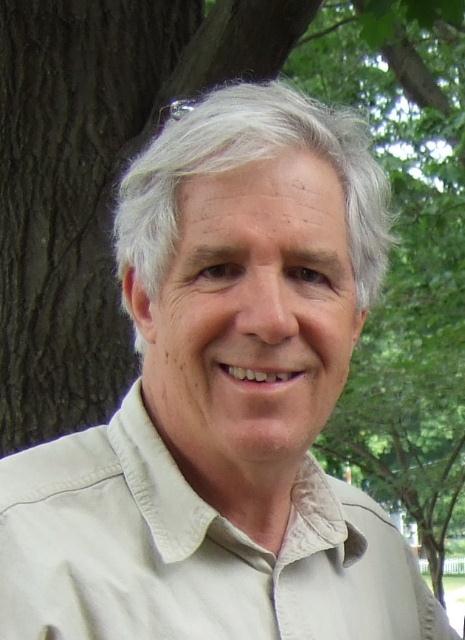
David Riley is co-chairman of the Friends of India Point Park, which is leading a coalition trying to get National Grid to bury the high-voltage transmission lines along the East Providence and Providence waterfront. The group has asked the R.I. Supreme Court to overturn a recent decision by the Rhode Island Energy Facility Siting Board to approve the utility company’s request to install new overhead lines, adjacent to the linear park. Two former state attorneys general, Jeffrey Pine and Patrick Lynch, are representing the city of Providence and Friends of India Point Park, respectively. Riley spoke with the Providence Business News about the long effort.
PBN: Describe the coalition that has united behind the effort to bury the electrical transmission lines. Who wants this done and who is leading the legal fight?
Seifert Systems Invests in Energy Efficiency to Strengthen Operations
For manufacturers, energy is more than just another operating expense. It plays a critical role…
Learn More
RILEY: The coalition [includes] more than 50 organizations. We’ve had letters of support from three college presidents: the presidents of Brown University, [Rhode Island School of Design] and Johnson & Wales University. Most recently, the appeal to the Supreme Court has been filed. There are four petitioners. The city of Providence, the Friends of India Point Park, the Hilton Garden Inn, which is the inn at the park, and the Rhode Island Seafood Festival. We also have 30 groups that are joining in an amicus brief in support of this appeal.
PBN: What is the argument in favor of doing this? Is the central argument that this represents visual pollution?
RILEY: That is one of the arguments. National Grid in the U.K. is the parent company of National Grid. And they have recently, over the last couple of years, decided to spend $1 billion burying power lines that go through national parks and important scenic areas of the U.K. They’re doing that because they realize the impact on tourism of the visual blight.
PBN: What is the argument made by opponents, such as National Grid, that this would be too expensive to do it underground?
RILEY: Yes, which leaves out the fact that we’ve raised $18 million and there is another $9 million that could come from the regional grid. The ISO [ISO New England], the regional grid for New England, had agreed to pay for replacing those [three] old towers overhead. But they also agreed that money could be contributed to [burying them]. … They think it would set a bad precedent, that people would want to bury their power lines. In fact, in other states and other cities, power lines have been buried for decades when they are strategically located, as these are. People argue that it’s only aesthetics. Well, what is WaterFire? Is WaterFire an aesthetic experience or an economic asset? It’s clearly both.
PBN: Is there an environmental argument to burying them as well?
RILEY: Environmental in terms of enjoyment of the park. This stretch of Interstate 195 is used by 60 million people a year, it’s the major gateway to the city. It’s the only place on the interstate in the Ocean State where you get a water view. Roughly 10 million people a year go speeding by it to the Cape and the Islands. If you could get just 1 percent of them to stop and spend some money, you would have another $100 million coming into the economy.
PBN: India Point Park seems to be well-used and popular. What have park users said they want?
RILEY: We have a petition signed by 2,100 people. Four hundred of them sent in statements. The statements talk about boosting tourism, creating jobs and the impact on the waterfront. As someone said, “They’re not making waterfronts anymore.”
Mary MacDonald is a staff writer for the PBN. Contact her at macdonald@pbn.com.