For manufacturers, energy is more than just another operating expense. It plays a critical role in production, equipment reliability, sustainability initiatives and long-term competitiveness.
As companies look for ways to improve efficiency while managing operating costs, many are discovering that targeted energy upgrades can deliver measurable business benefits with minimal disruption to day-to-day operations.
Building a Strong Data Foundation in the Age of AI
Artificial intelligence (AI) has become a key priority in the boardroom and across management —…
Learn More
Click here to read more content from Rhode Island Energy
Seifert Systems, a manufacturer of thermal management solutions headquartered in Quonset Business Park in North Kingstown, is one example of how Rhode Island businesses can use energy efficiency investments to support both operational performance and long-term sustainability goals. Quonset Development Corporation (QDC) has a Strategic Energy Management Partnership (SEMP) with Rhode Island Energy. Through this partnership, businesses located at Quonset Business Park, including Seifert Systems, have benefited from energy-efficiency initiatives and cost-saving opportunities.
Supporting Manufacturing Through Smarter Energy Use
Founded more than 60 years ago, Seifert Systems designs and manufactures cooling, heating, ventilation and enclosure climate control solutions used throughout industrial environments around the world.
Its products help protect sensitive electrical equipment across industries including manufacturing, food and beverage, packaging, water and wastewater treatment, industrial automation, traffic control and digital signage.
Today, the family-owned company serves customers in more than 50 countries while continuing to expand its presence in the United States. Its 30,000-square-foot North Kingstown facility serves as the company’s U.S. headquarters, combining office, warehouse and manufacturing operations under one roof.
Across its global operations, Seifert has made sustainability a core business objective, with corporate goals focused on carbon neutrality, renewable energy adoption, energy efficiency and CO₂ reduction.
That same philosophy guided the company’s recent work with Rhode Island Energy.
 Energy Savings with Immediate Benefits
Rather than approaching energy efficiency as a one-time project, Seifert has continued identifying opportunities to improve its facility over multiple years.
The first project focused on upgrading lighting throughout the building with high-efficiency LED fixtures. Completed in 2025, the project is expected to reduce electricity consumption by more than 10,000 kilowatt-hours (kWh) annually while lowering energy costs by more than $2,000 each year. In addition to reducing energy costs, the upgraded lighting provides brighter, more consistent illumination throughout the manufacturing, warehouse and office spaces.
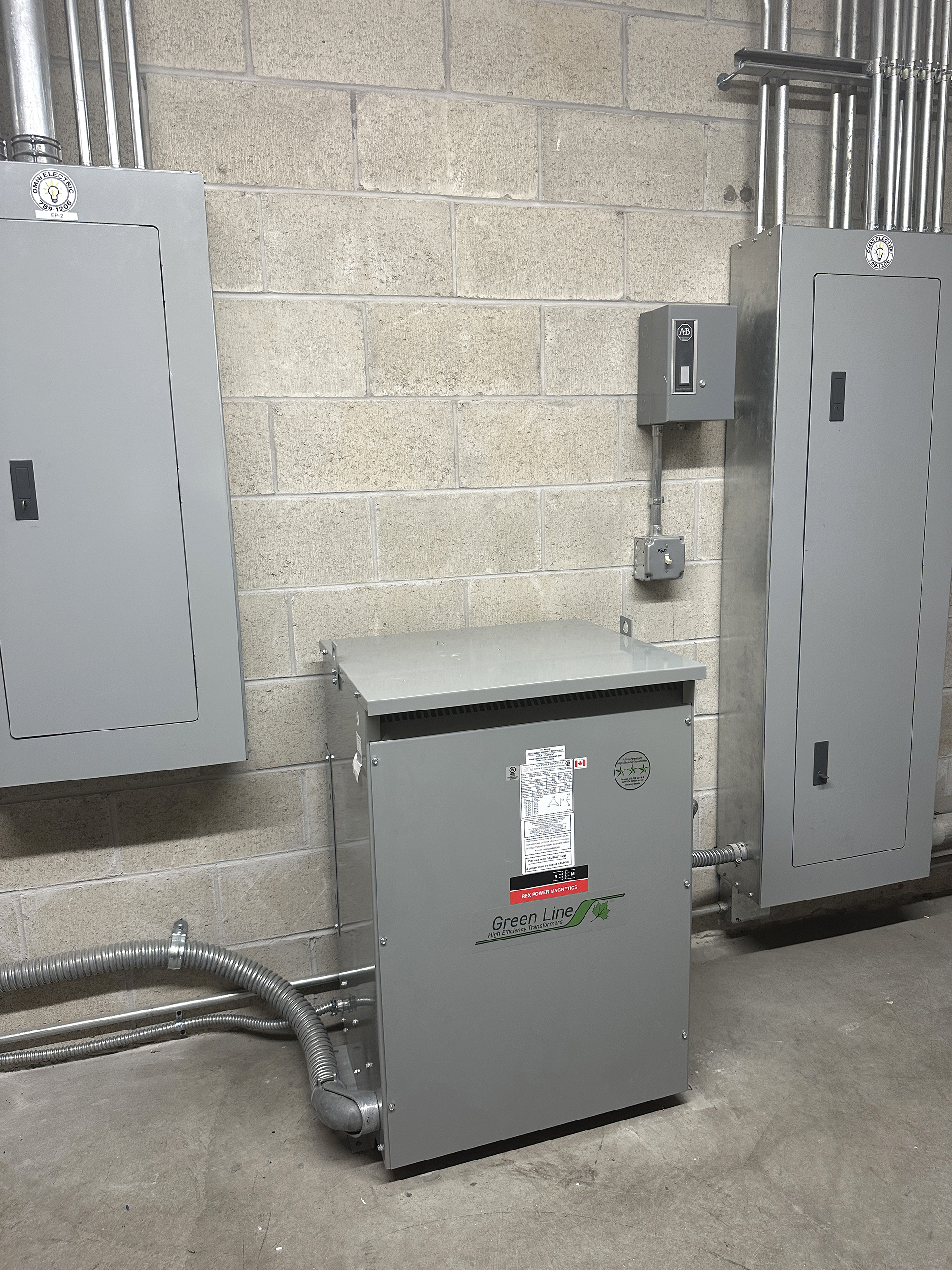
Building on those results, Seifert partnered with Rhode Island Energy again in 2026 to replace aging electrical transformers with newer high-efficiency equipment. While transformers often operate behind the scenes, they play an essential role in delivering reliable power throughout a facility.
The transformer project is expected to save more than 12,000 kWh of electricity annually and reduce energy costs by an additional $2,500 each year. Rhode Island Energy incentives covered more than 70% of the project’s total cost, helping make the investment even more attractive.
Combined, the two projects are expected to save more than 22,000 kWh of electricity and over $4,500 annually while avoiding greenhouse gas emissions equivalent to more than 25,700 miles of gasoline-powered driving.
“Energy efficiency is an important part of how we operate and how we support our broader sustainability goals,” said Thomas Brannigan, Quality Engineer at Seifert Systems. “By working with Rhode Island Energy, we were able to identify practical upgrades that reduce energy use, lower operating costs and improve reliability in our North Kingstown facility.”
A Practical Path Forward
Seifert’s experience illustrates that meaningful energy improvements don’t always require major capital projects or lengthy facility shutdowns. Many opportunities begin with a no-cost energy assessment that identifies upgrades tailored to a facility’s specific operations.
Projects ranging from lighting improvements and HVAC optimization to electrical system upgrades can frequently be completed with minimal disruption while generating long-term operational savings. Available incentives can also significantly reduce upfront investment costs, allowing businesses to realize returns more quickly.
For Rhode Island manufacturers, these improvements do more than reduce utility bills. They can improve equipment reliability, support corporate sustainability initiatives and strengthen long-term business competitiveness.
Whether businesses are beginning their energy efficiency journey or building on previous investments, Rhode Island Energy offers technical expertise, financial incentives and customized solutions to help identify opportunities that improve facility performance and reduce operating costs.
To learn more about Rhode Island Energy’s business energy efficiency programs and available incentives, visit www.rienergy.com/business. Email us at: EnergyEfficiency@RIEnergy.com to schedule your energy assessment.