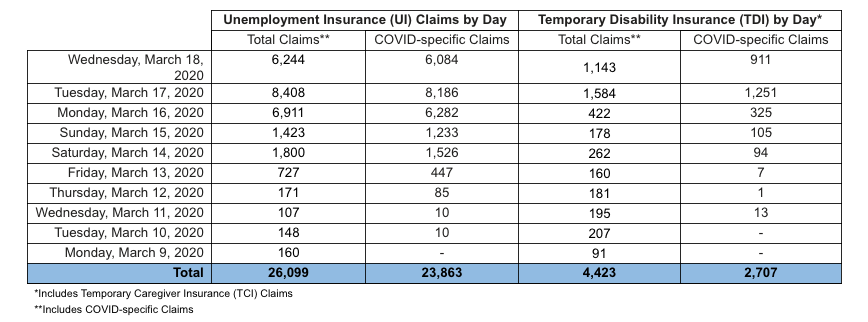
PROVIDENCE — Nearly 24,000 Rhode Islanders have lost their jobs due to business closures and cuts related to the state’s effort to halt the spread of the coronavirus that causes the COVID-19 infection.
More than 20,000 people have lost those positions in the past three days, according to updated filings for unemployment benefits through the R.I. Department of Labor and Training.
For Leaders Who Don't Have Time to Get Sick
Top performers guard their calendars, delegate relentlessly and optimize every hour of the day. Health,…
Learn More
The statistics released Thursday indicate 23,863 people have filed for COVID-19-related unemployment benefits. Another 2,707 people have filed applications for temporary disability insurance, which is a lesser amount, but would cover people forced to leave jobs because they are sick or quarantined, according to state officials.
The state has had 20,552 applications for unemployment insurance since Monday, an unprecedented number, said Scott R. Jensen, the DLT director.
The state’s largest prior surge in unemployment came in 1992 during the banking crisis, he said in a recent interview.
The massive upheaval in the state’s economy reflects the decision by Gov. Gina M. Raimondo to temporarily close or curtail businesses or entities that attract crowds of people, including the state’s two casinos, the public schools across Rhode Island, restaurants and bars that seat patrons and daycare centers.
Jensen said data is not yet available on exactly which kinds of jobs have been most impacted so far, but anecdotally, he said many seeking assistance are hourly part-time employees such as waitresses, casino workers, bus drivers for the schools and cafeteria workers.
“It’s a lot of people at one time because of a lot of closures at one time,” Jensen said.
In general, the state unemployment benefit covers roughly half a person’s wages up to 26 weeks, he said. The payments come from a fund that is sourced through employer unemployment taxes.
The benefit is not applicable to all jobs being lost. “If you are getting a W-2 you are probably eligible. If you are an independent contractor or own your own business, probably not.”
Mary MacDonald is a staff writer for the PBN. Contact her at macdonald@pbn.com.